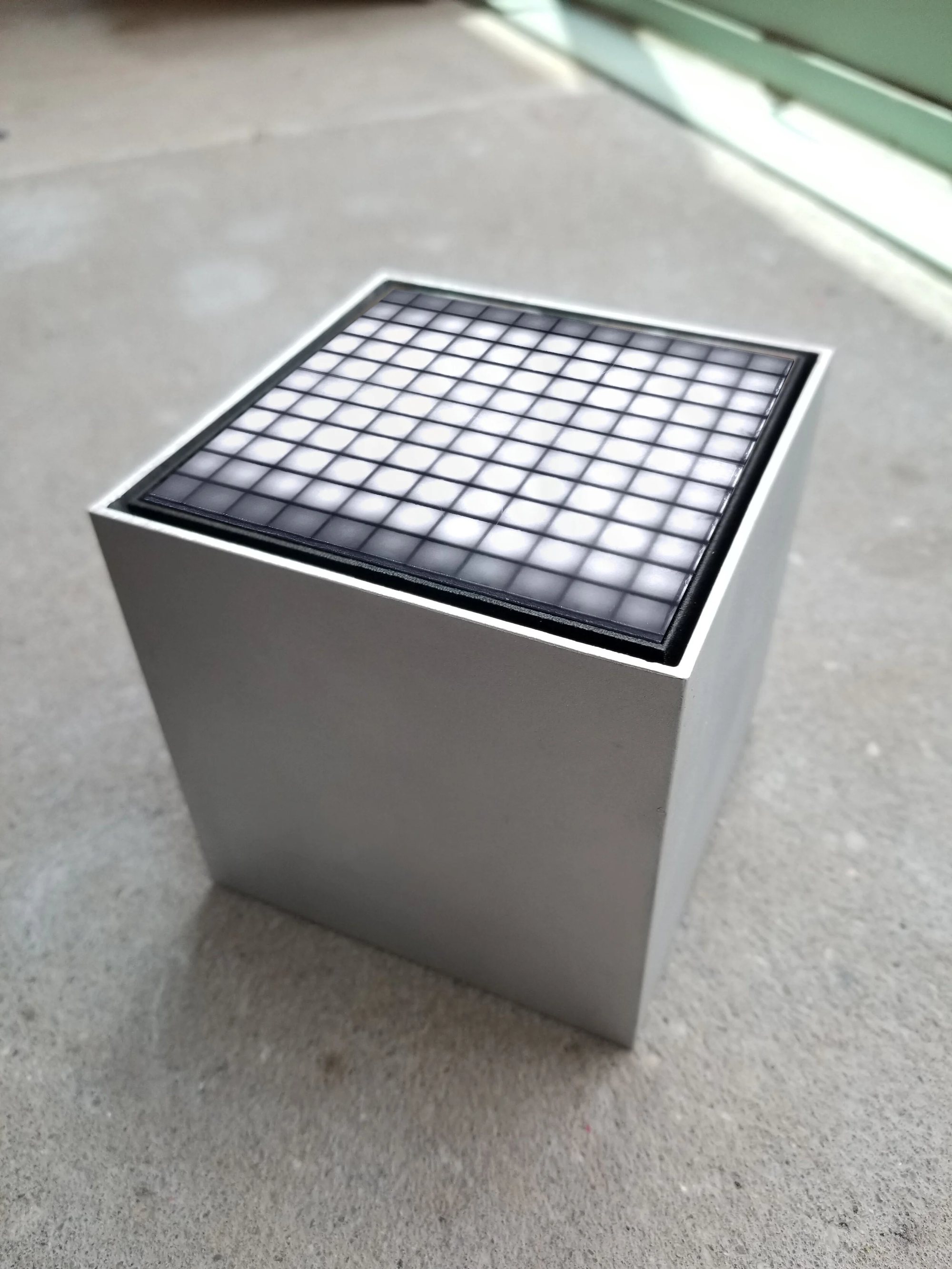
A networked LED matrix display resolved into a palm-sized cube — a layered optical stack, single-board compute and active cooling packed into an enclosure with no visible fasteners.
Wireline packages a networked LED matrix into an object small enough to sit on a desk. The difficulty is not the matrix — it is everything that has to stack behind it. A single-board computer, a driver board, a cooling fan and a light-shaping optical assembly all have to co-exist inside a cube whose exterior is expected to read as a finished product rather than a development board.
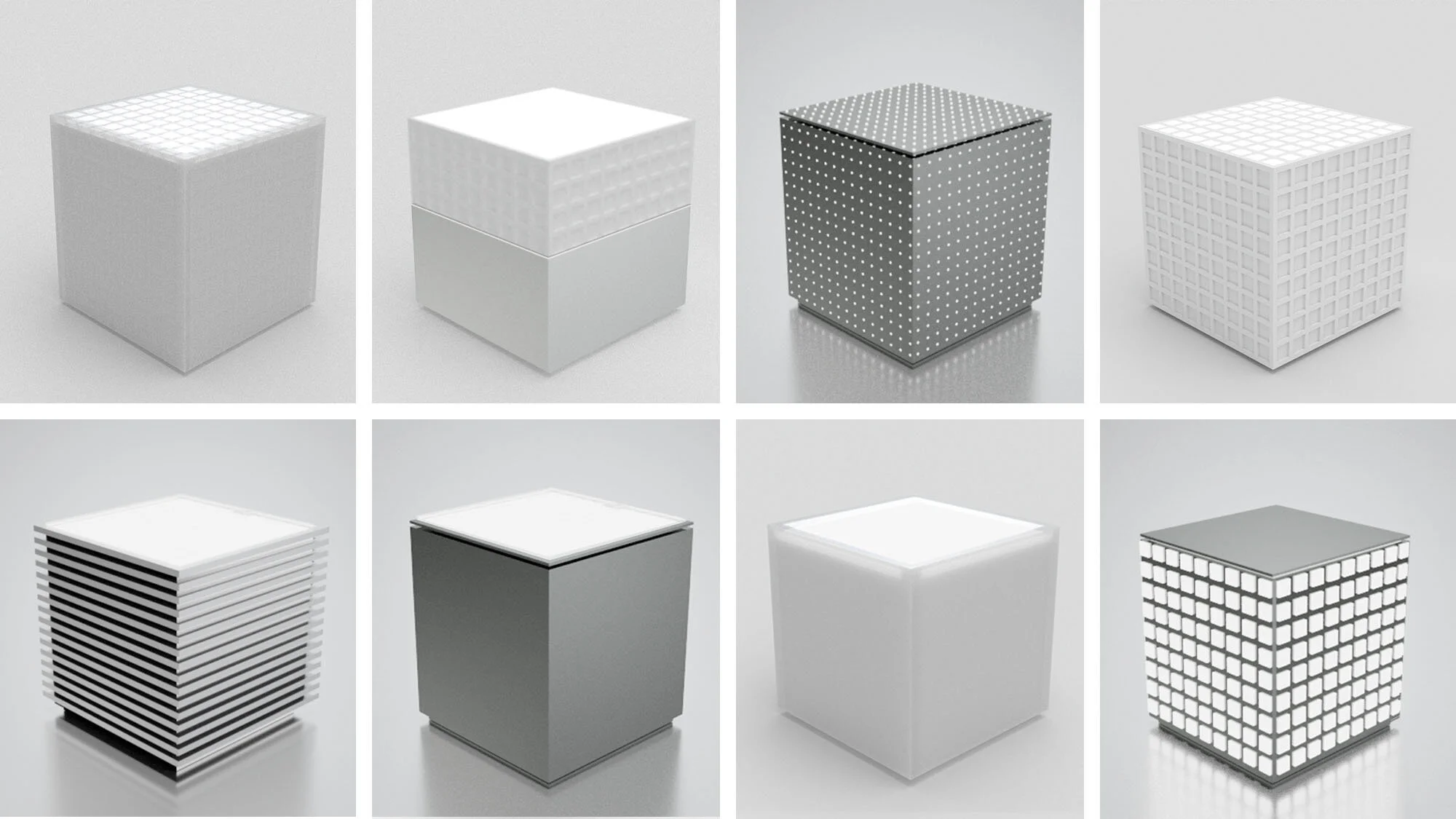
The work covered the full internal architecture and the enclosure that conceals it: layer order and stack height, thermal path for a fan running inside a sealed volume, optical separation so adjacent pixels stay distinct, and an exterior with no visible fixings. Development ran through repeated printed prototypes, tested against the lit matrix at each revision.
Disciplines
Study
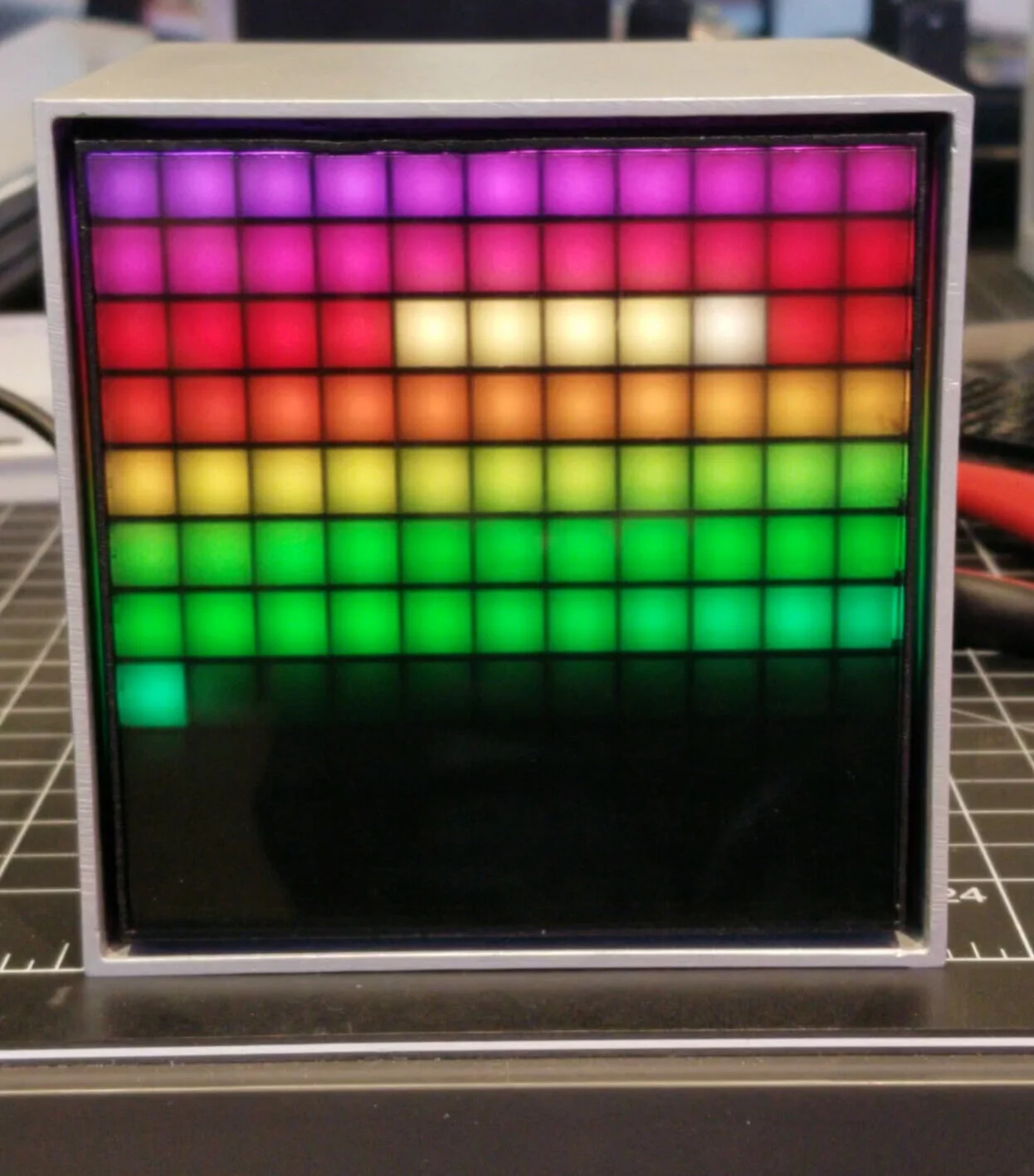
Bare LED matrices look like arrays of bright points. Diffuse them and the pixels bleed into each other, turning a grid into a glow. The whole legibility of the display depends on a component that emits nothing: the baffle sitting between the LEDs and the diffuser.
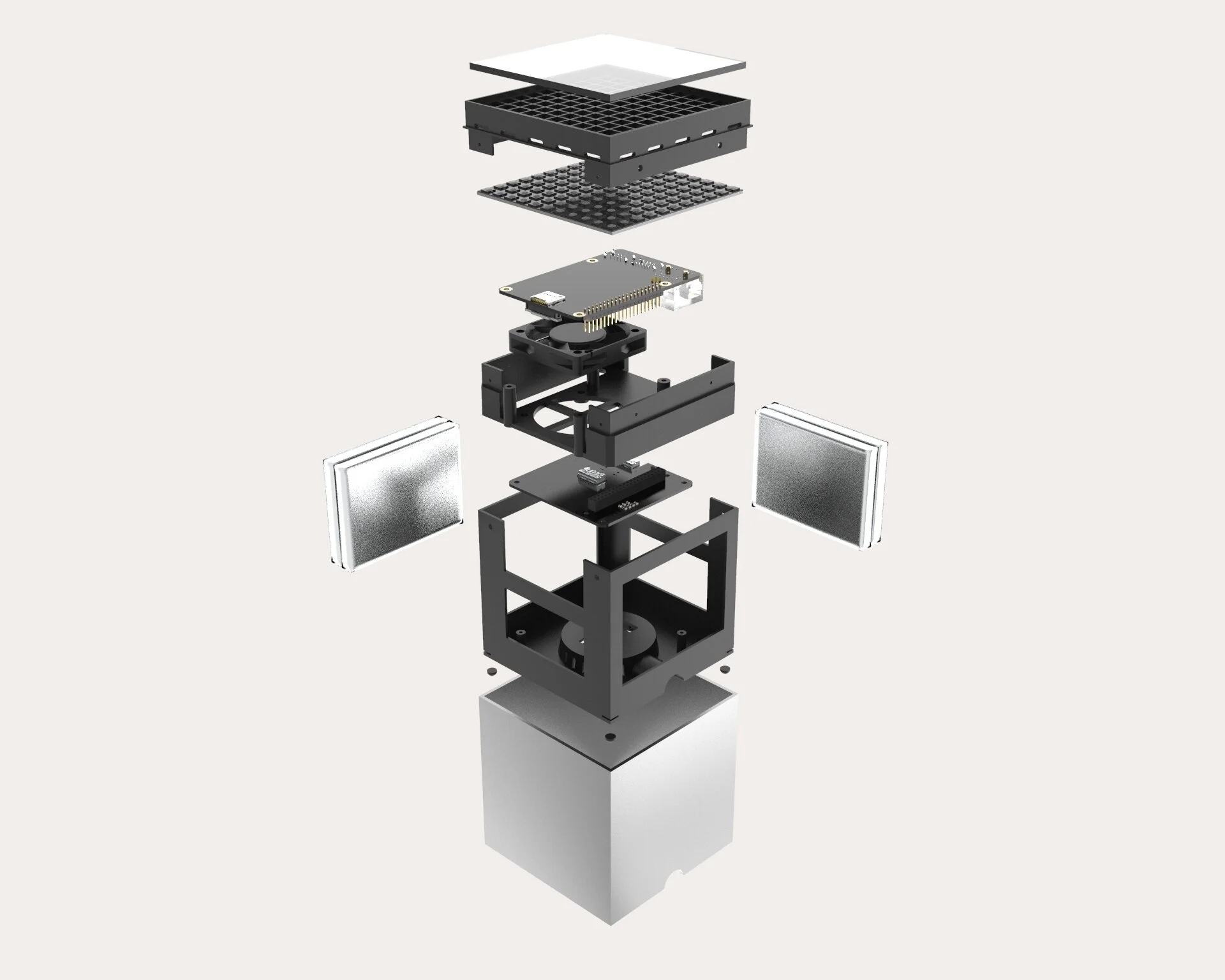
So the optical stack drove the architecture. A honeycomb baffle gives every LED its own cell with opaque walls, and a diffuser panel caps each cell so the pixel reads as a lit square rather than a point source. Cell depth and wall thickness set the total stack height — which in turn set the proportion of the entire enclosure.
Strategy
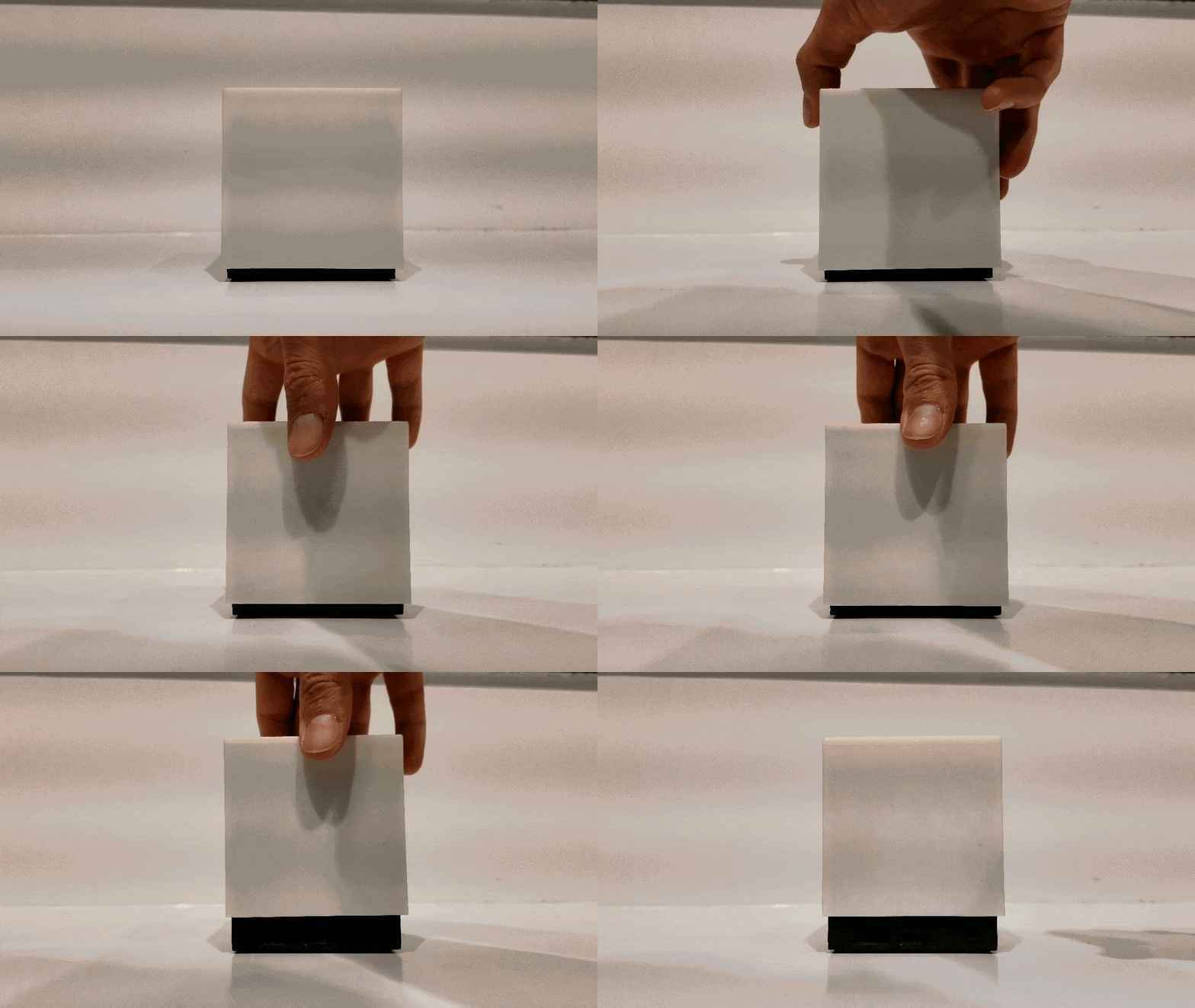
The resolved architecture stacks strictly in one axis: diffuser, honeycomb baffle, LED matrix, compute board with network interface, fan, then driver board on an internal chassis. Ordering it this way keeps every electrical connection short and lets the whole assembly drop into the shell as a single cartridge rather than being built up inside it.
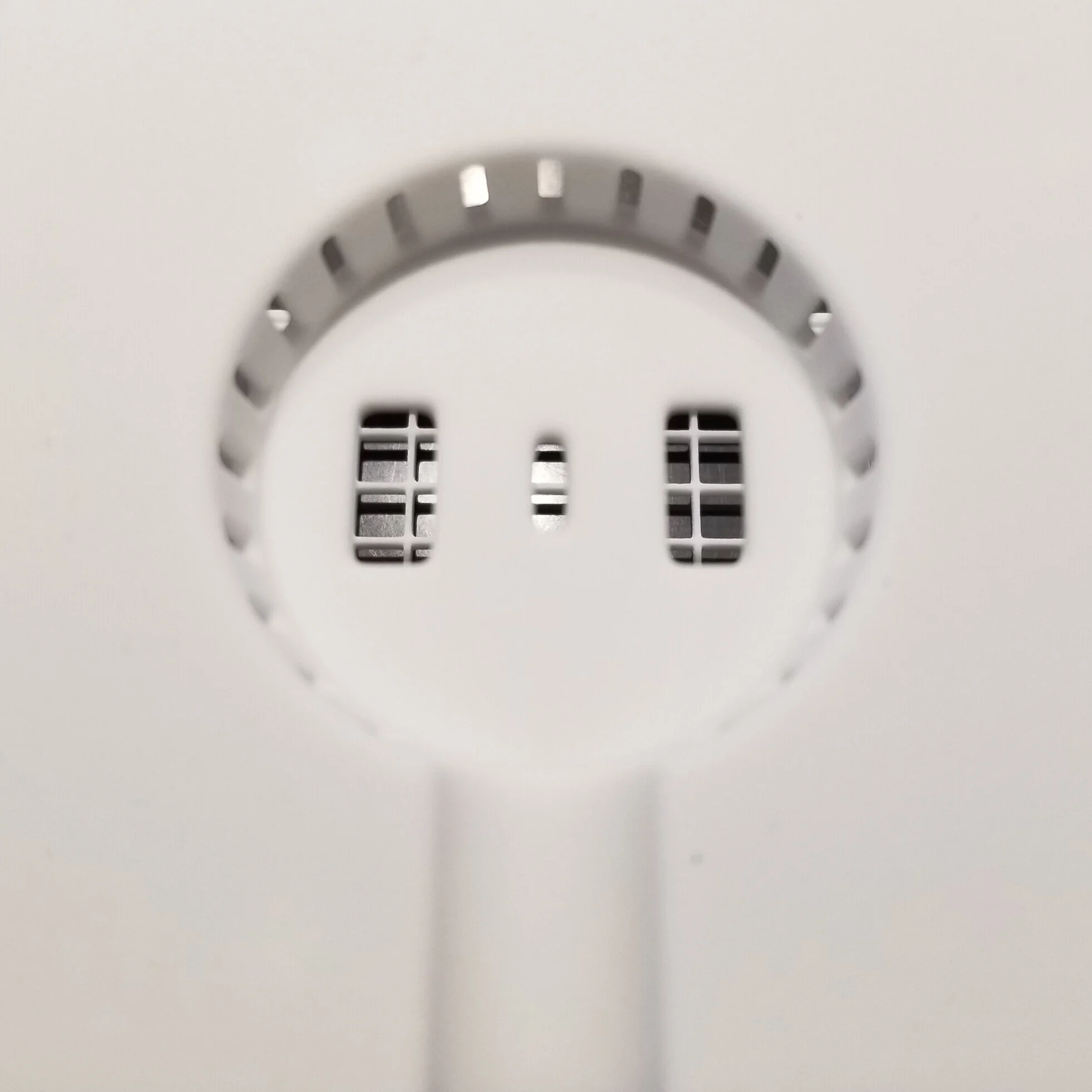
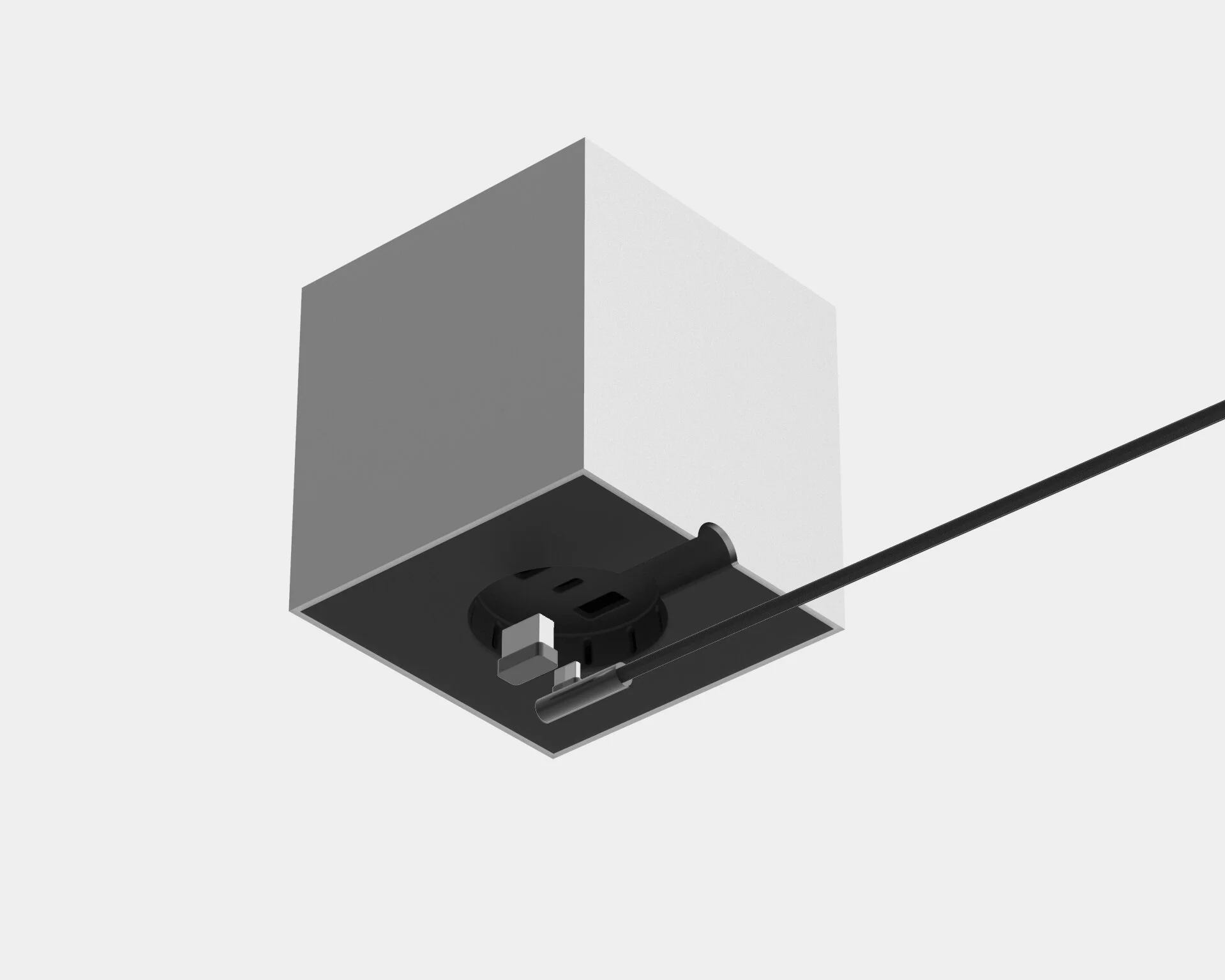
Cooling then works with that stack instead of against it. The fan sits mid-height and moves air through the open chassis frame, exhausting via shadow gaps in the enclosure seams — so ventilation reads as a deliberate parting line rather than a grille. Side panels fix from within, leaving the exterior as four clean faces and one lit top.
Assembly sequence
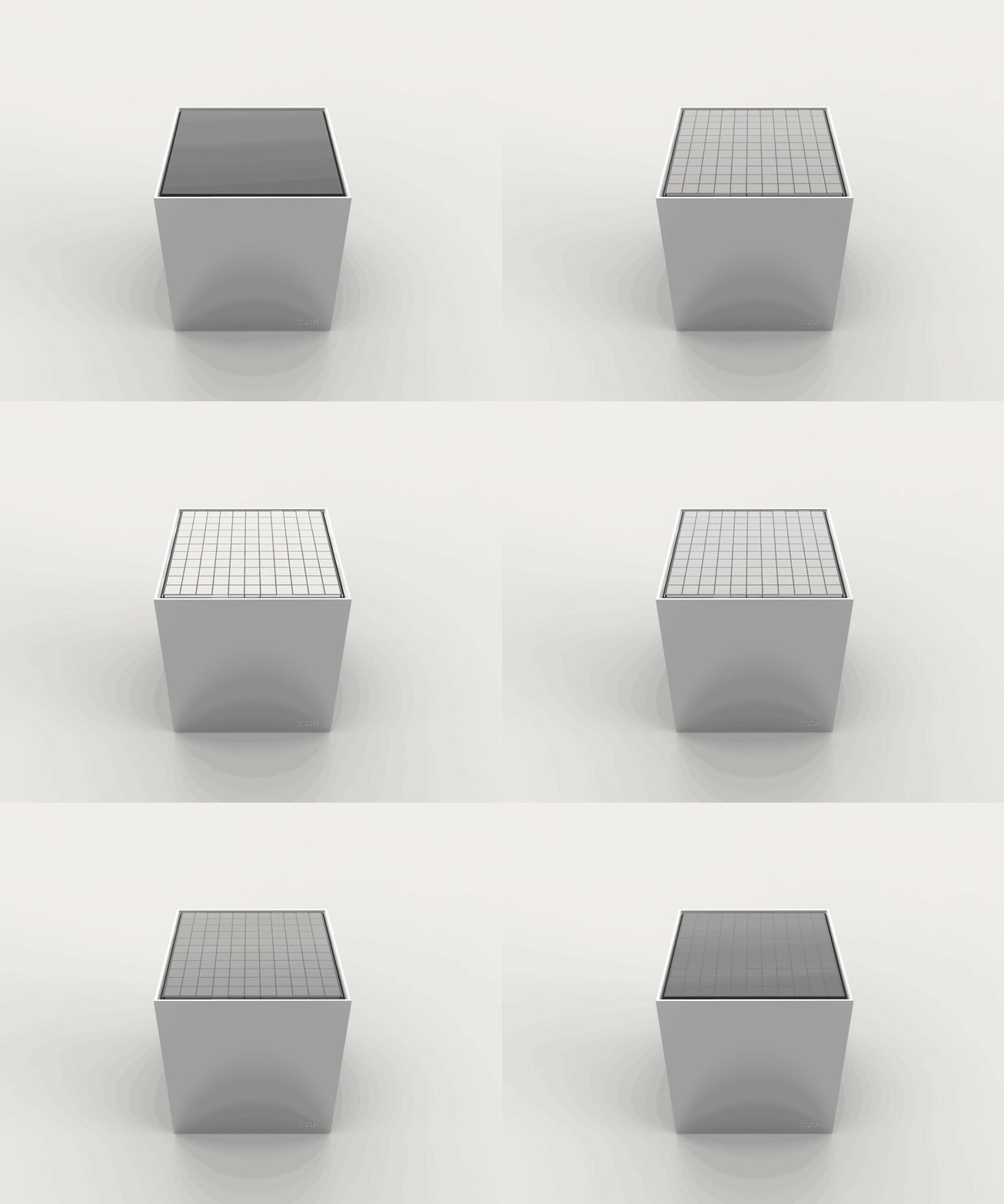
Enclosure study
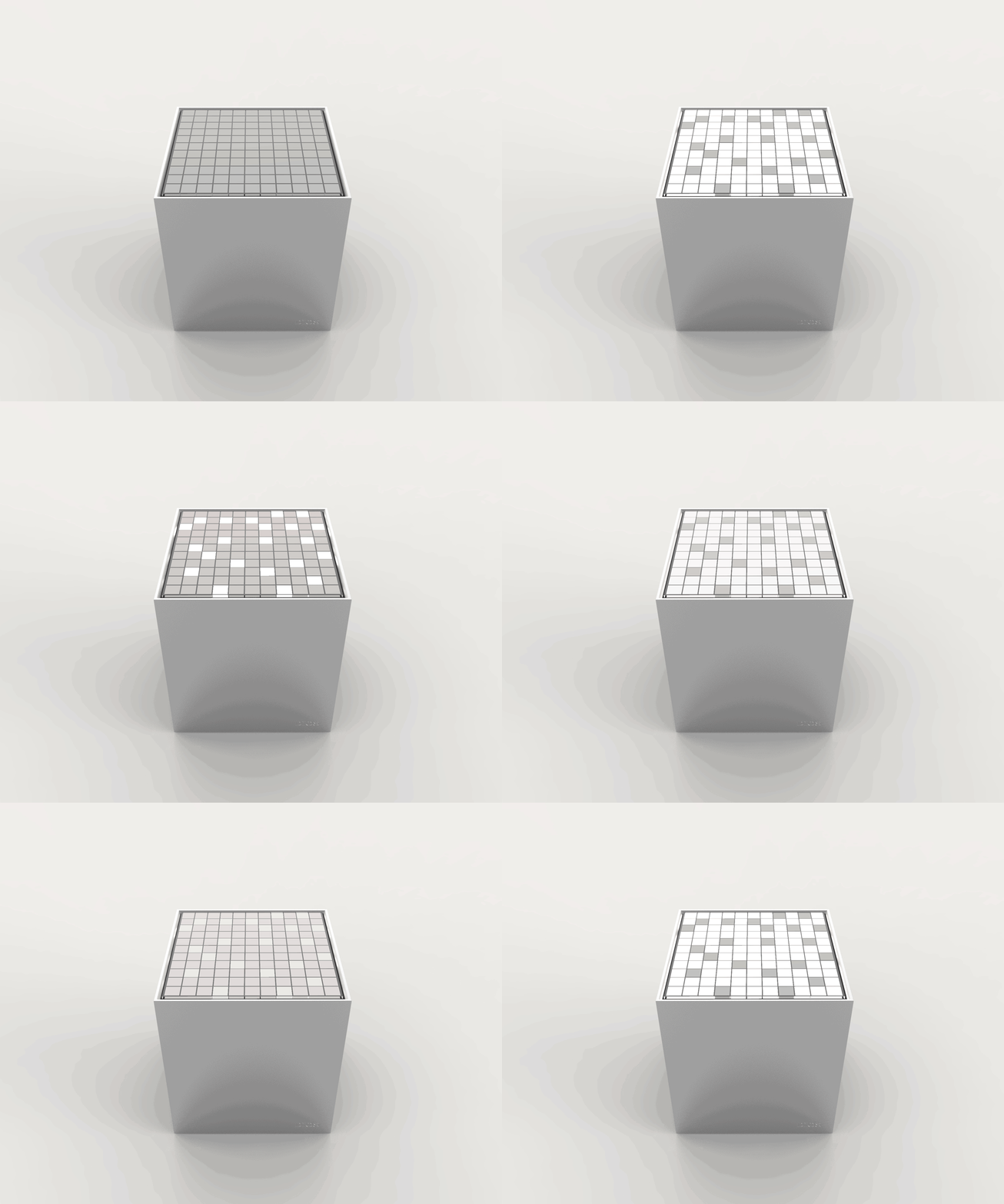
Aperture study
Enclosure directions
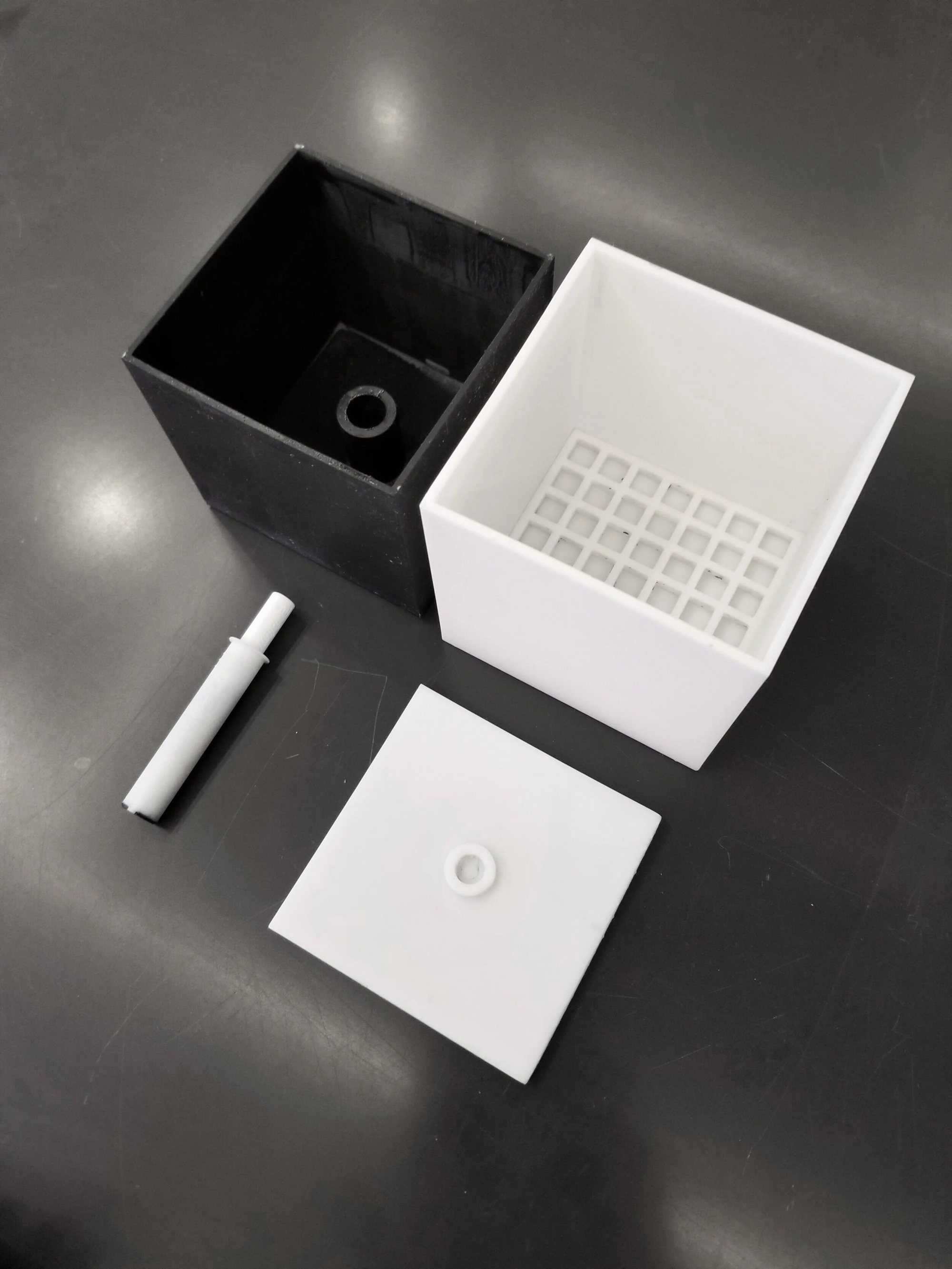
Printed prototype — early
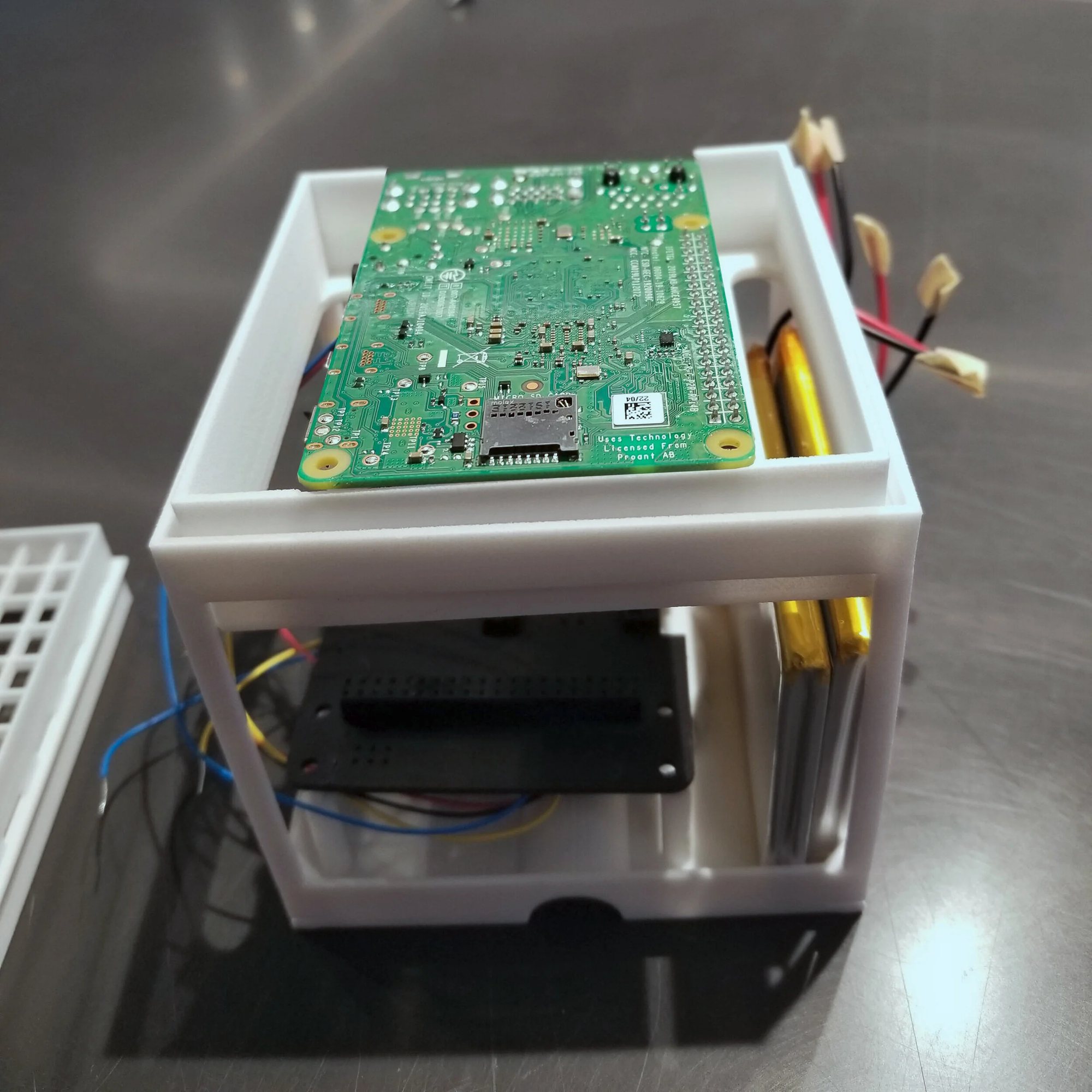
Baffle fit check
Lit matrix evaluation
Assembled revision
Prototype — running
Result
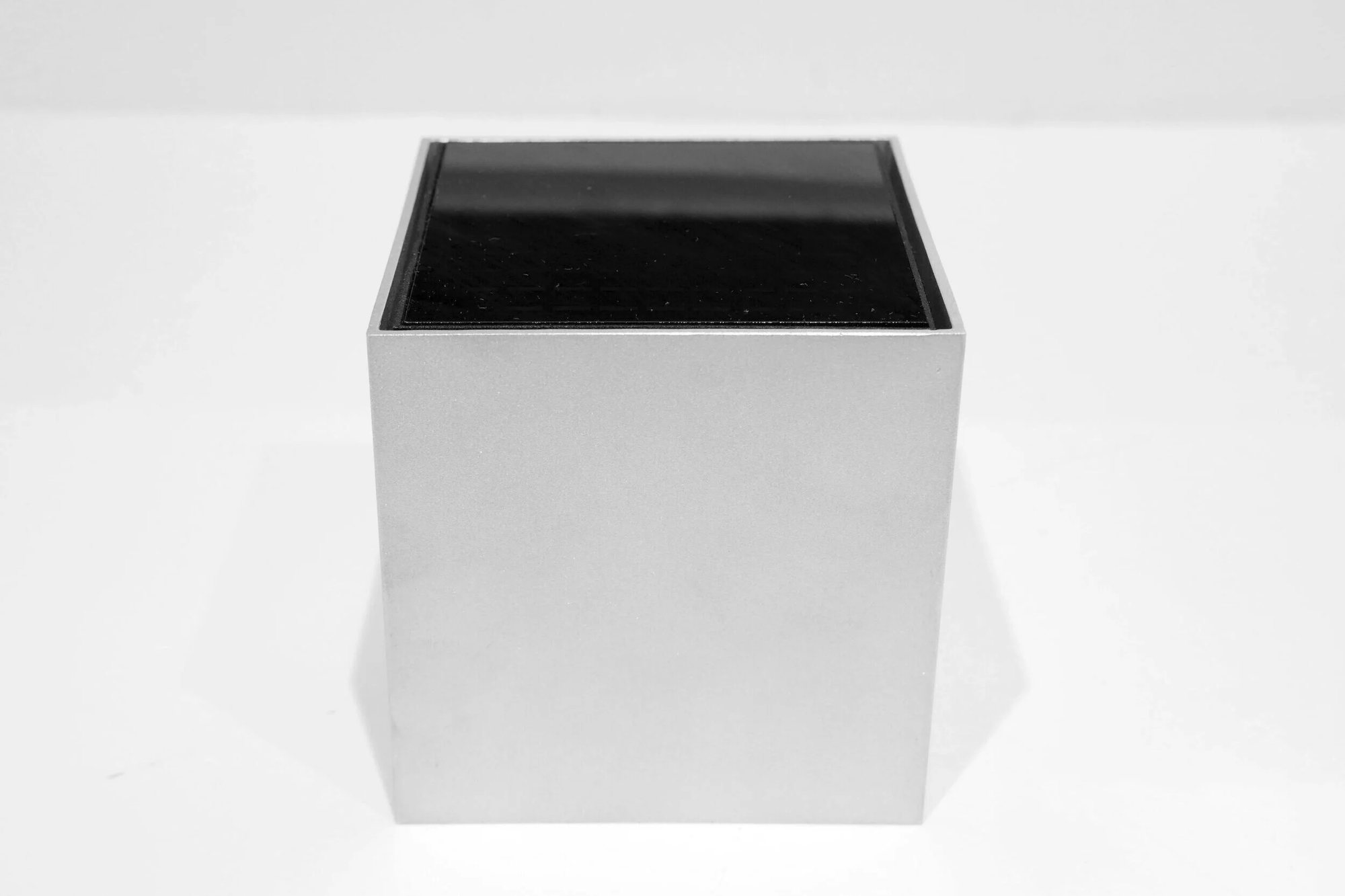
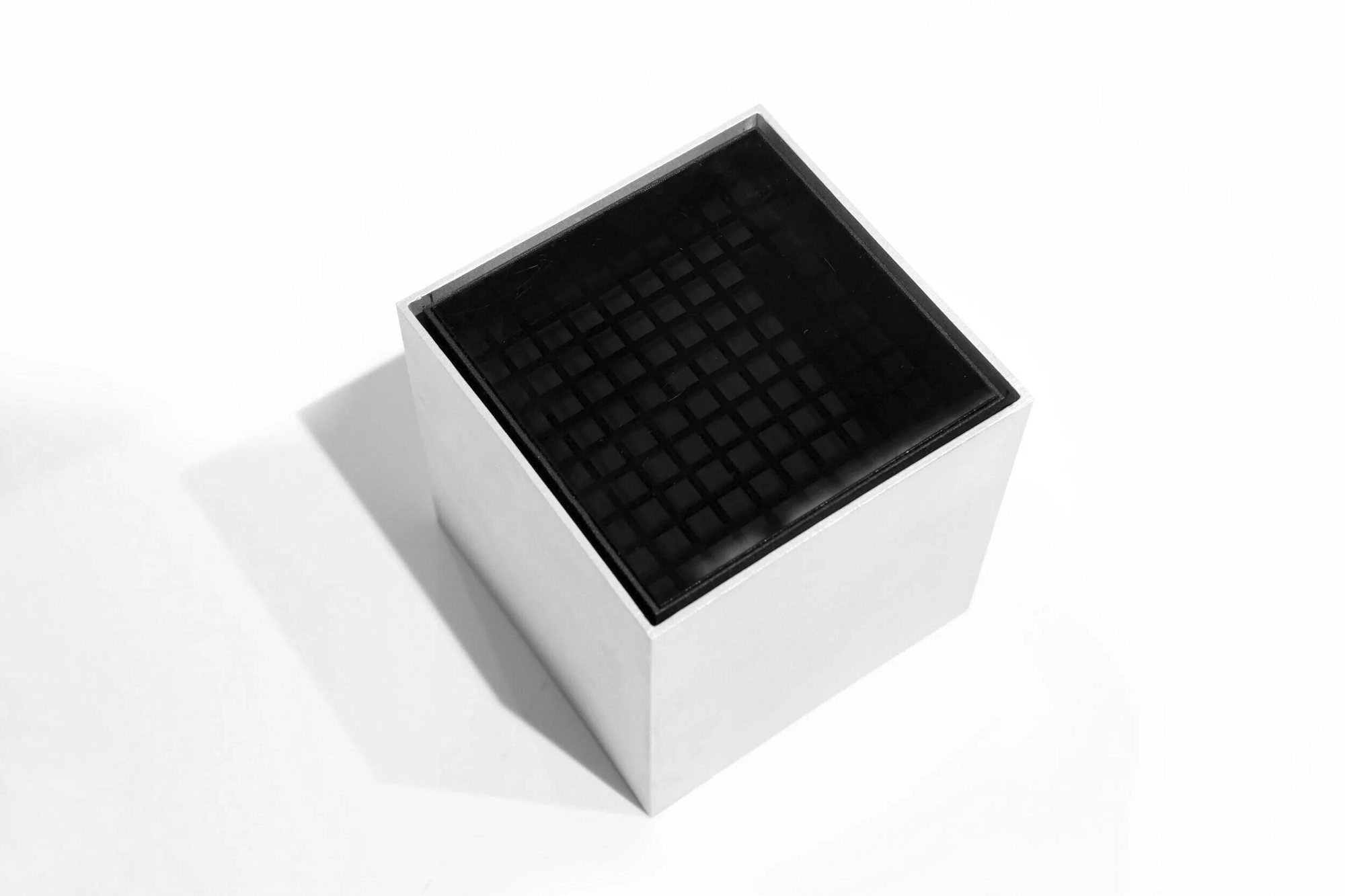
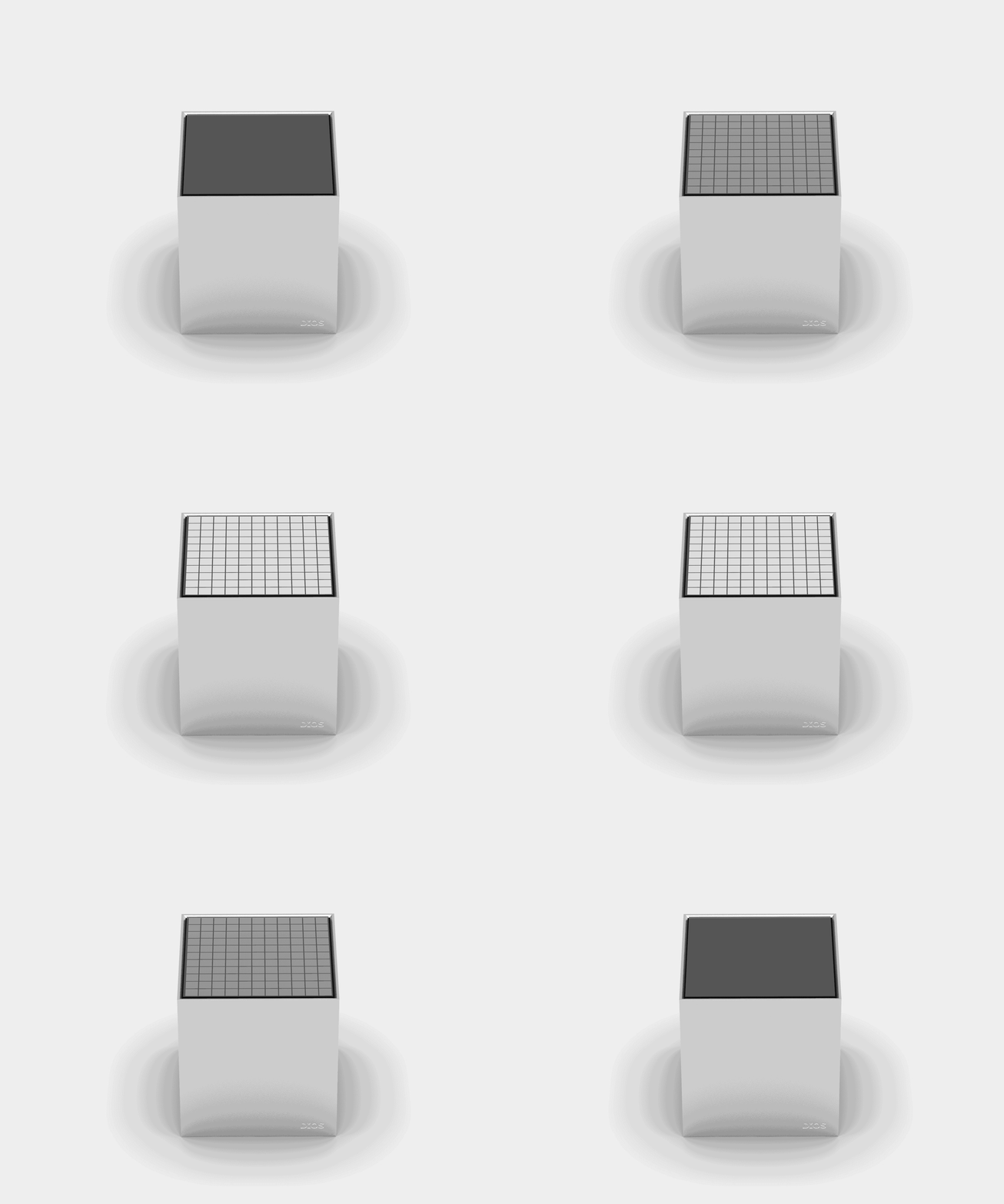
The resolved unit holds a full networked display stack inside a cube with four uninterrupted faces. The honeycomb baffle keeps pixels legible as discrete squares rather than a wash, the internal chassis lets the whole electronics assembly install as one cartridge, and fan exhaust routes through enclosure shadow gaps so no grille appears on any visible surface.
Outcomes
Technology
Subsystems
Details