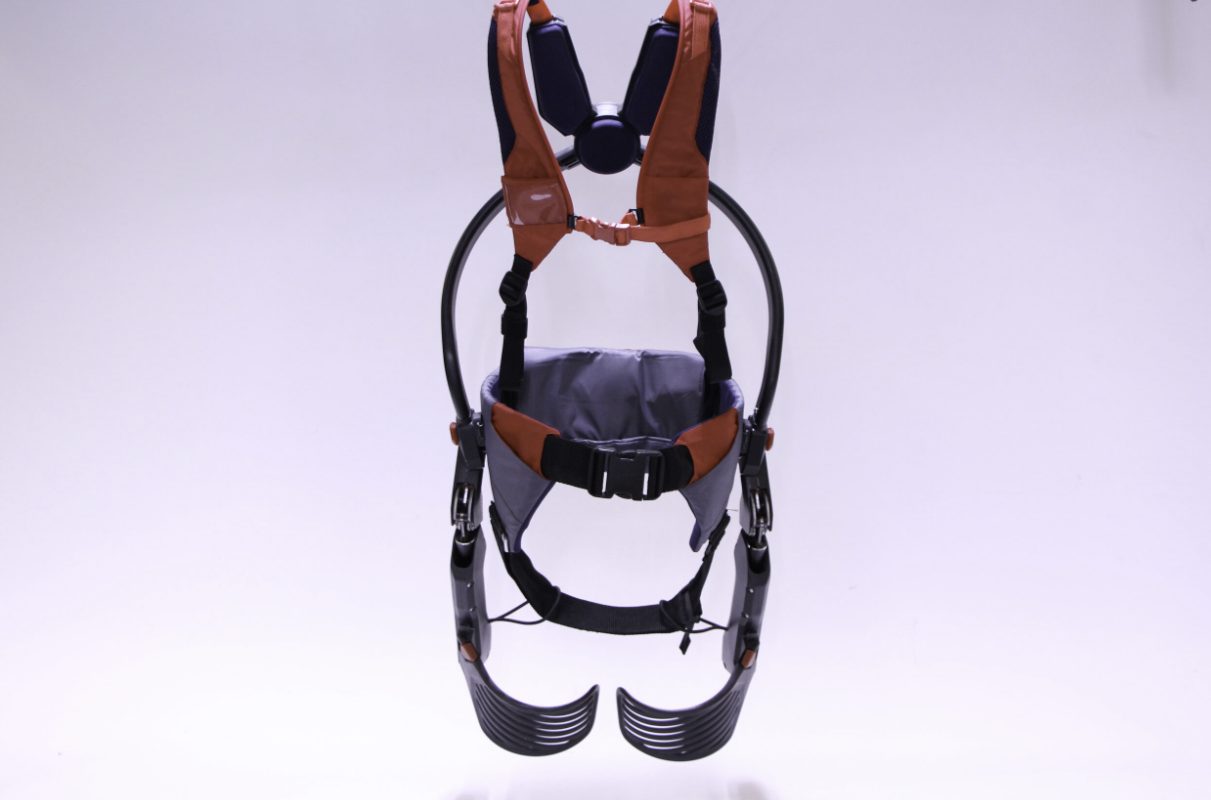
A passive wearable exoskeleton that routes upper-body load away from the spine — harness to compliant back structure to sprung thigh pads, with no motors, batteries or power draw.
Powered exoskeletons solve assistance with actuators, and inherit everything that comes with them: mass, batteries, charge cycles, service, cost. A passive system has none of that to lean on. Every bit of support has to come from structure and geometry — where the load enters the body, what path it takes, and where it leaves.
The design brief was a full-body wearable that intercepts load at the shoulders and delivers it into the thighs, bypassing the lumbar spine on the way. That meant developing three things in parallel: a rigid kinematic chain that tracks the wearer's movement, a compliant element to store and return energy through a bend, and a soft-goods system that keeps the whole assembly located on a body without pressure points. It was taken through multiple fabricated prototypes and worn testing.
Disciplines
Study
The failure mode for load-bearing wearables is not structural. It is abandonment. Anything that pinches at the shoulder, slides at the waist, or resists a natural stride gets removed within the first hour, and no amount of measured support matters after that.
That reframed the problem as an interface problem rather than a frame problem. Where does the harness actually bear? What happens to the structure when the wearer walks instead of bends? Can the thigh interface stay seated through a full range of hip motion without being strapped tight enough to restrict it? The mechanism had to disappear into normal movement and only make itself felt under load.
Strategy
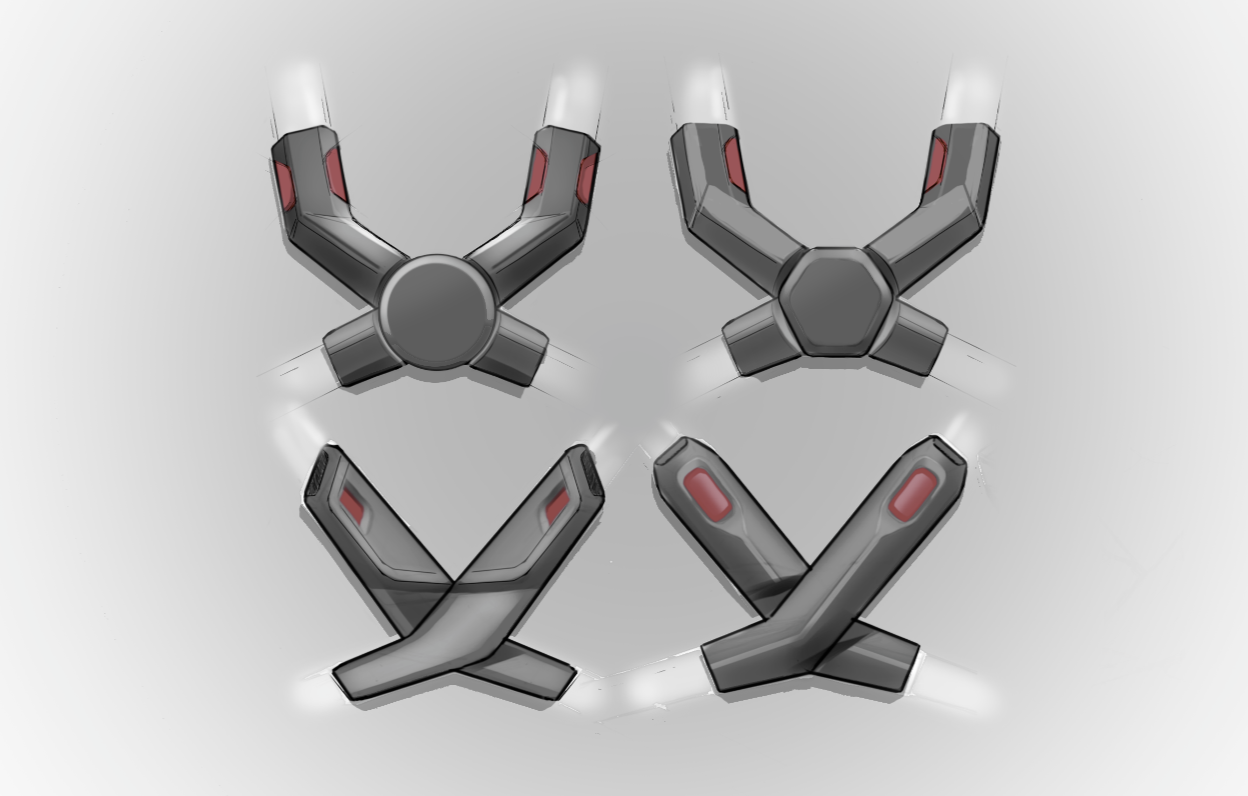
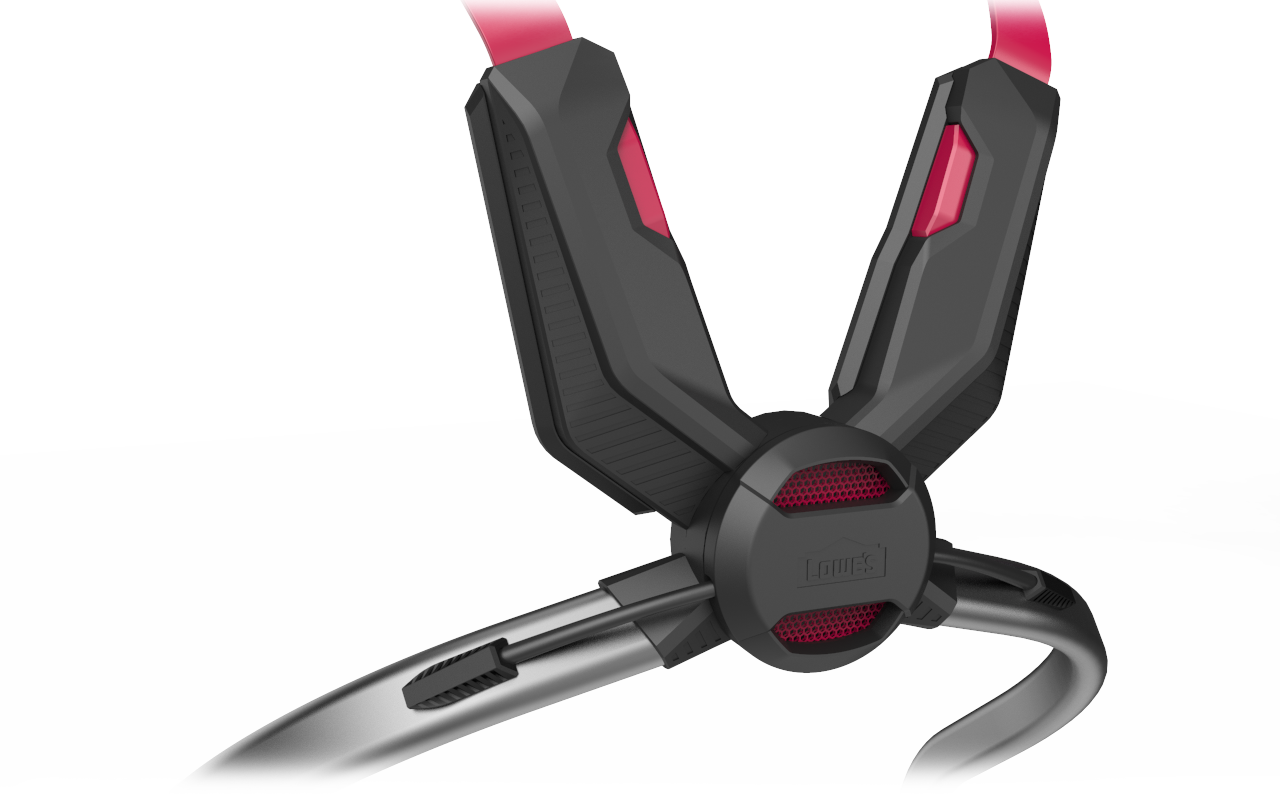
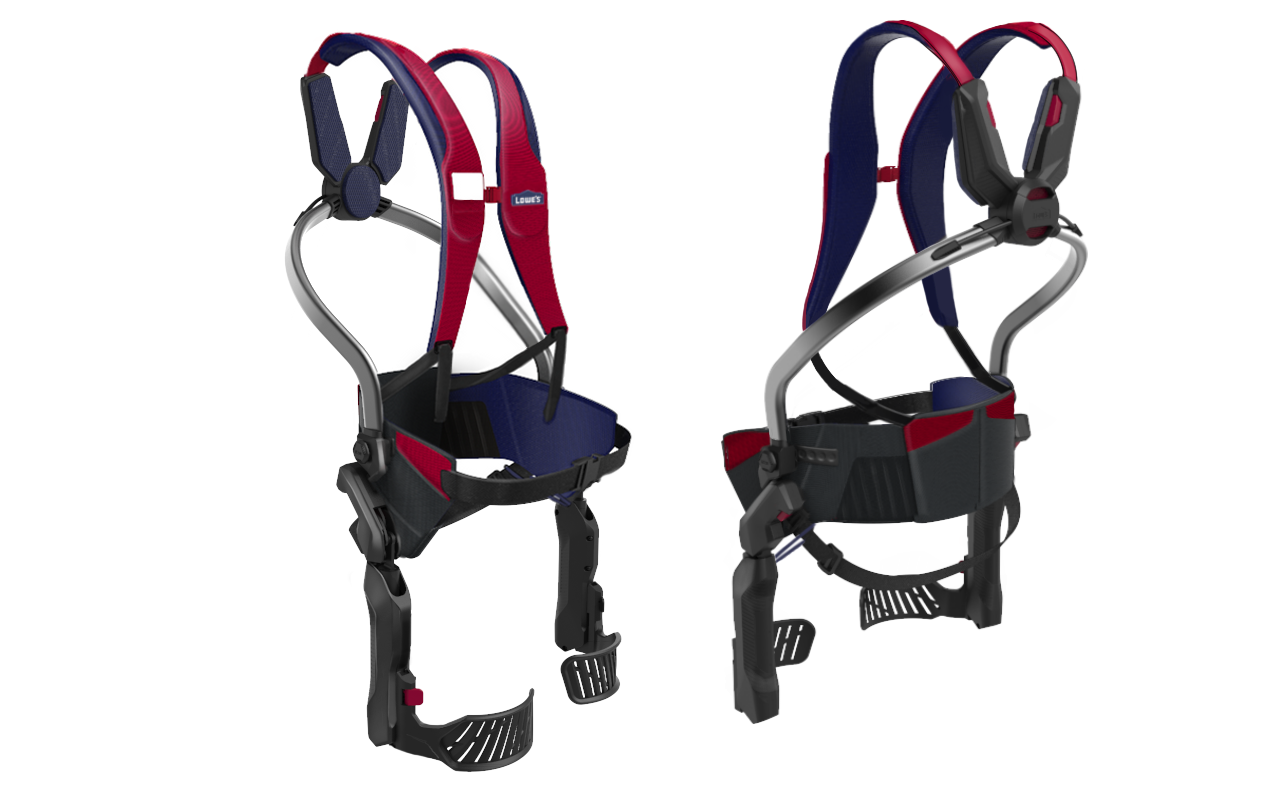
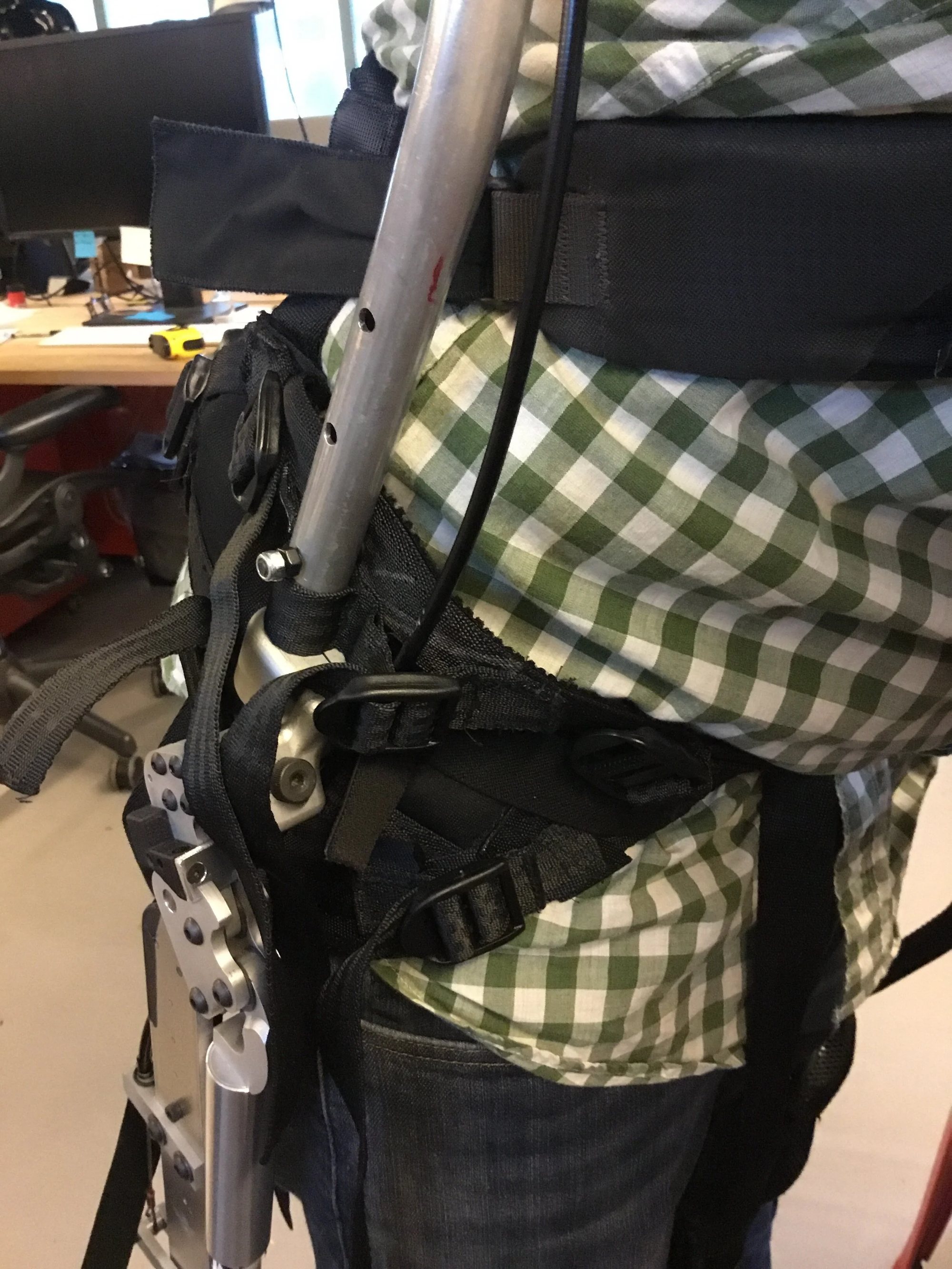
The resolved architecture reads as a single path. Padded shoulder straps collect load and hand it to a curved back structure that follows the spine without contacting it. A waist belt locates the assembly on the pelvis and takes lateral position out of the shoulders. From there, articulated side members carry the load down past the hip joint to the thighs.
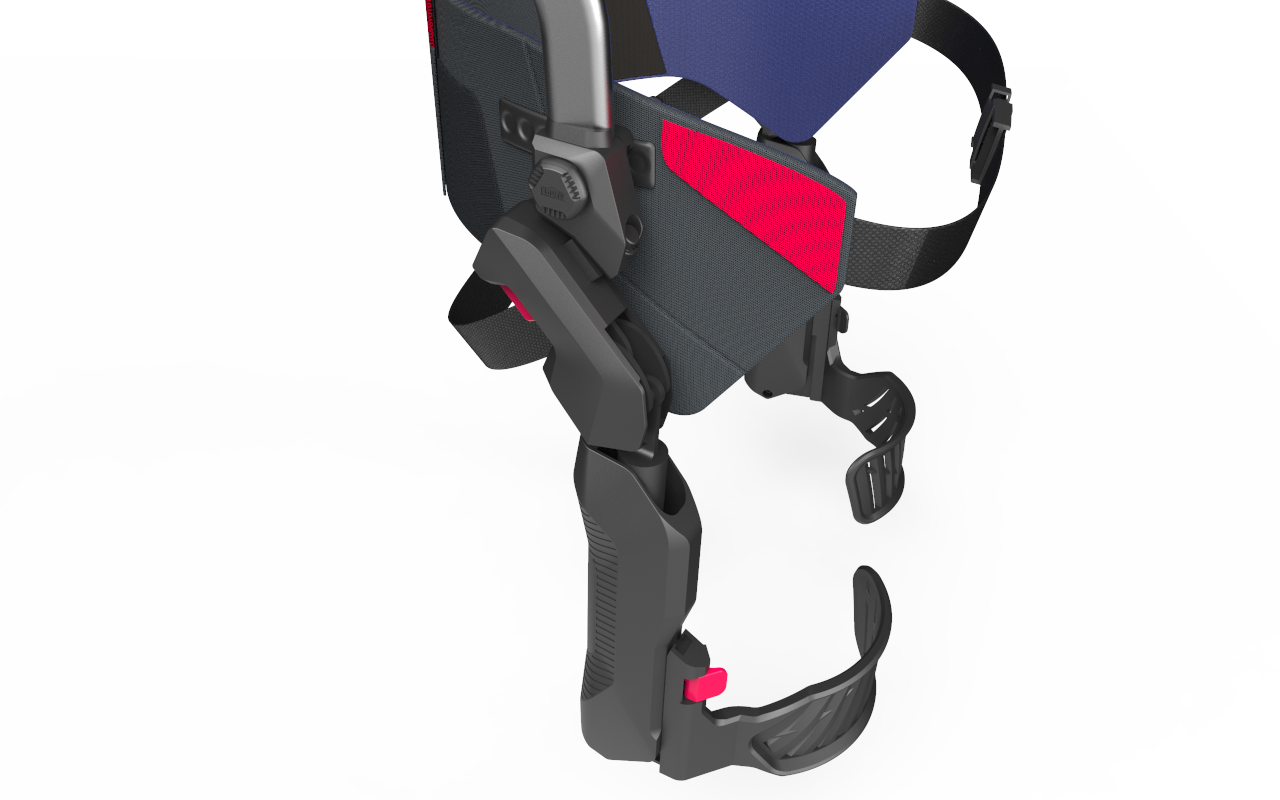
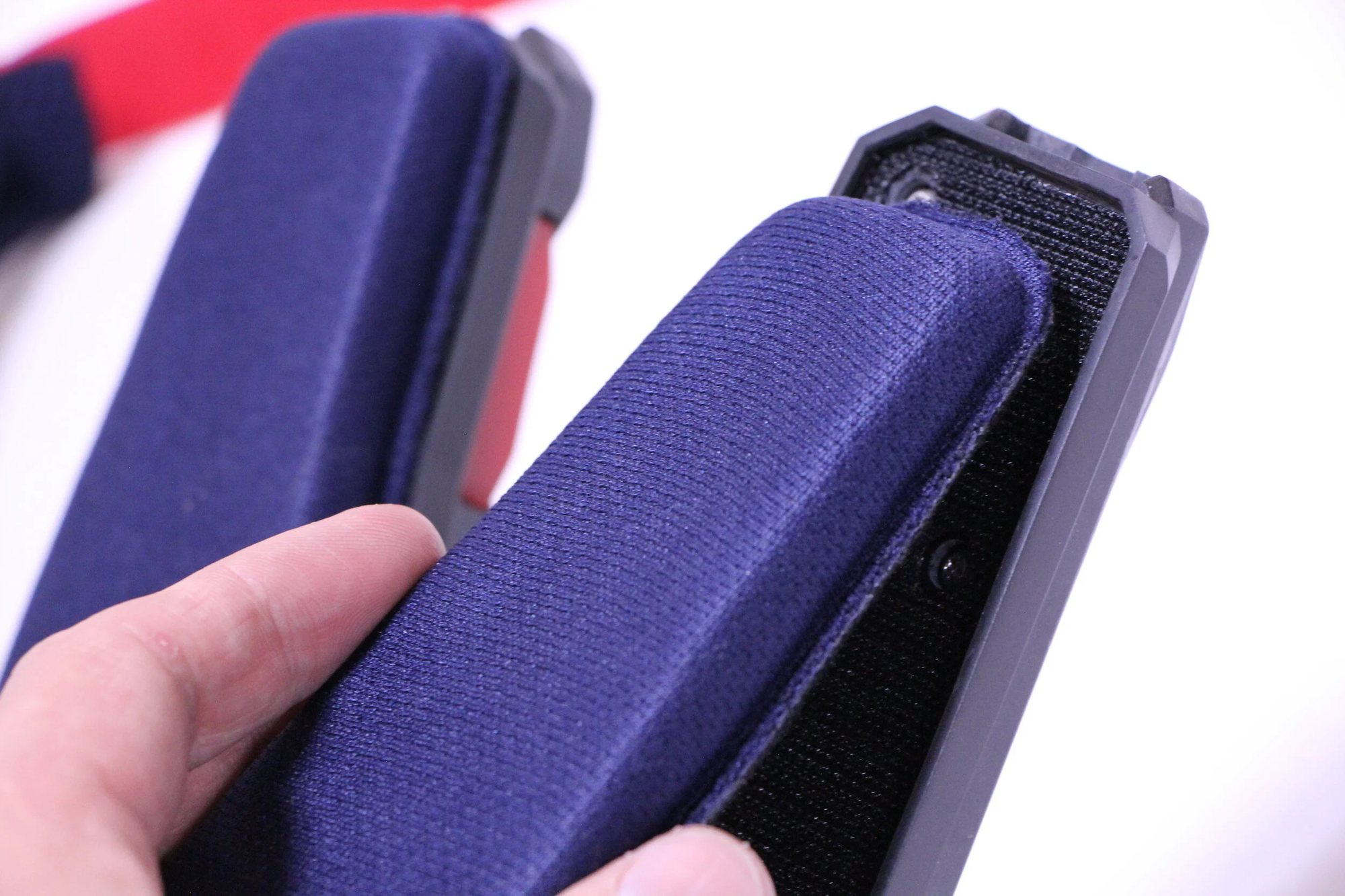
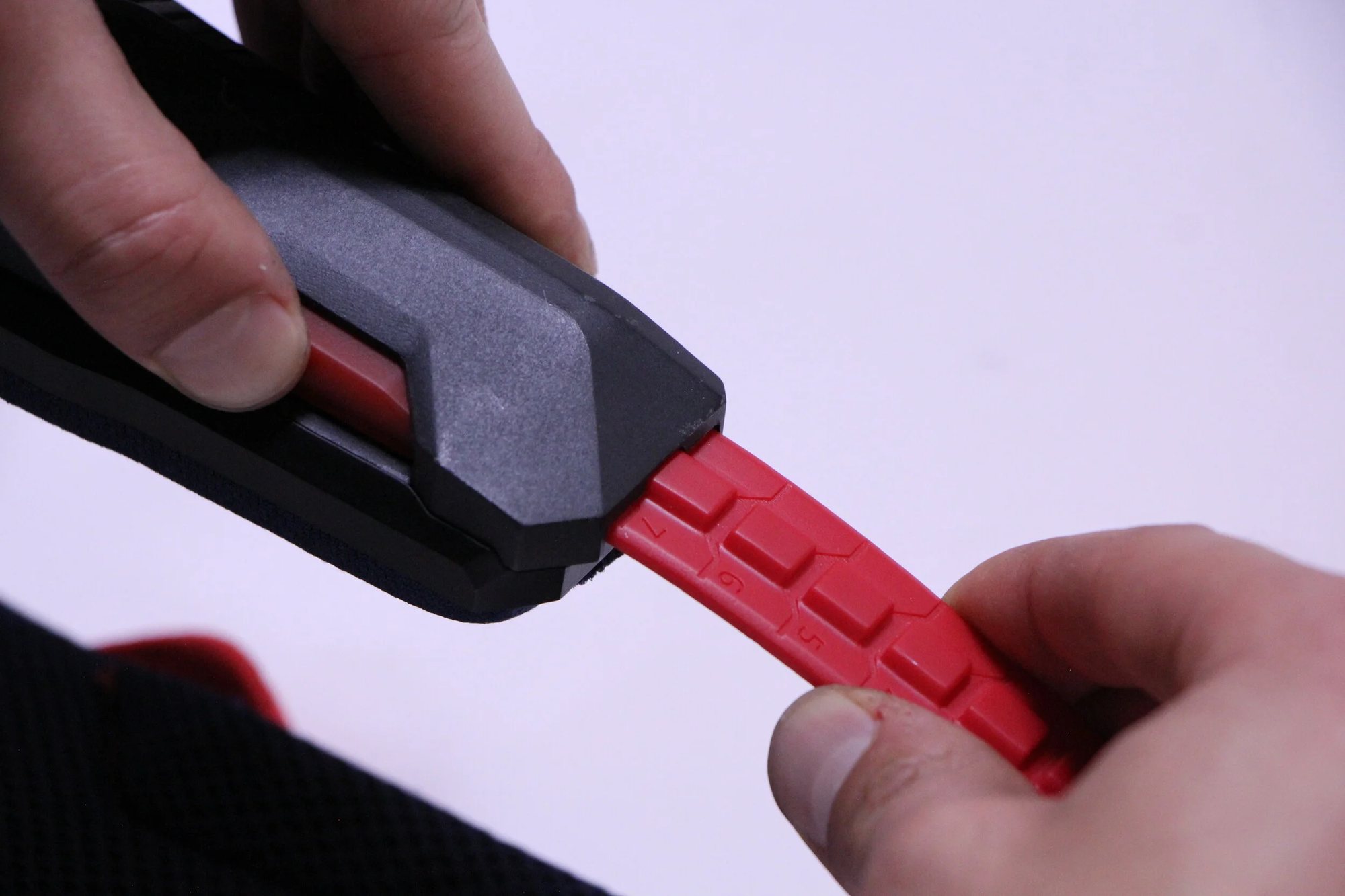
The termination is where the compliance lives: ribbed leaf-sprung thigh pads that flex progressively, spreading contact pressure across a broad area and returning stored energy as the wearer straightens. Wrapping all of it, a soft-goods system in leather-look facings and technical textile handles every surface that touches the body — developed as its own study across multiple material sets.
Leg assembly
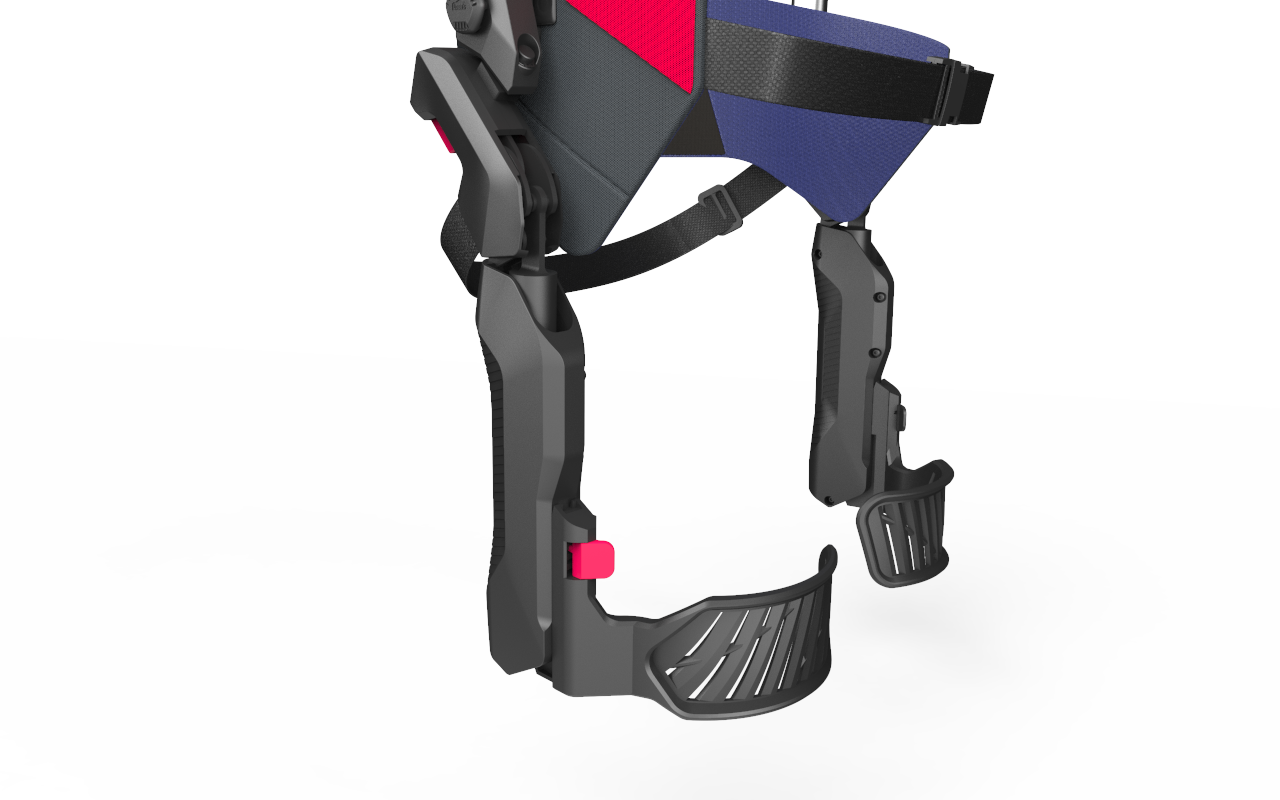
Thigh pad — sprung
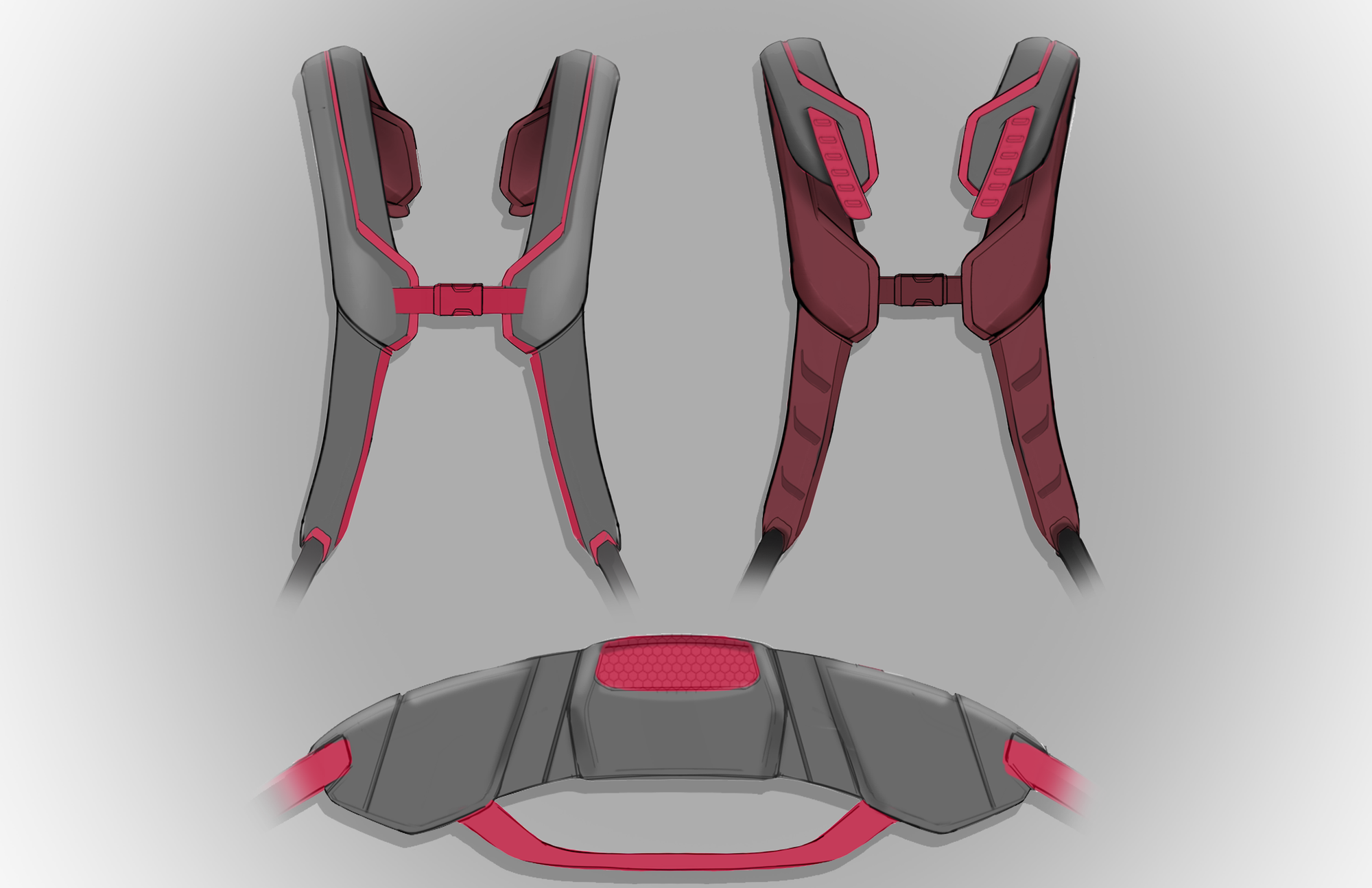
Textile study — 01
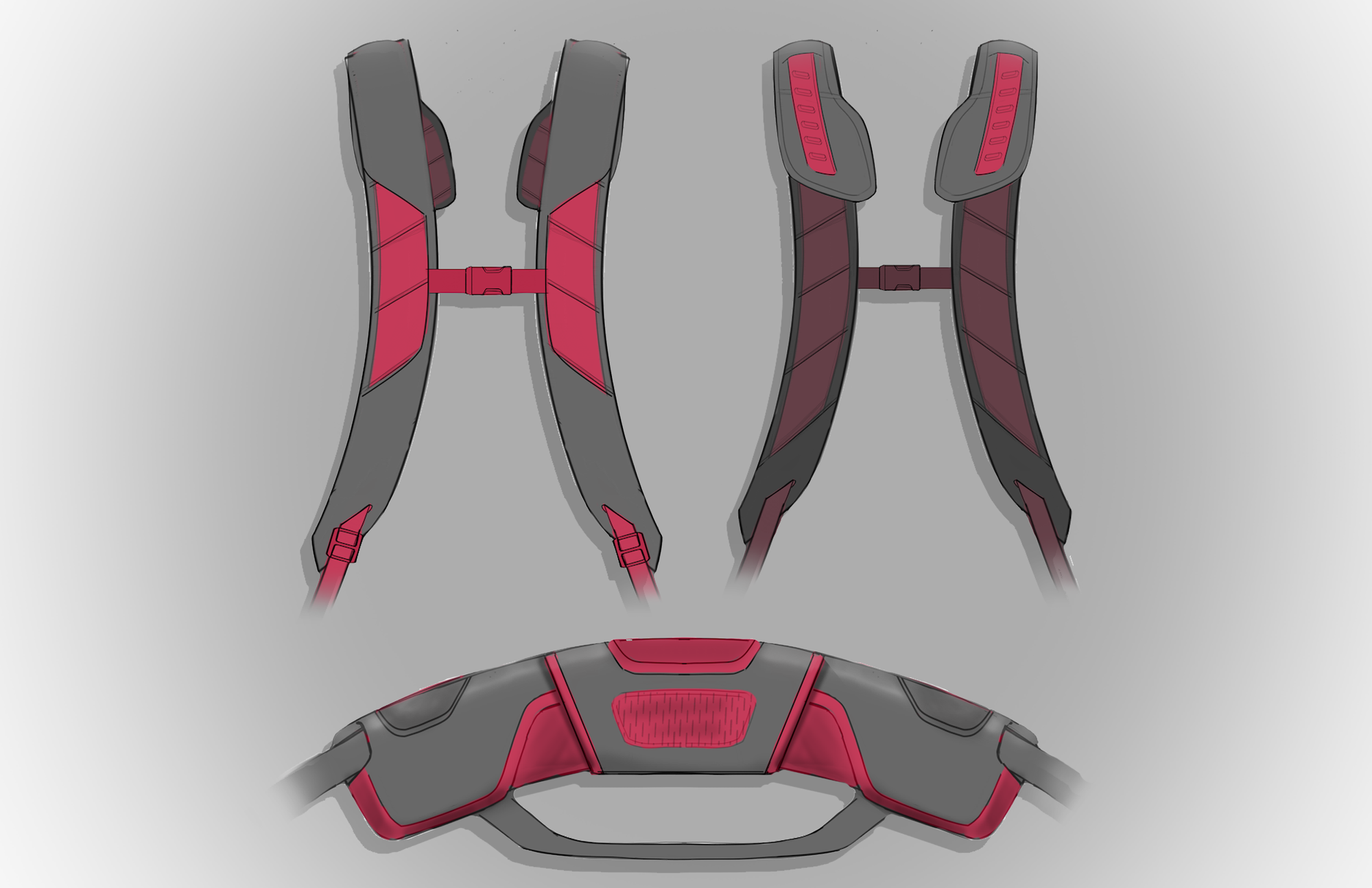
Textile study — 02
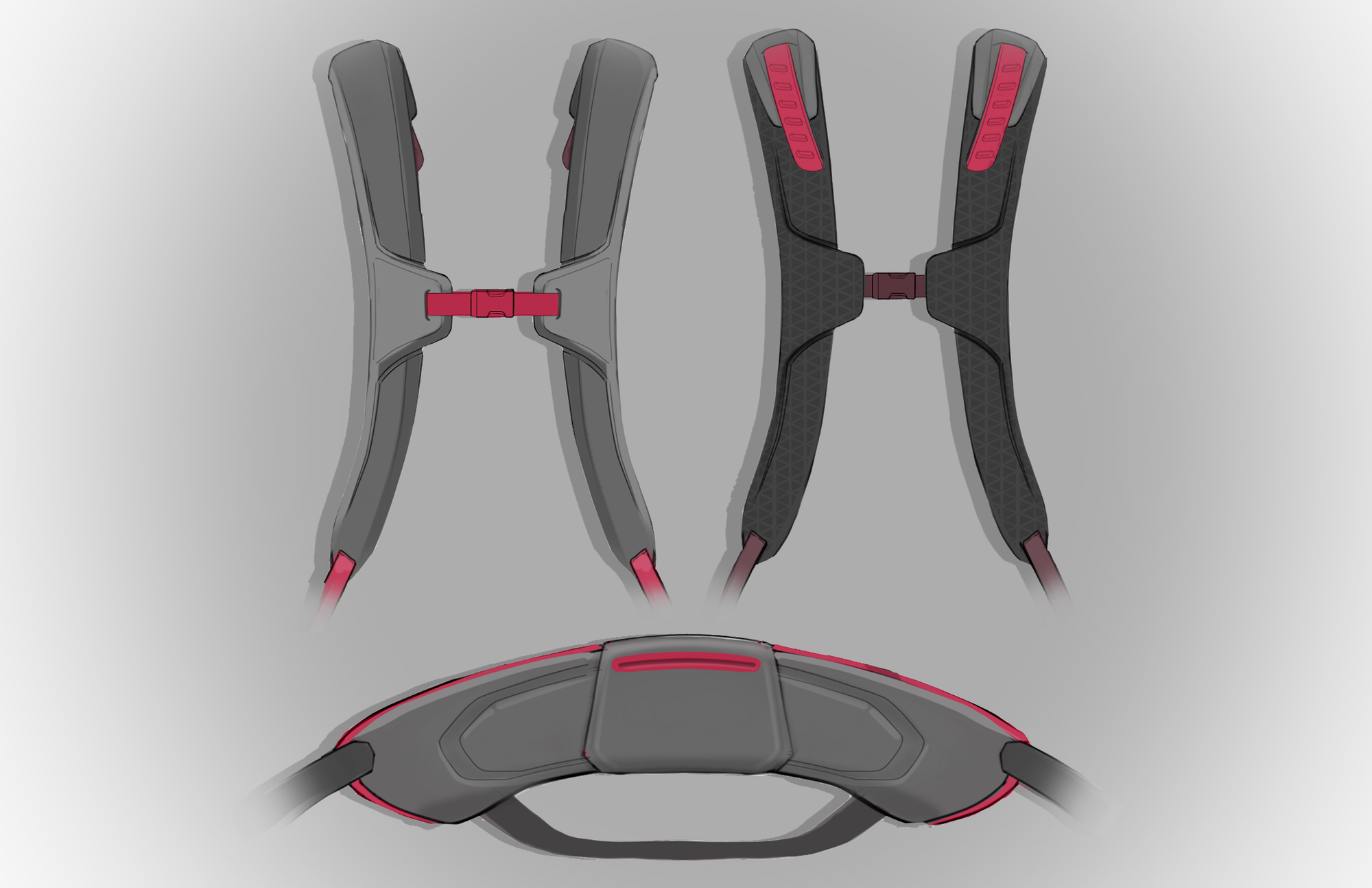
Textile study — 03
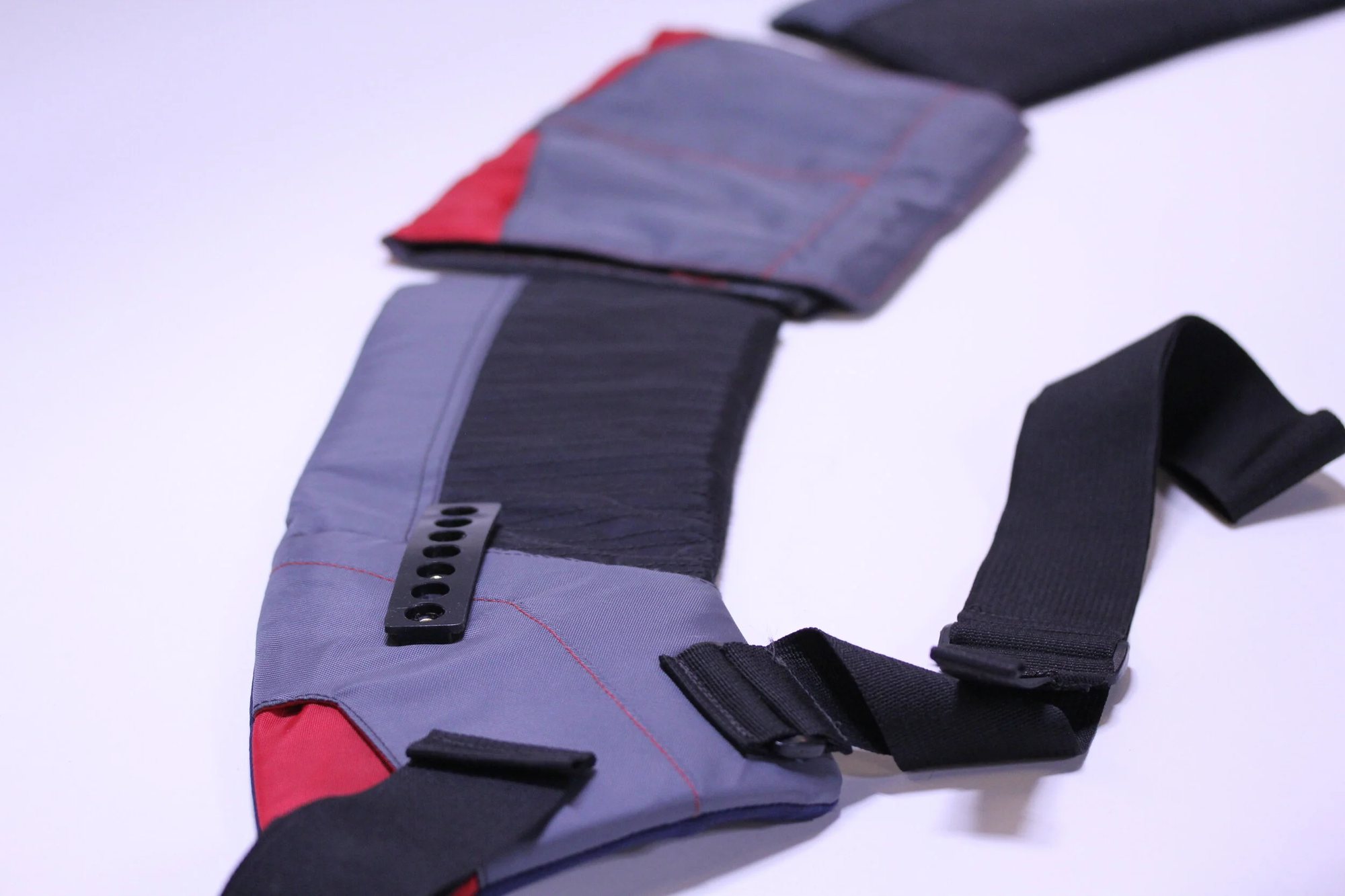
Prototype build — 01
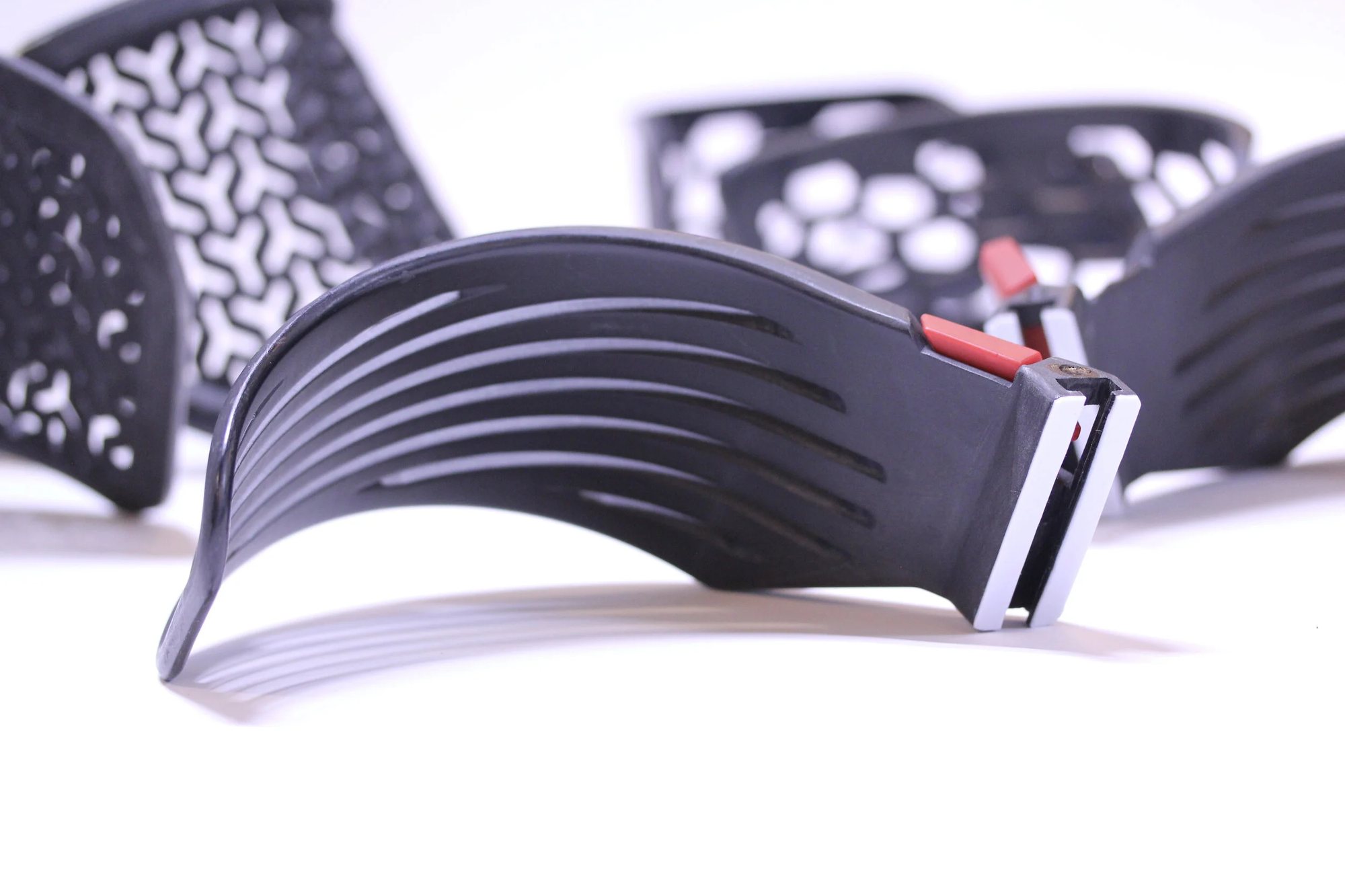
Prototype build — 02
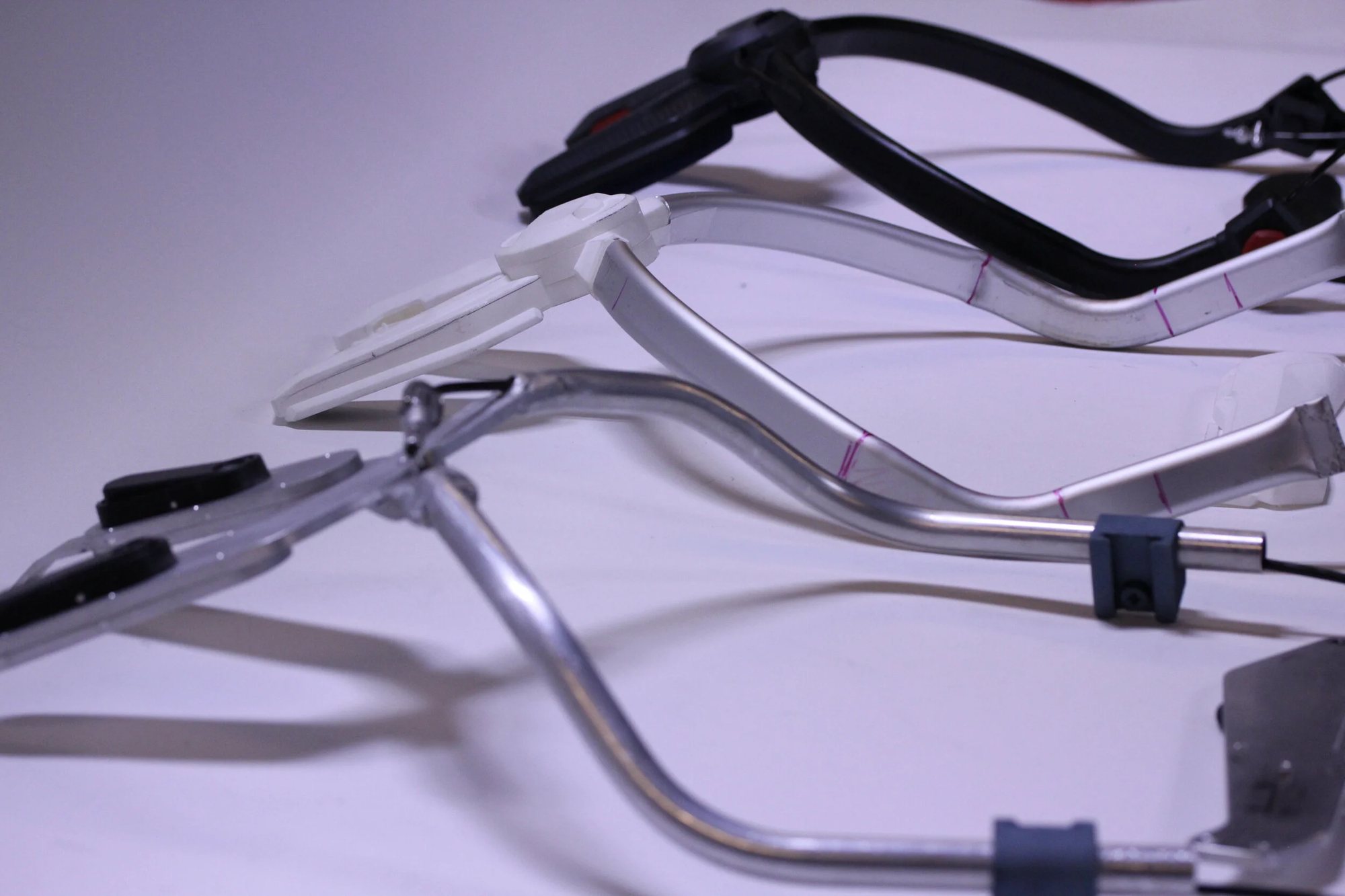
Prototype build — 03
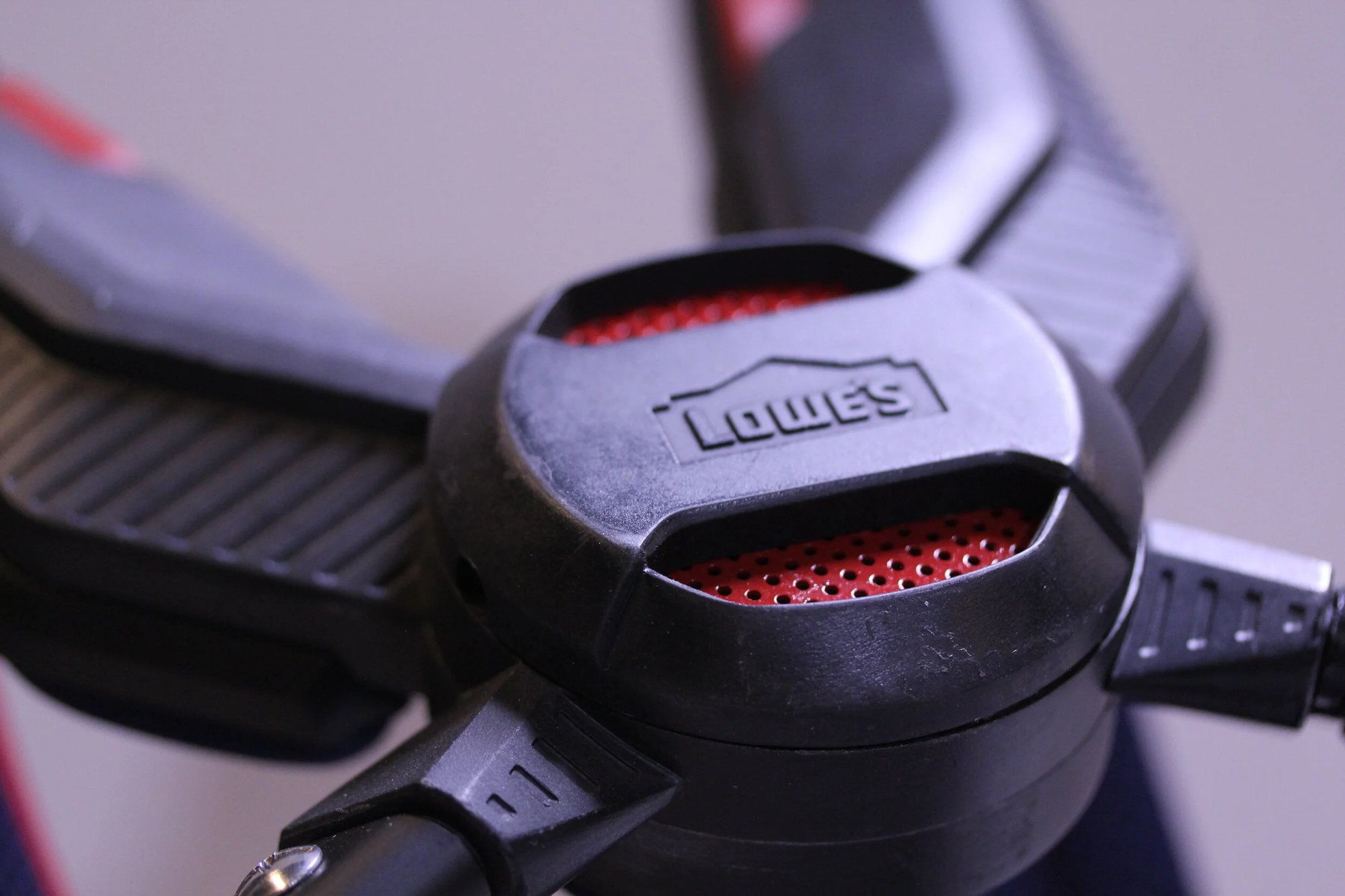
Prototype build — 04
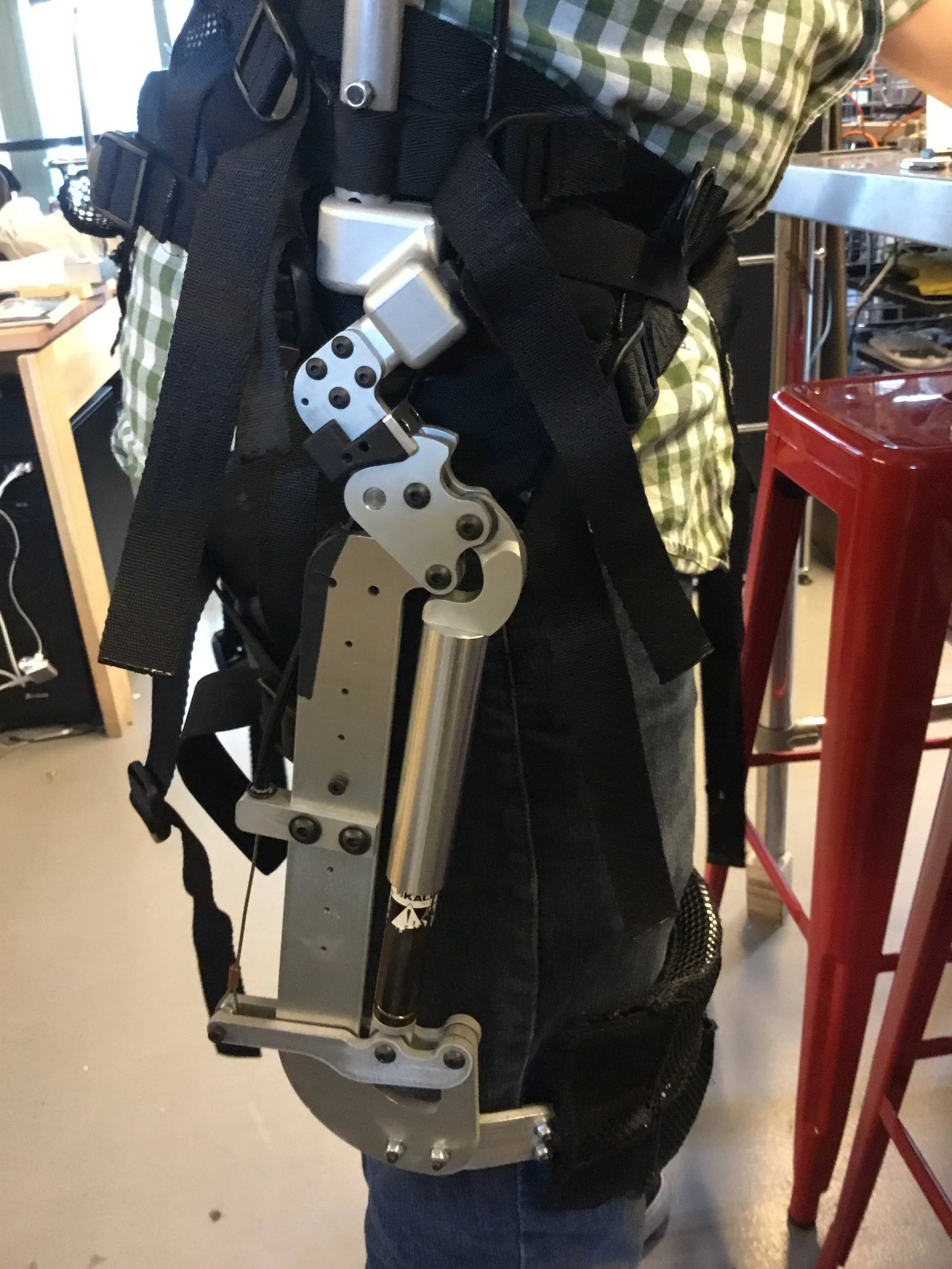
Component detail
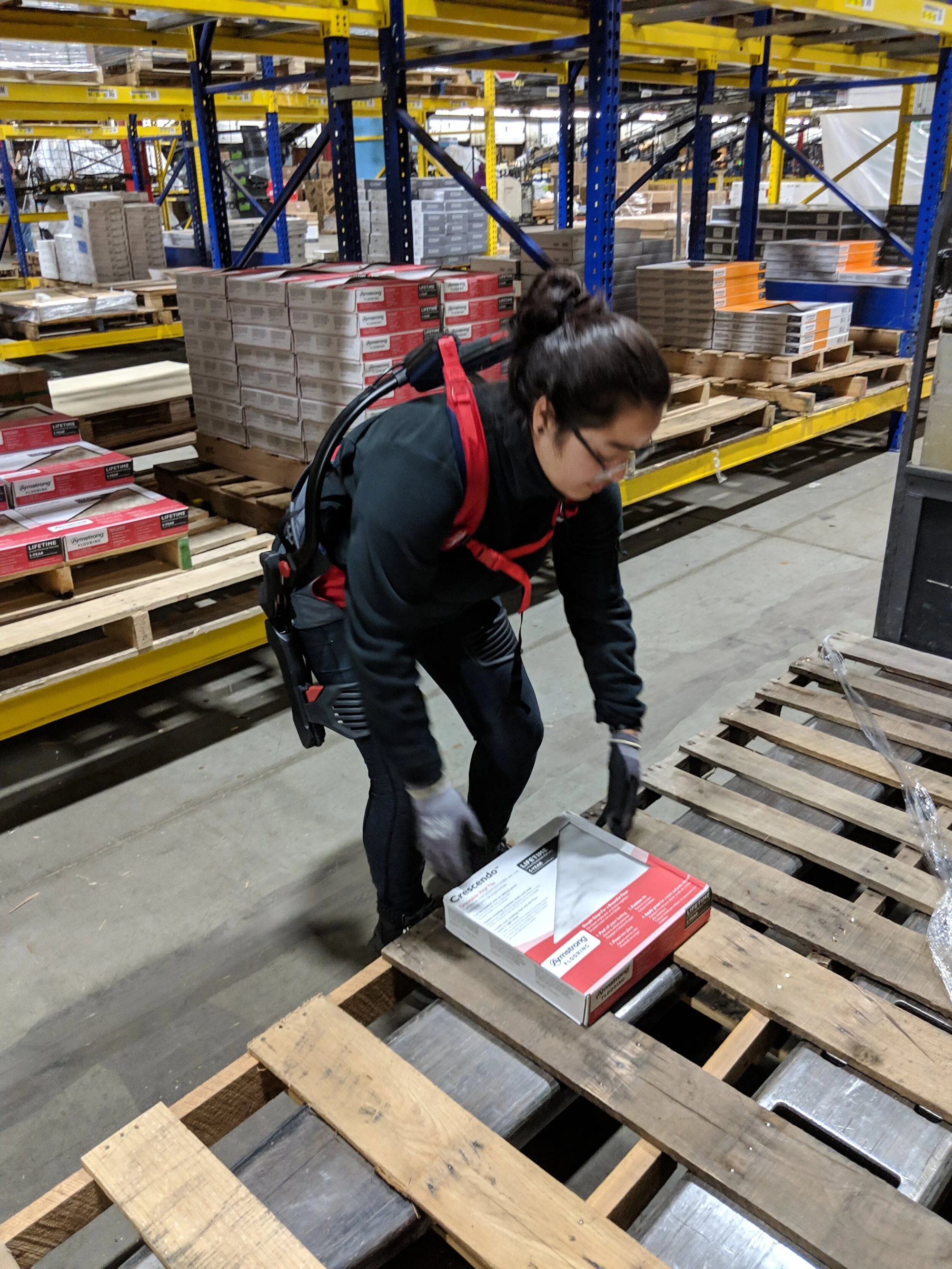
Soft goods integration
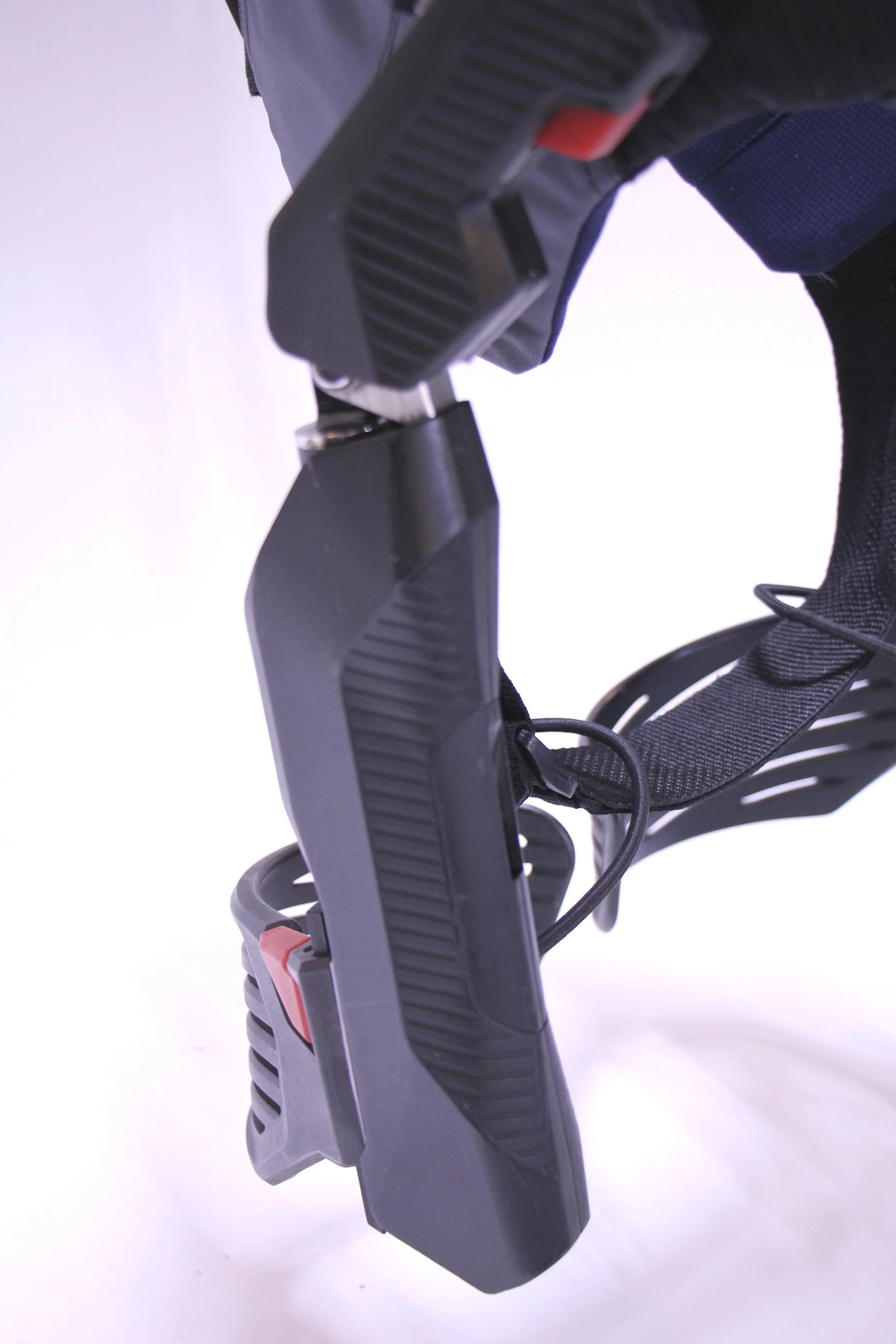
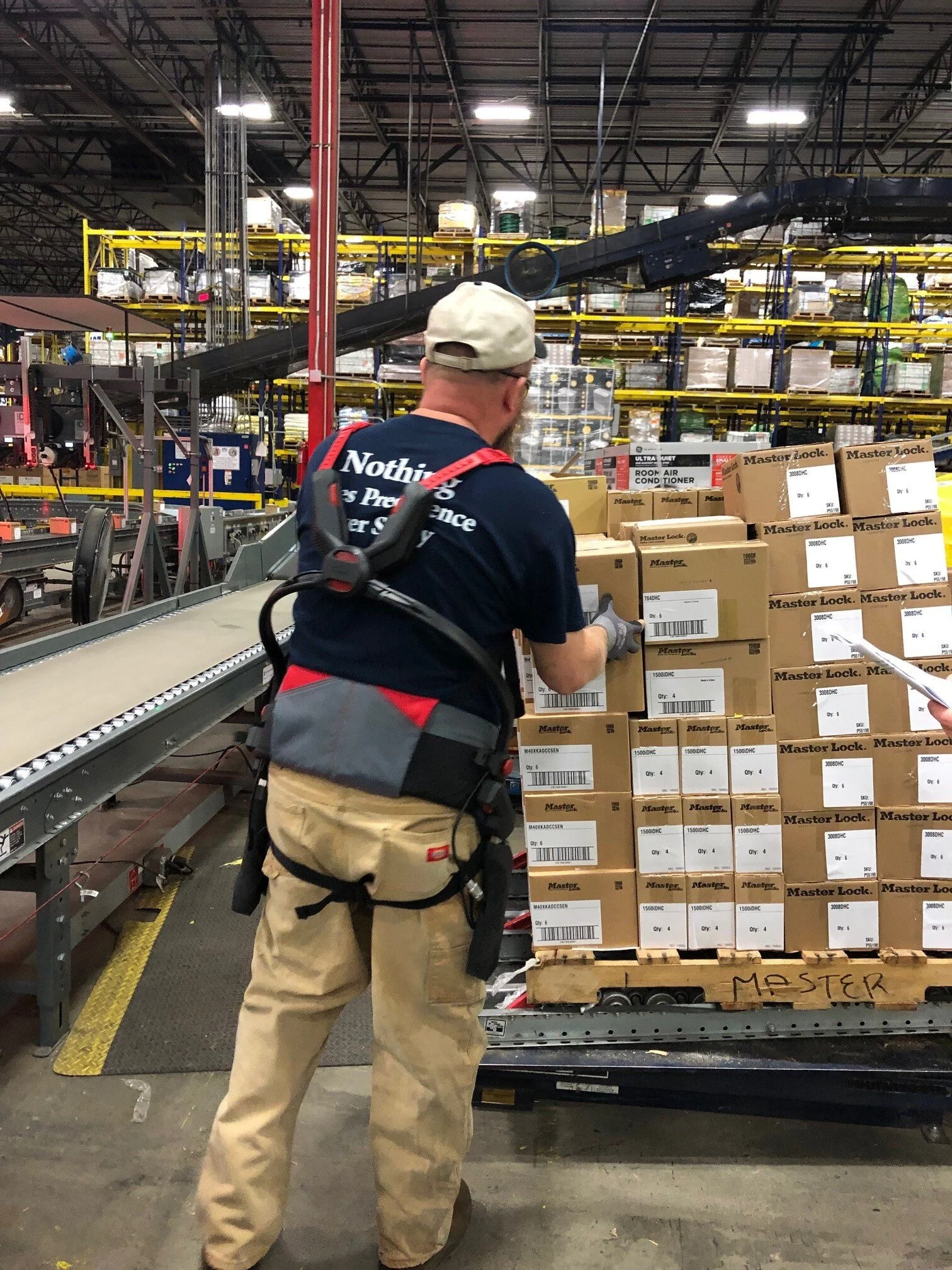
Wear testing
Result
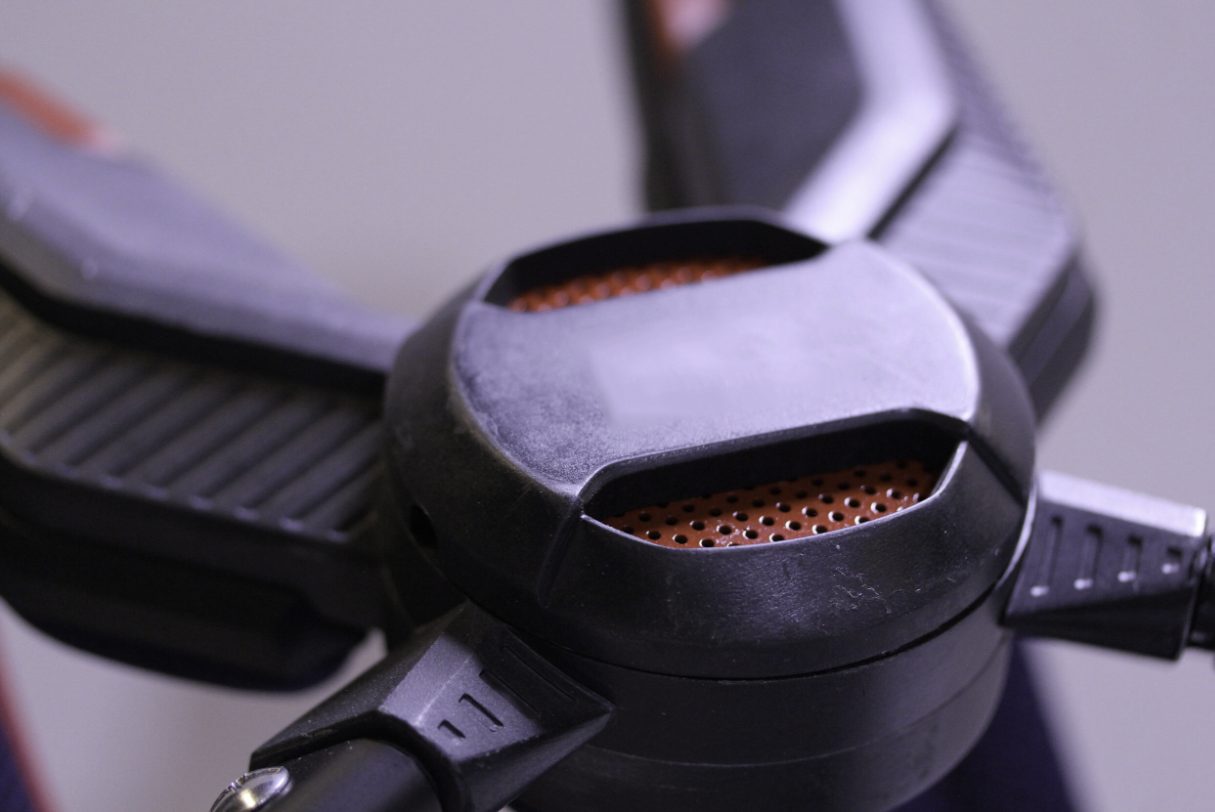
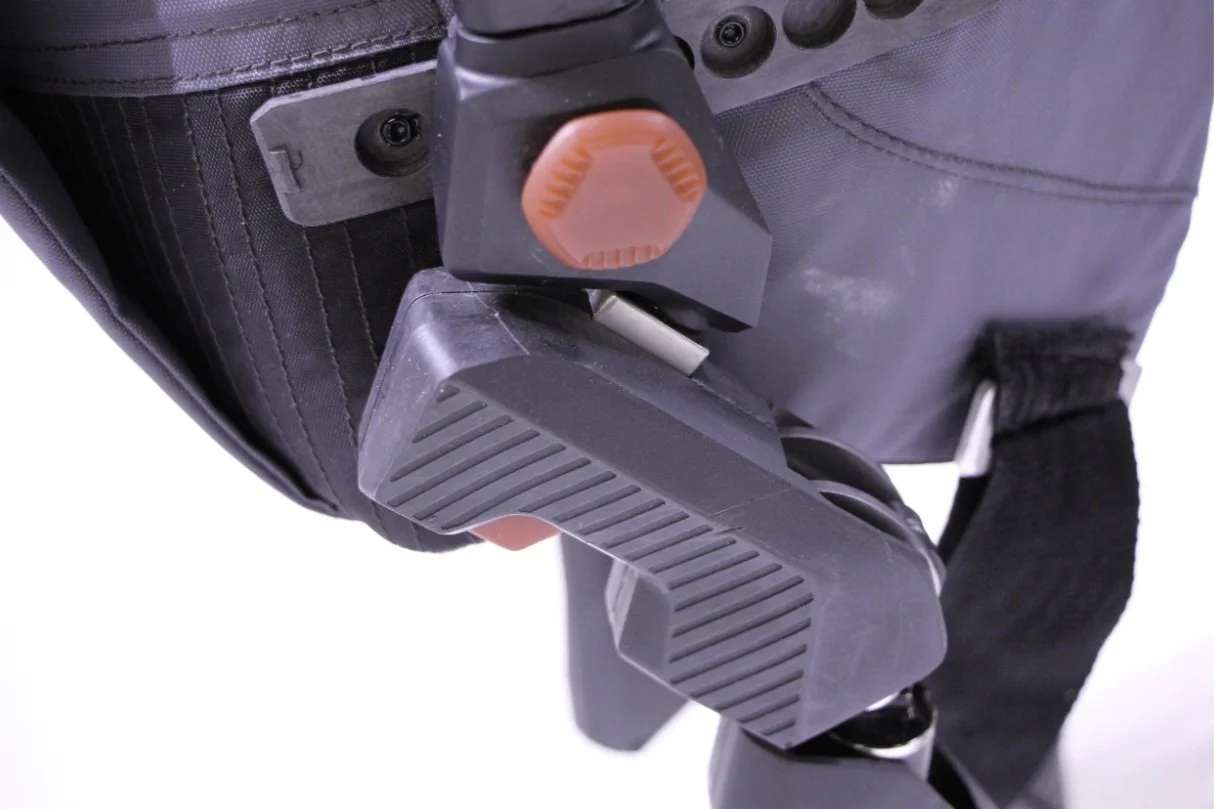
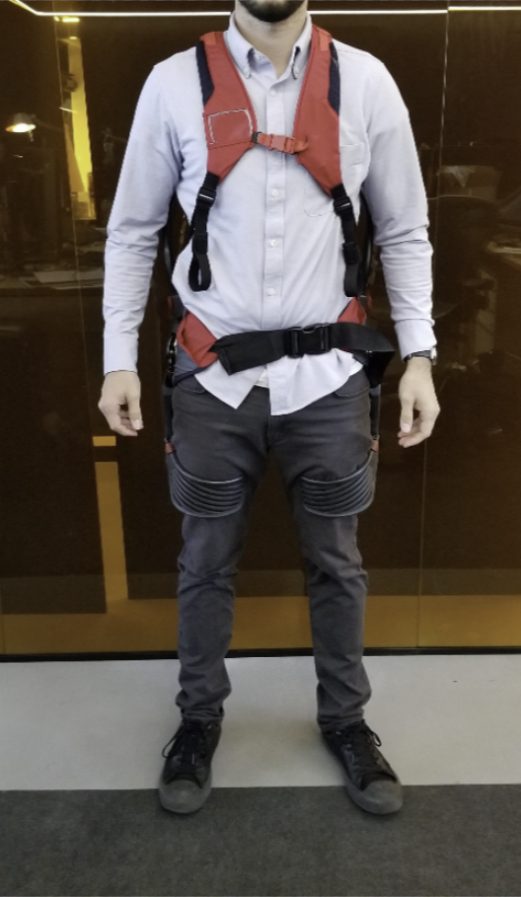
The completed prototype carries load along one continuous path — shoulder harness, compliant back structure clear of the spine, pelvis-located waist belt, articulated side members, sprung thigh pads — using no actuators, batteries or electronics of any kind. Soft goods were developed as a parallel discipline so every body-contact surface is textile rather than hardware, and the assembly stays located through a full stride rather than only in a static bend.
Outcomes
Technology
Subsystems
Details