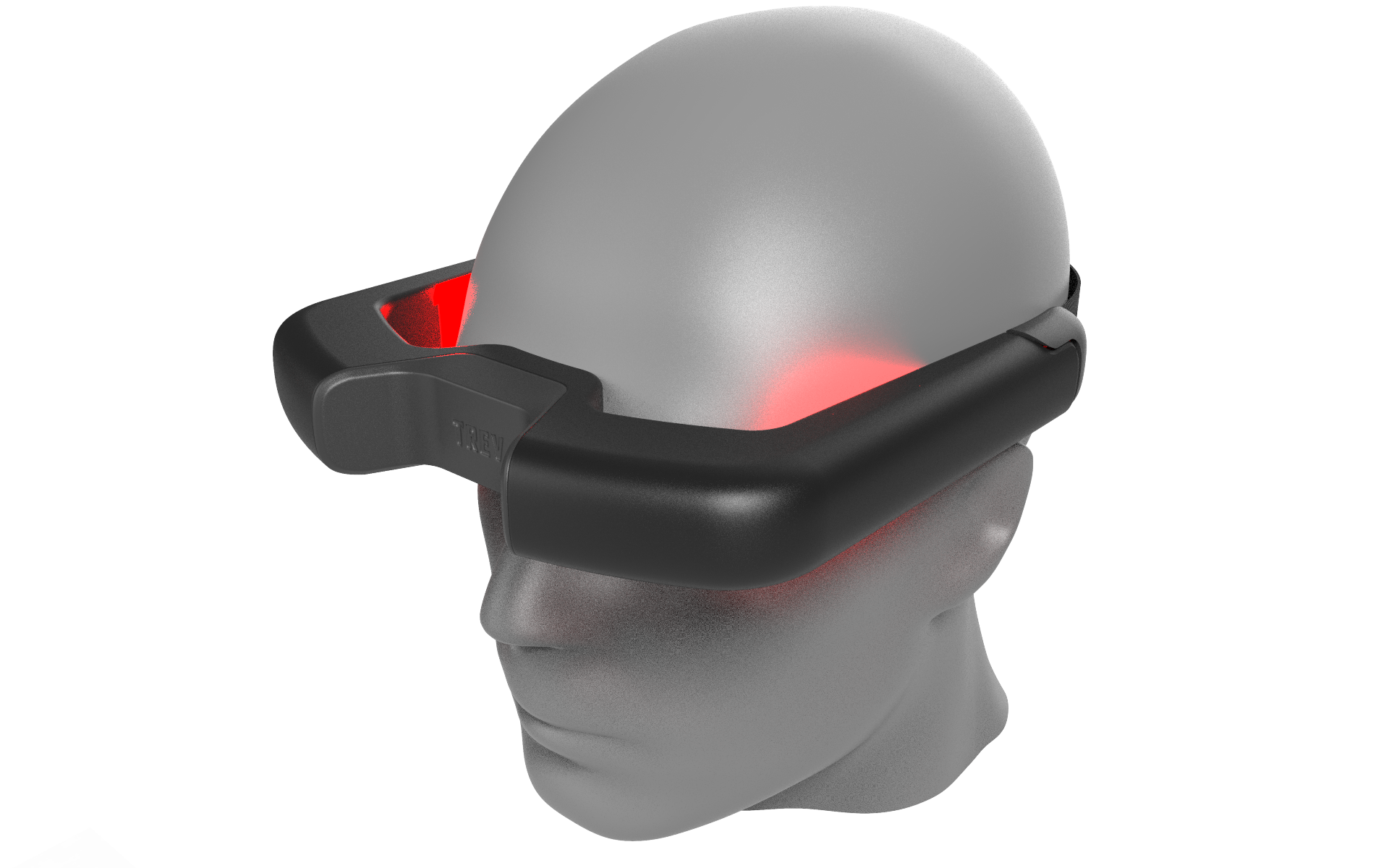
A next-generation neuro-wellness headset integrating photobiomodulation, spatial audio stimulation, and biometric sensing into a single consumer-grade wearable system.
The convergence of neuroscience and consumer hardware was producing two extremes: clinical-grade neurostimulation devices too complex and stigmatized for everyday adoption, and wellness wearables too stripped-down to deliver measurable therapeutic outcomes. TREV was conceived to occupy the space between — bringing photobiomodulation, spatial audio stimulation, and AI-driven biometric feedback together in a form factor designed for daily use.
The design challenge was fundamentally architectural. Four distinct subsystems — optics, audio, sensing, and power management — each with competing spatial and thermal requirements had to be resolved within a single wearable enclosure. Getting the hardware architecture right before committing to a form language was the prerequisite to everything else.
Disciplines
Study
Analysis of the neurowellness hardware landscape revealed a consistent failure mode: devices that worked clinically were too clinical — bulky, medically coded, and socially visible in ways that made everyday use feel like a treatment session. Consumer-positioned alternatives had traded away the precise optics and sensor fidelity needed for consistent therapeutic outcomes.
The critical insight was that adoption correlated directly with wearability. The product didn't need to disappear — it needed to feel intentional. Wellness-forward, not medical-grade. Something a user reaches for, not tolerates.
Strategy
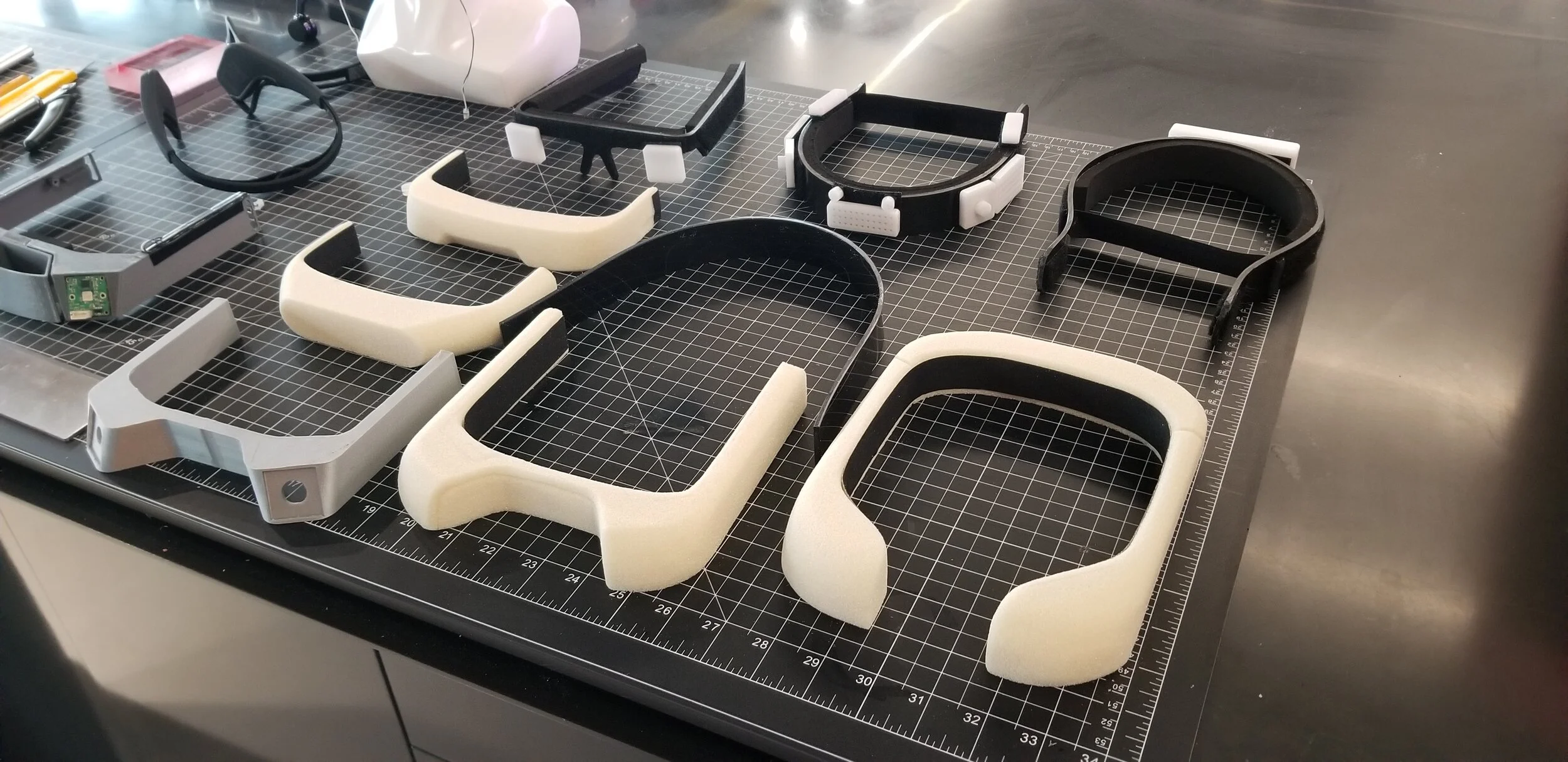
The strategic decision was to treat this as a hardware integration problem first. Light projection elements required precise angular positioning near the temporal regions for effective photobiomodulation. Audio transducers needed structural isolation to prevent resonance cross-talk. Camera placement had to balance biometric field-of-view against weight distribution and heat dissipation. Battery sizing was a constraint that cascaded through every other decision.
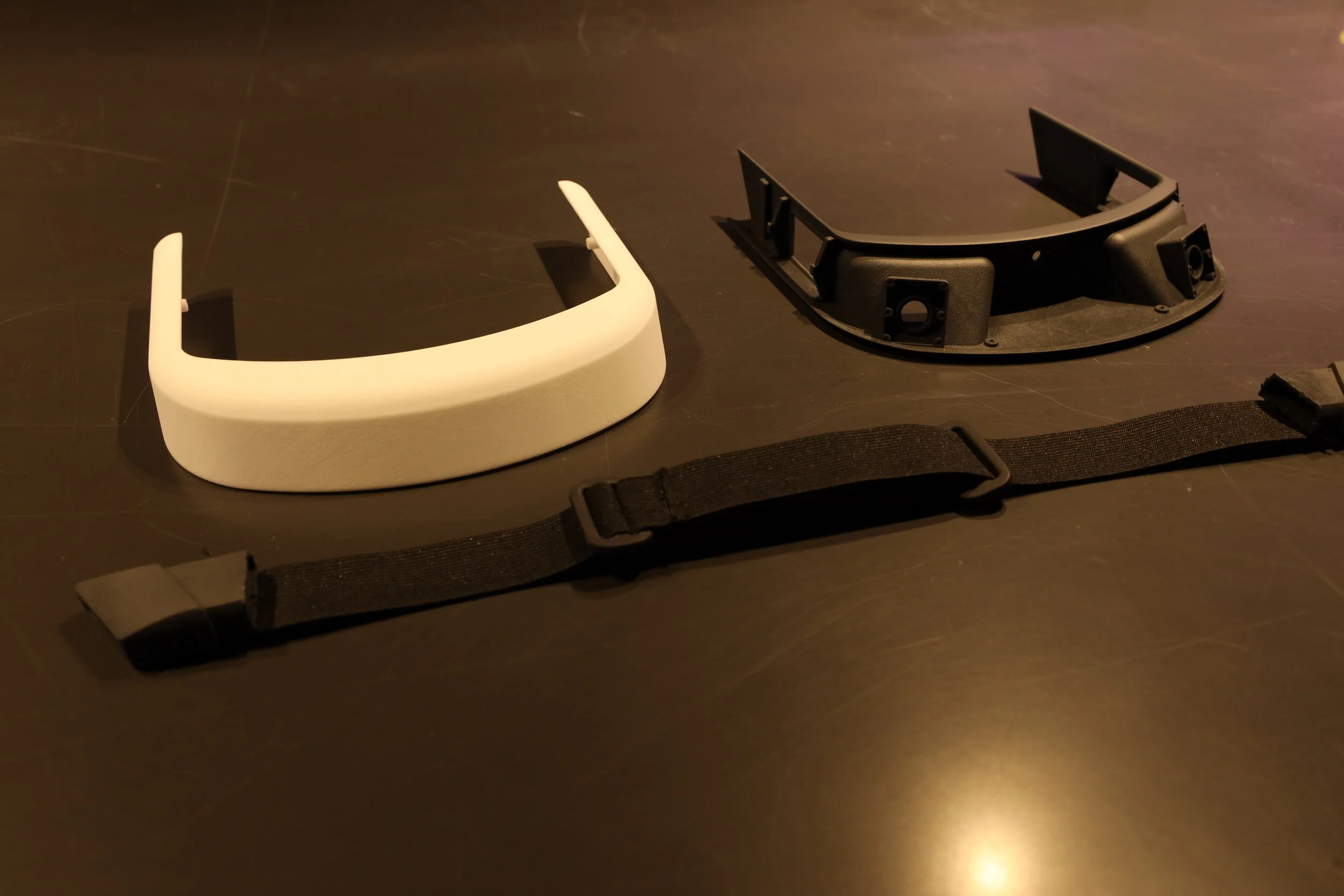
Multiple architecture studies mapped component configurations across the headset geometry before any aesthetic direction was fixed. The form language emerged from the engineering resolution — not the other way around.
Form study — optics module placement
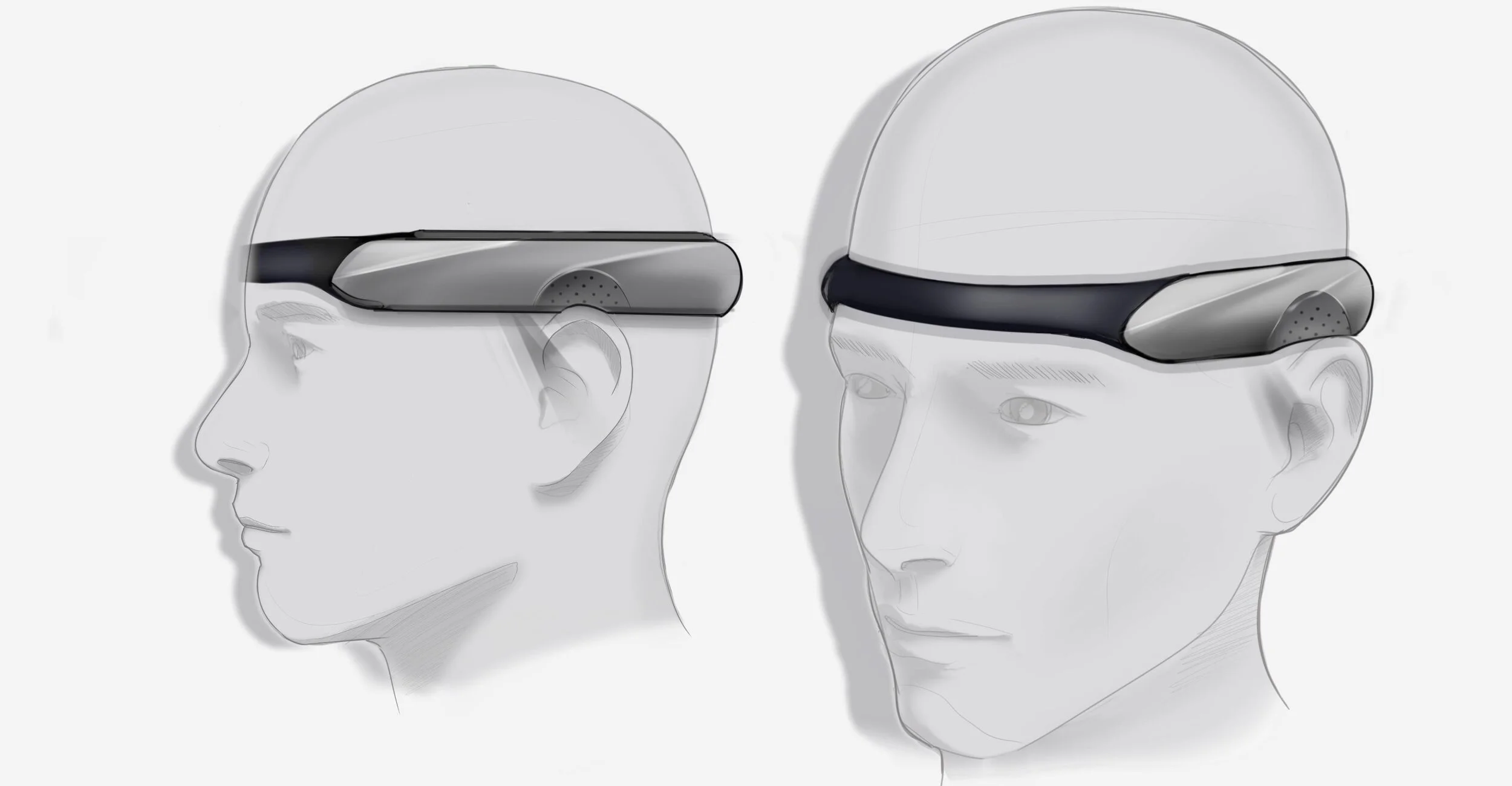
Form study — temporal geometry
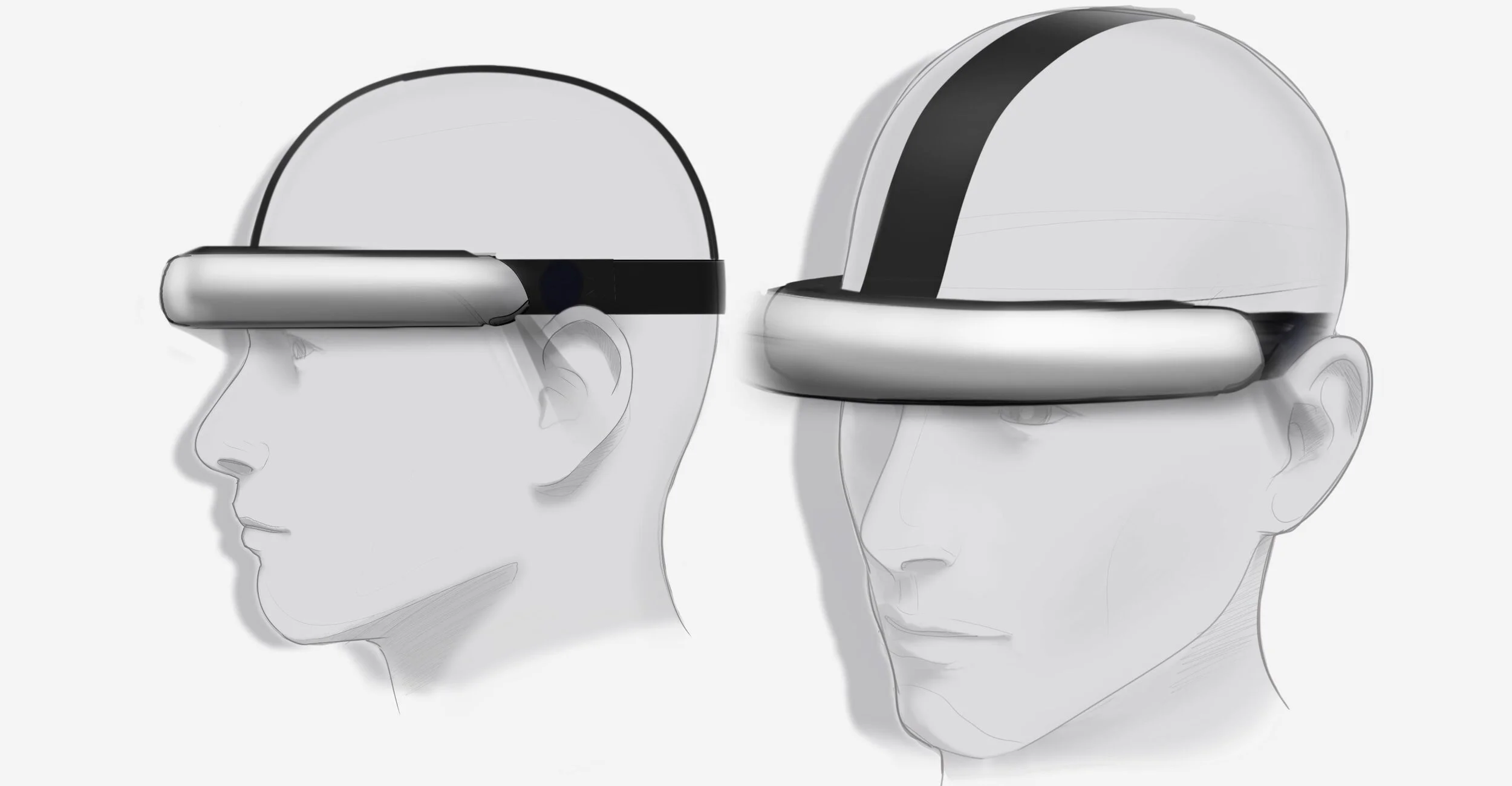
Architecture study — component stacking
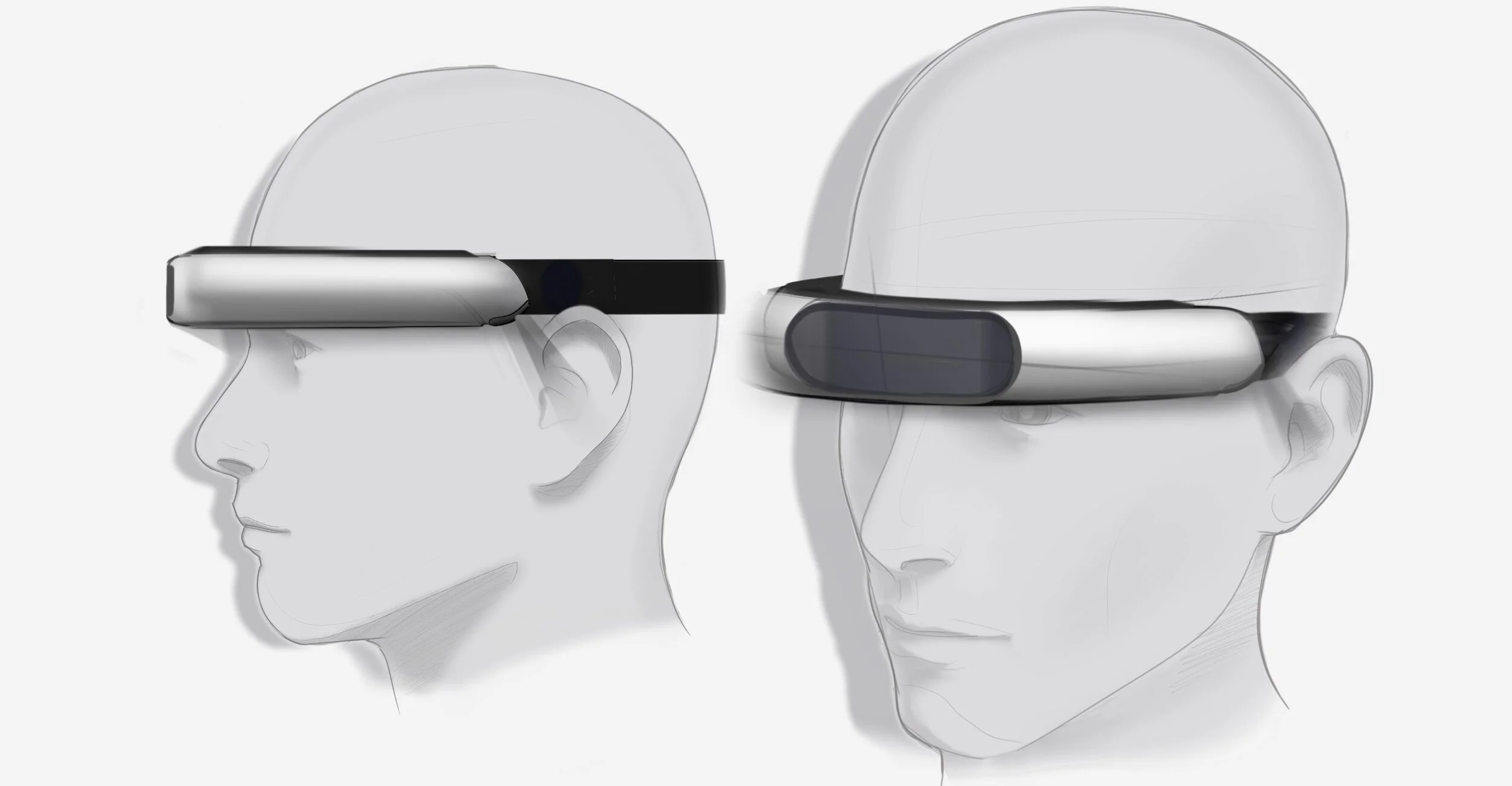
Architecture study — battery integration
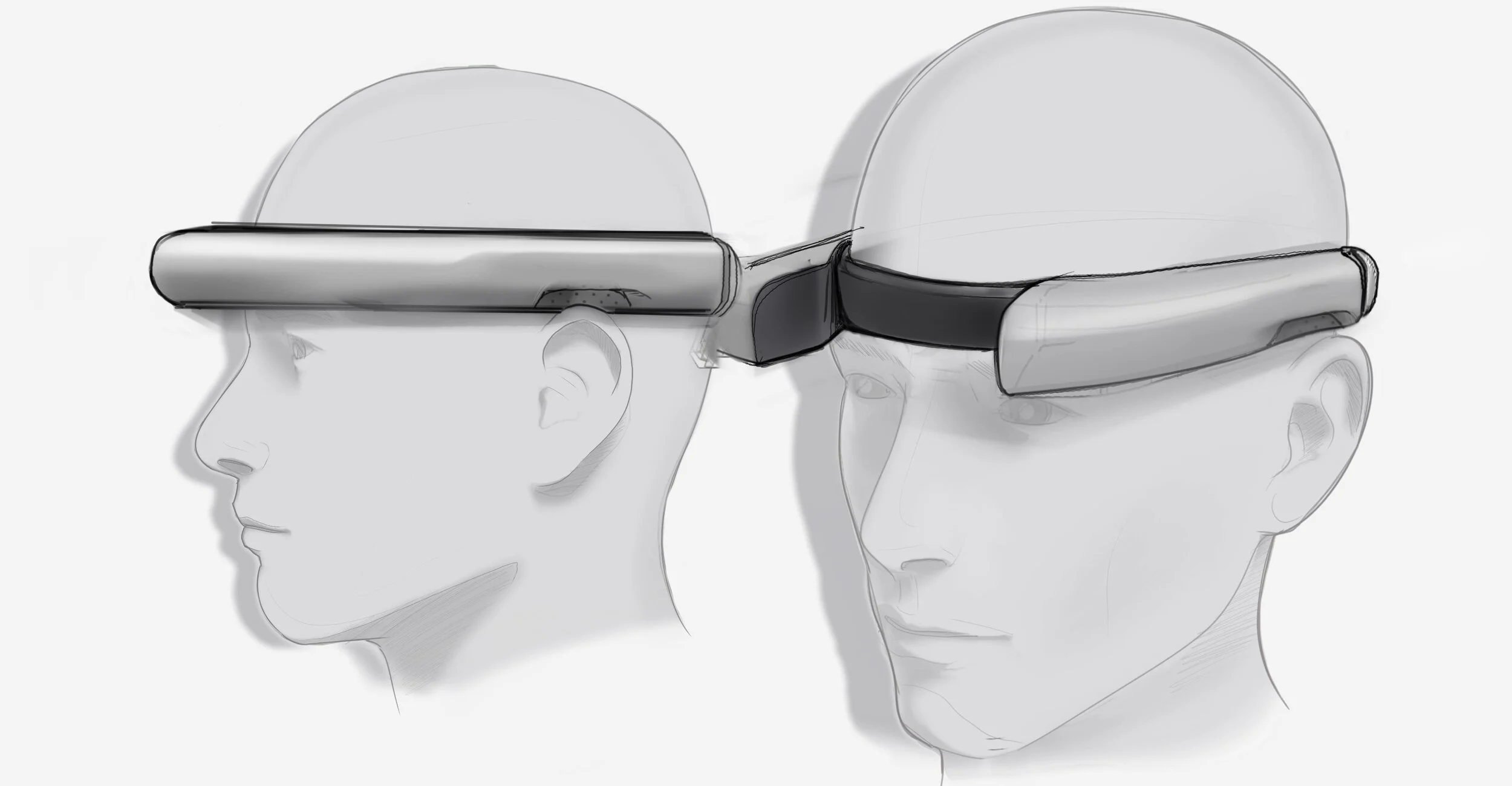
Form refinement — full-band silhouette
Refined concept C3 — final form direction
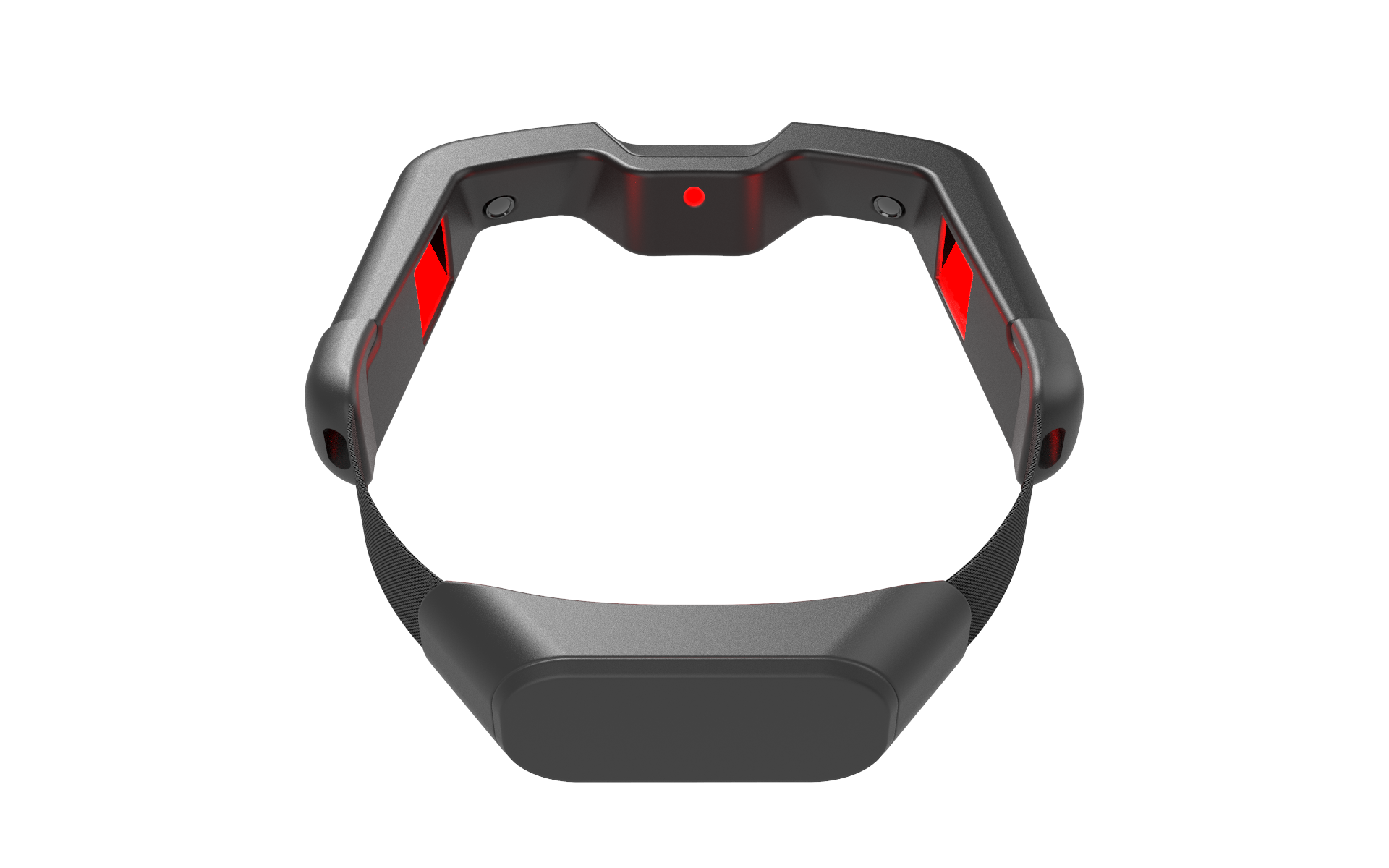
Refined concept C3 — rear detail
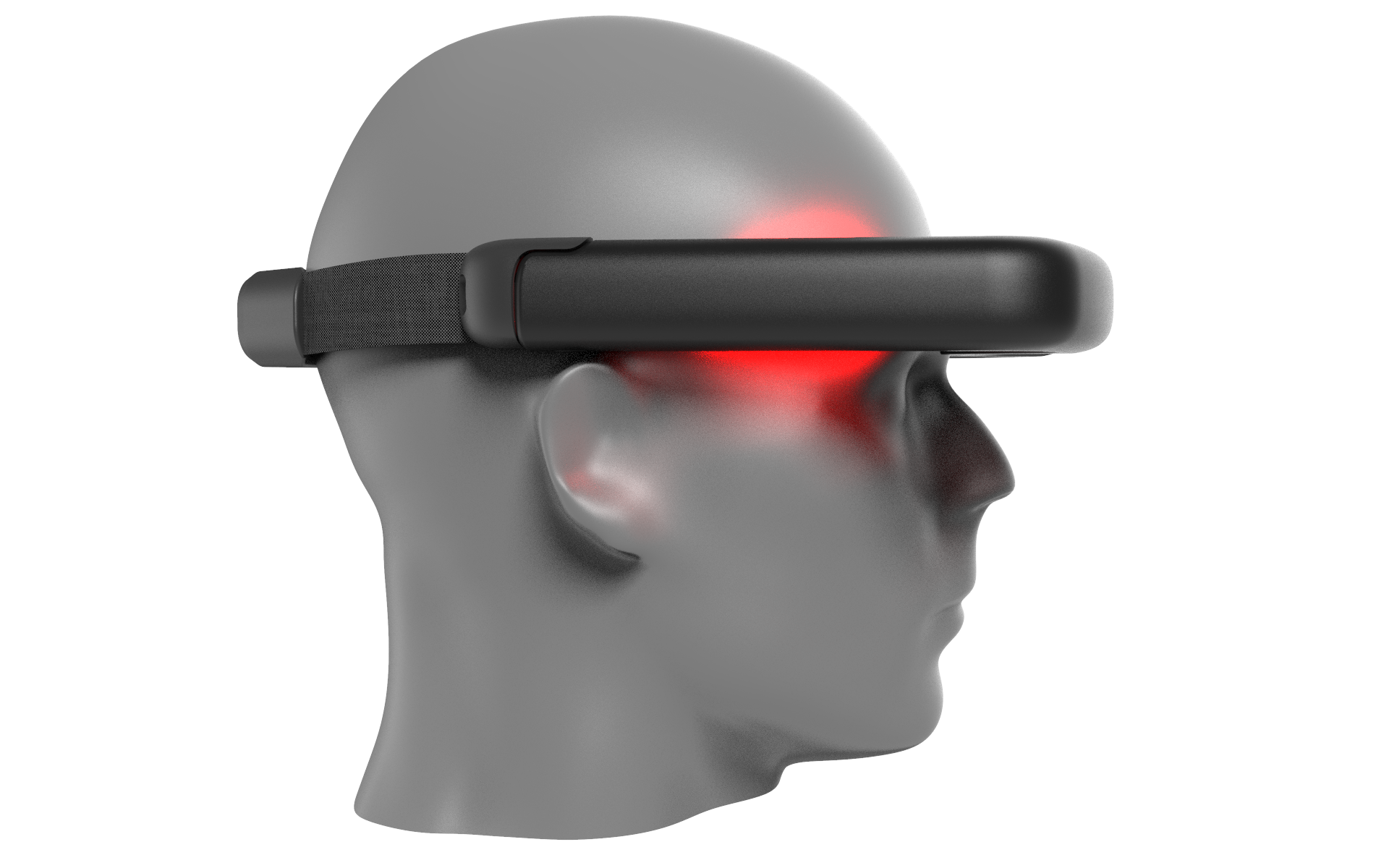
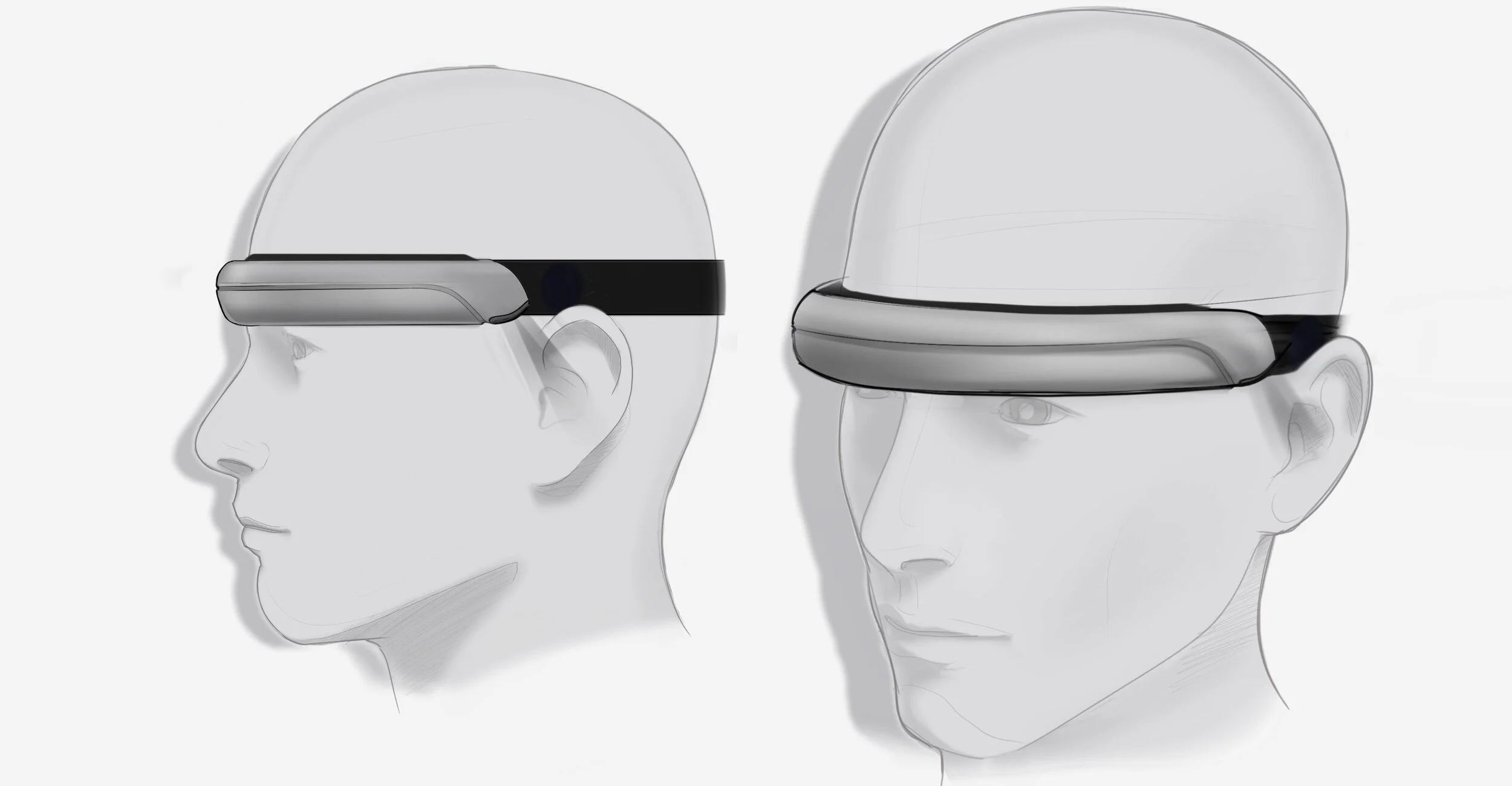
Refined concept C3 — side profile
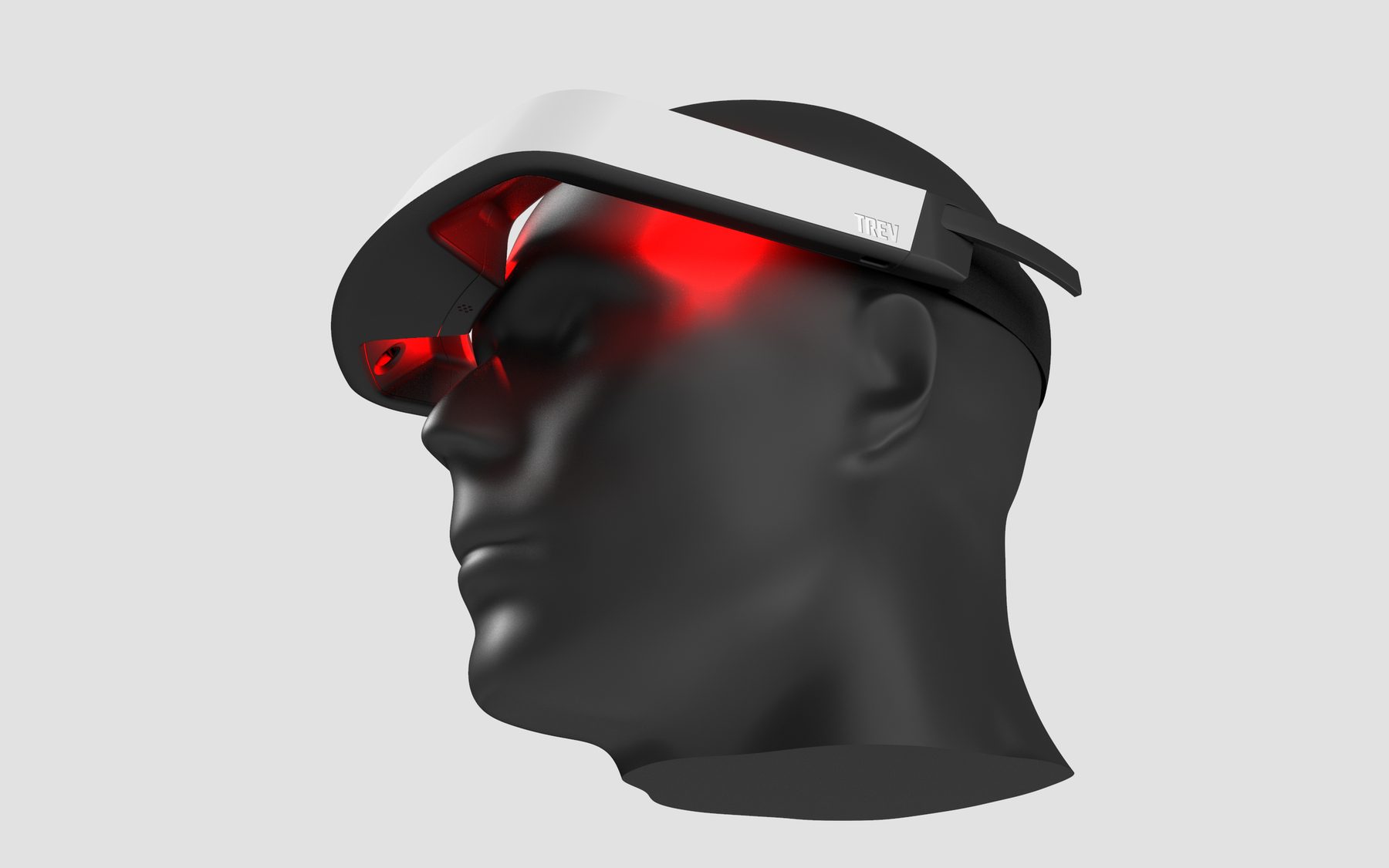
Rendered concept V1 — front profile
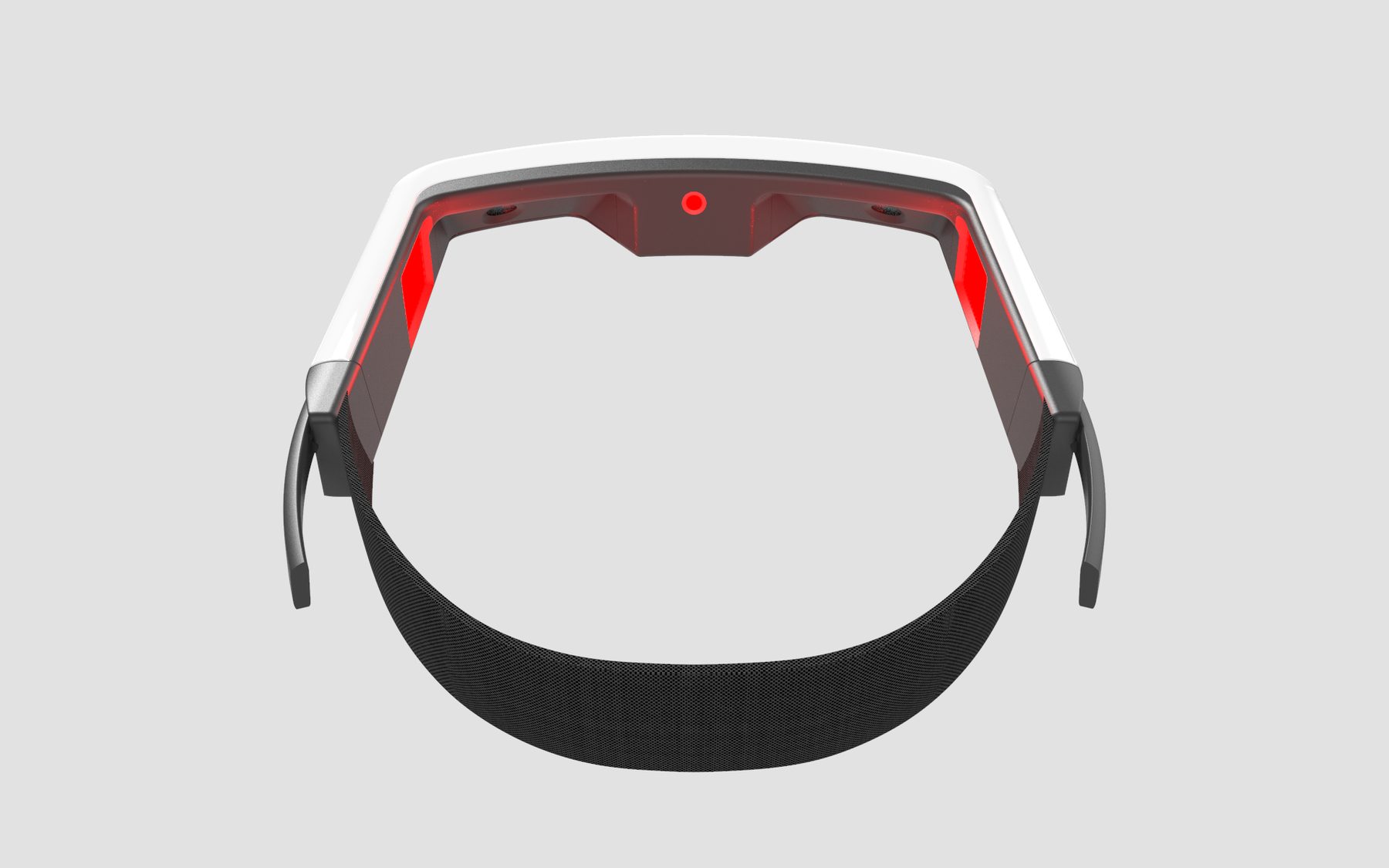
Rendered concept V1 — rear housing
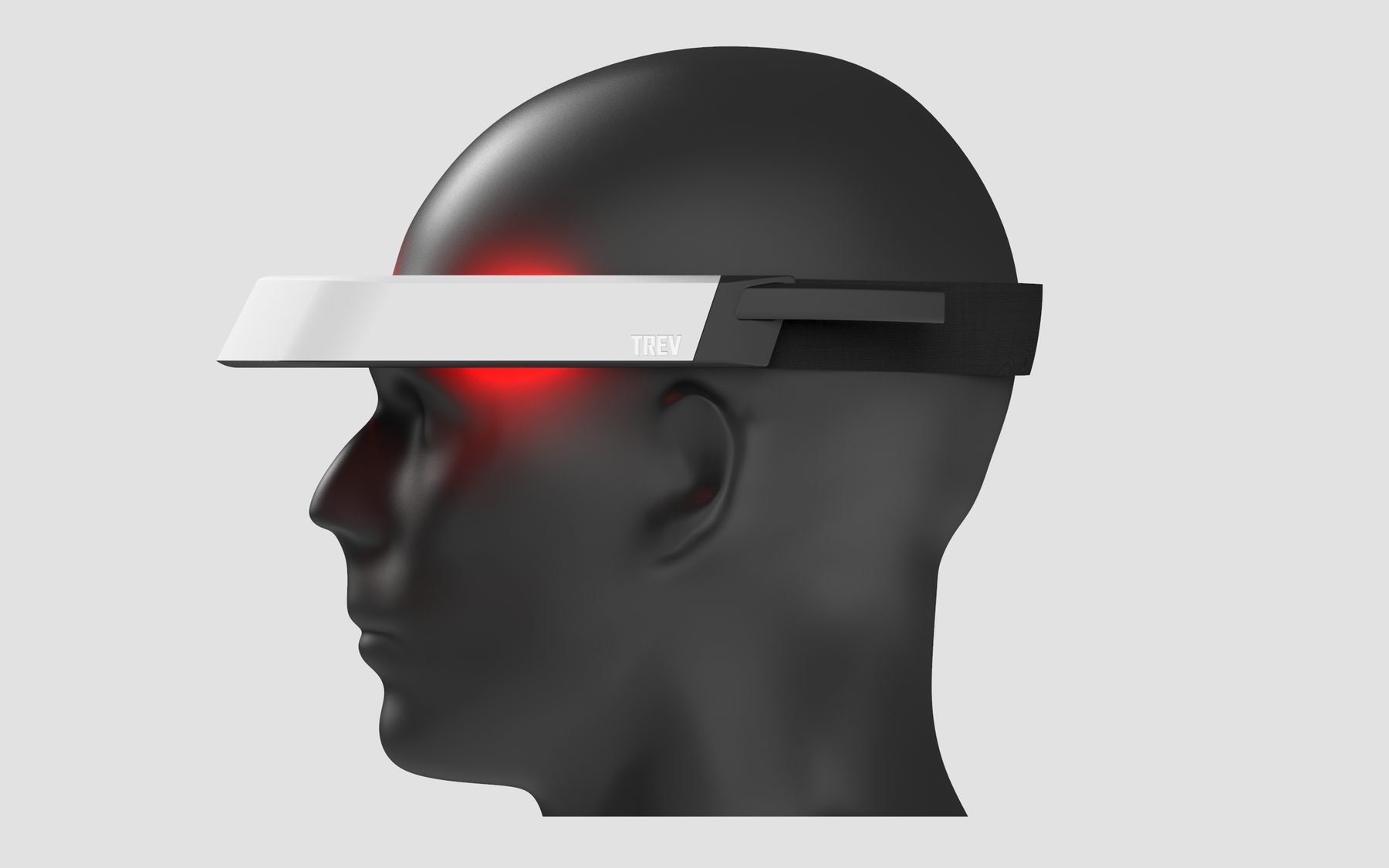
Rendered concept V1 — optics angle
Result
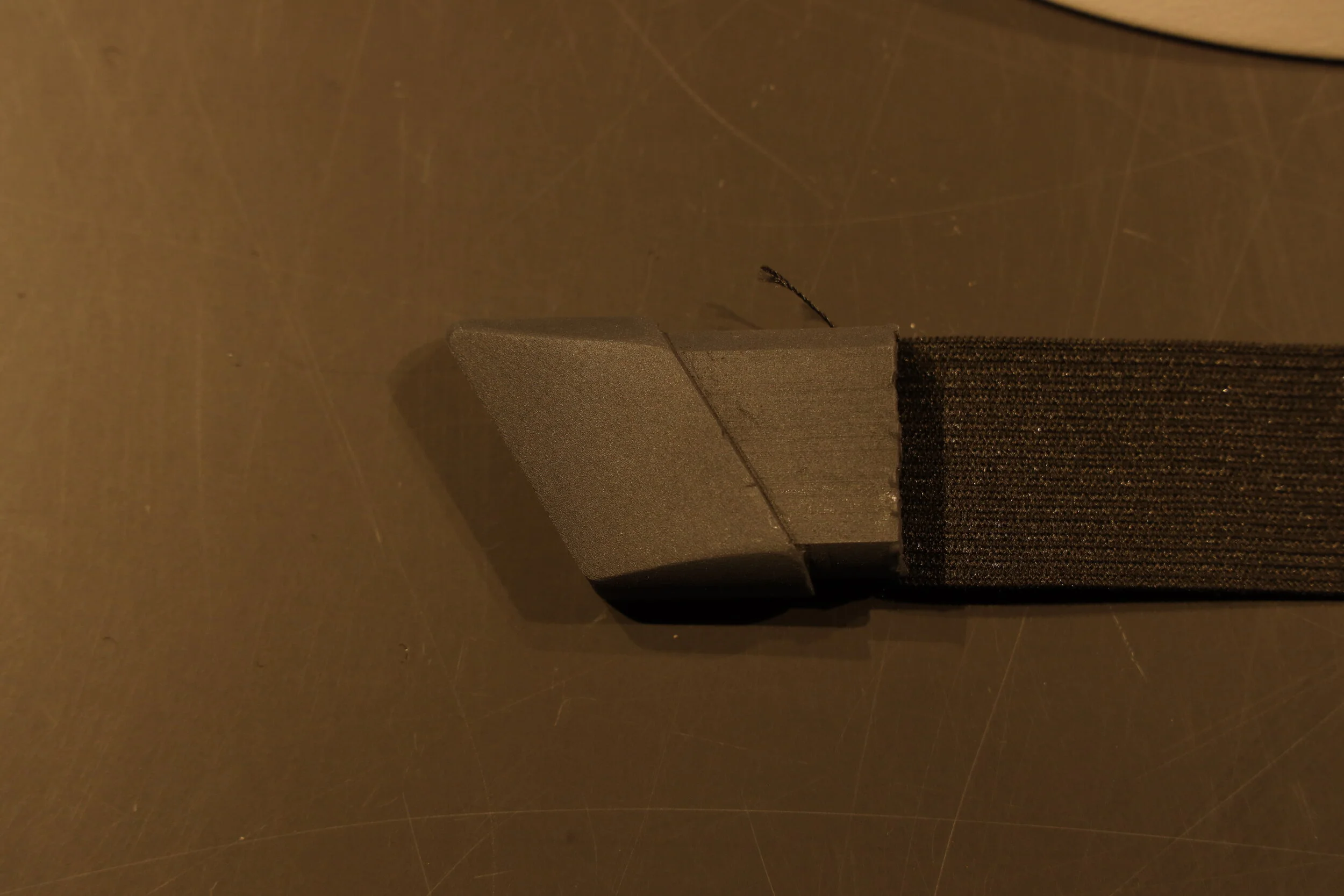
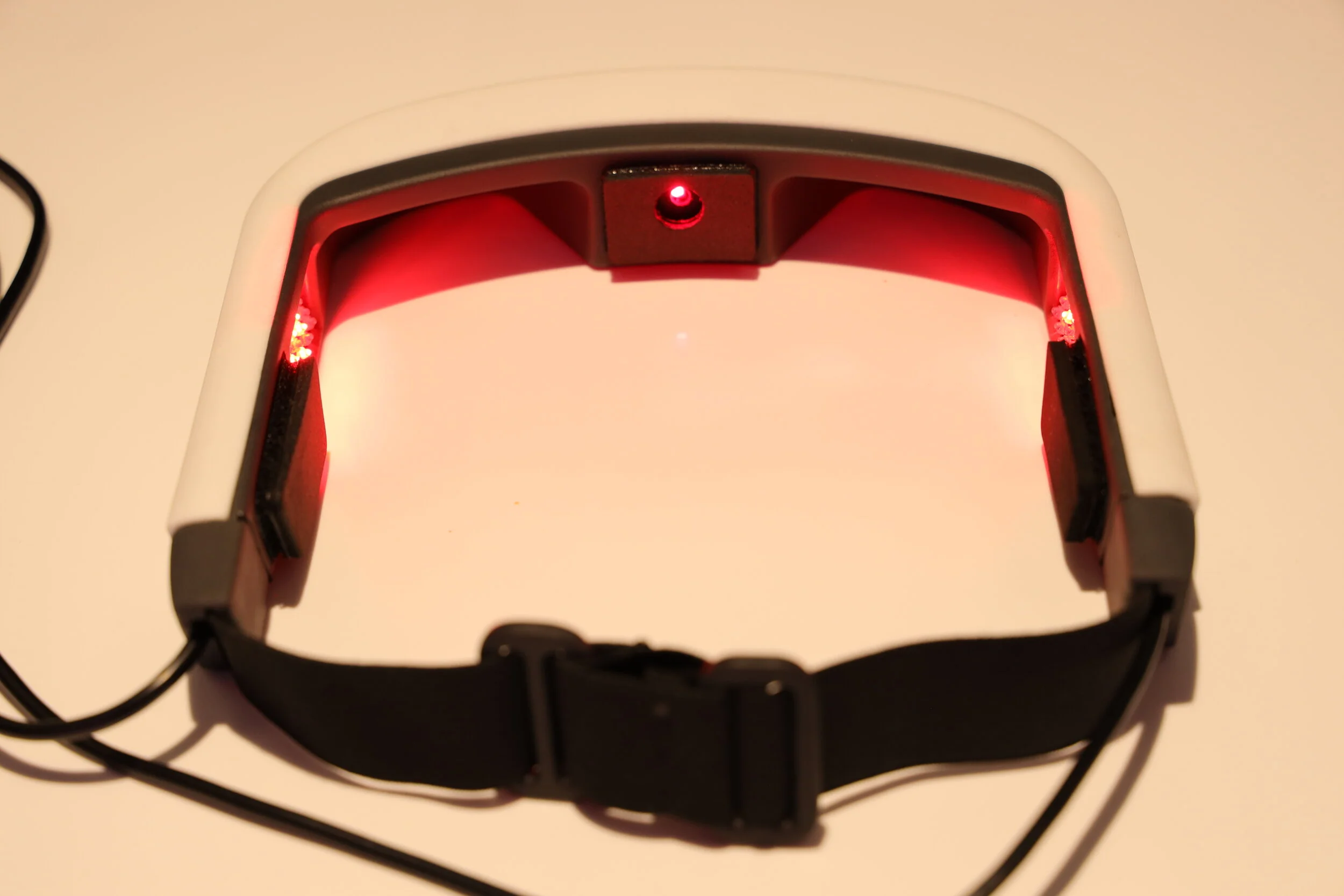
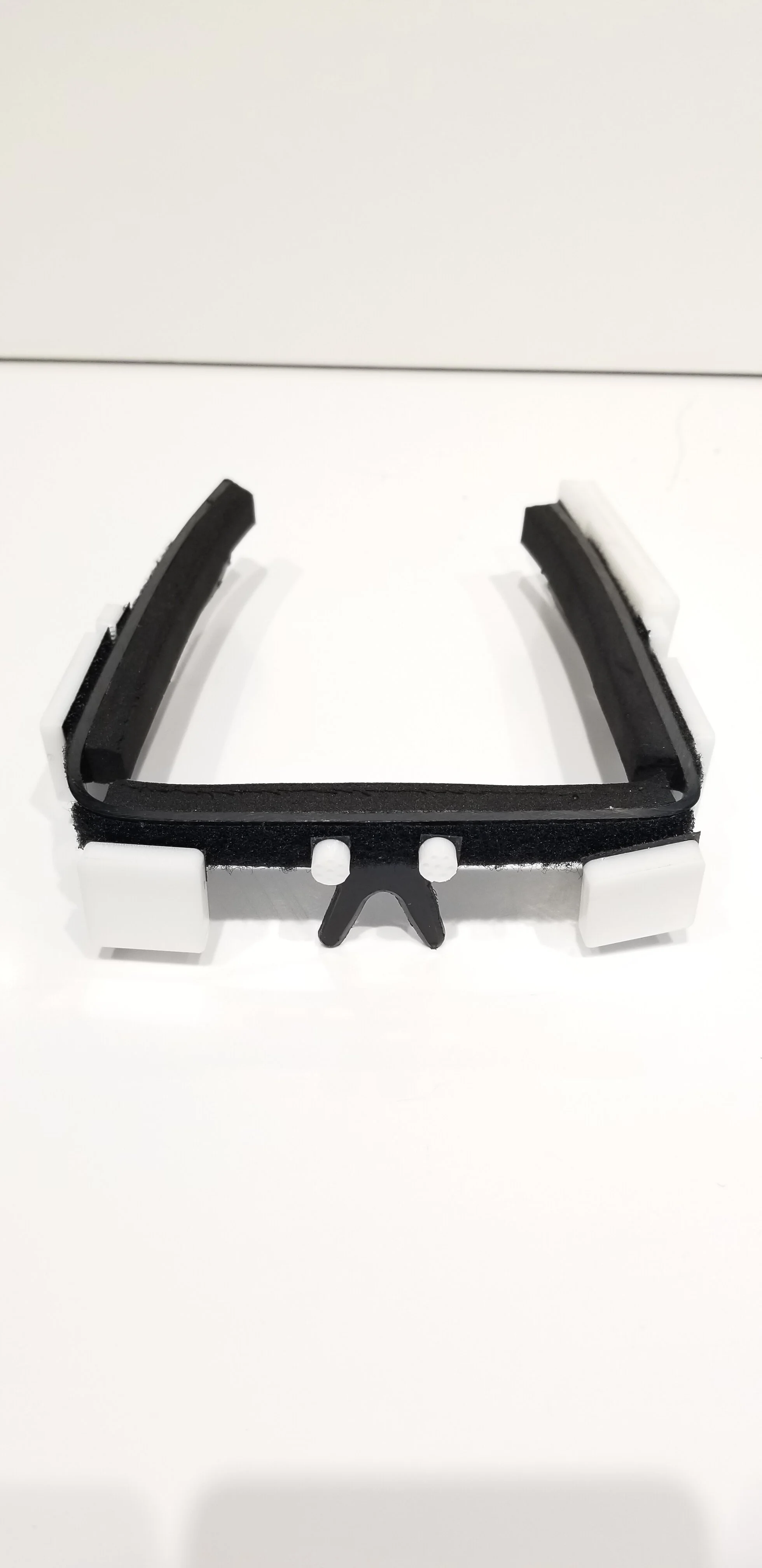
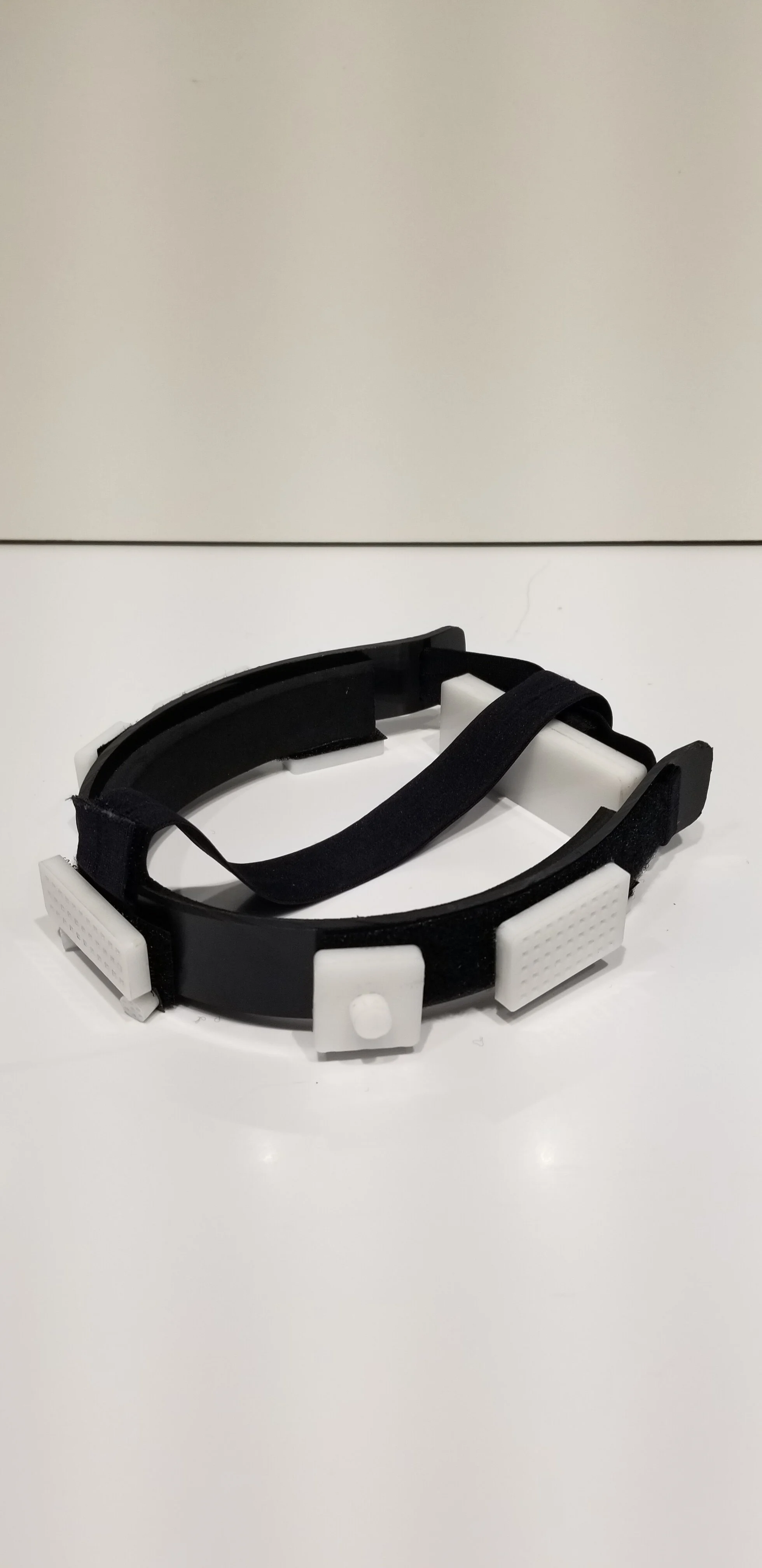
TREV integrates three therapeutic modalities — precision photobiomodulation near the temporal lobes, spatial audio stimulation, and continuous biometric monitoring — in a single over-ear wearable. An AI-driven feedback loop adapts the stimulation profile in real time based on biometric response, creating a closed-loop system that no existing consumer wearable offered. The production-ready architecture resolves component density, weight distribution, and thermal management within a form that wears like consumer headphones.
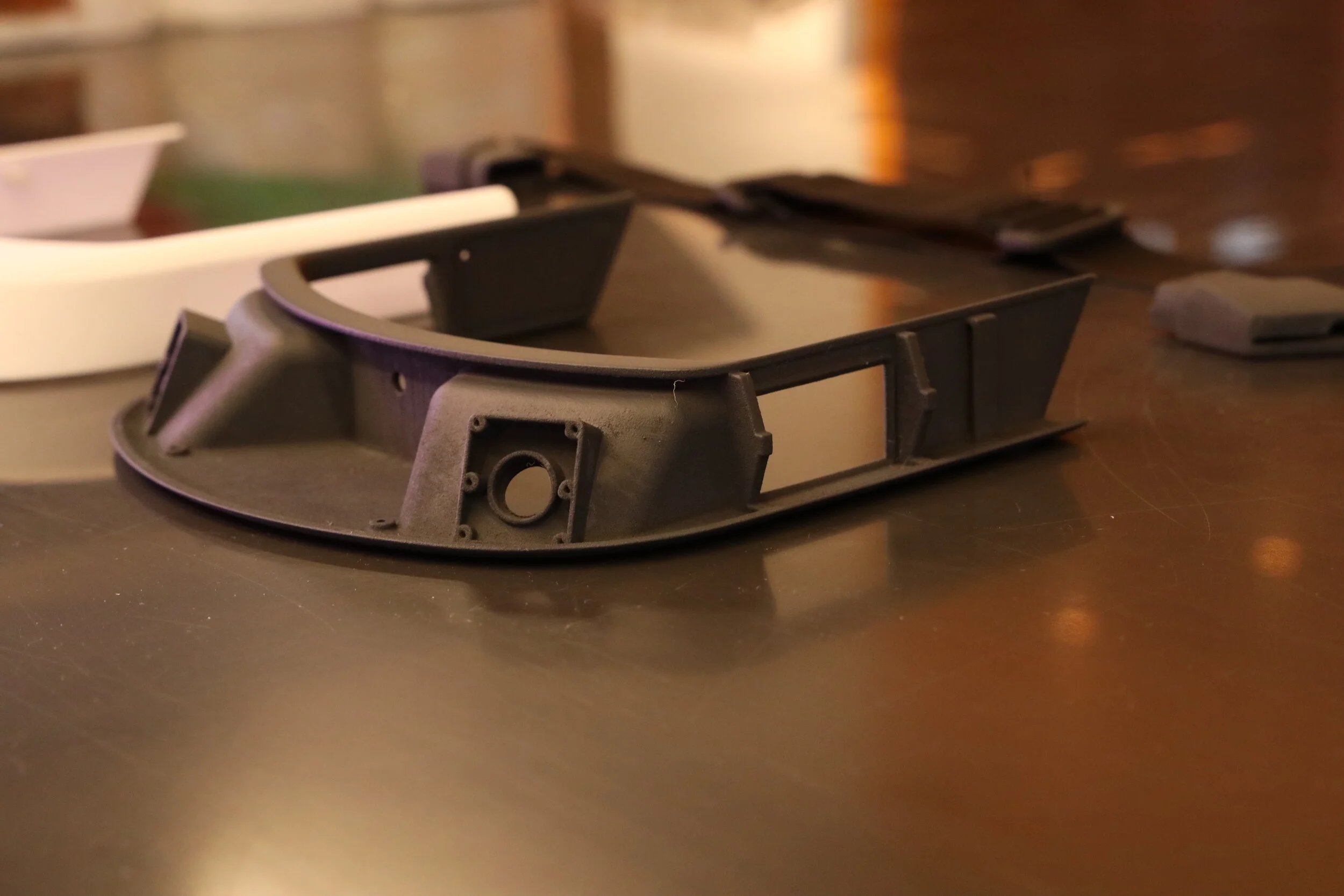
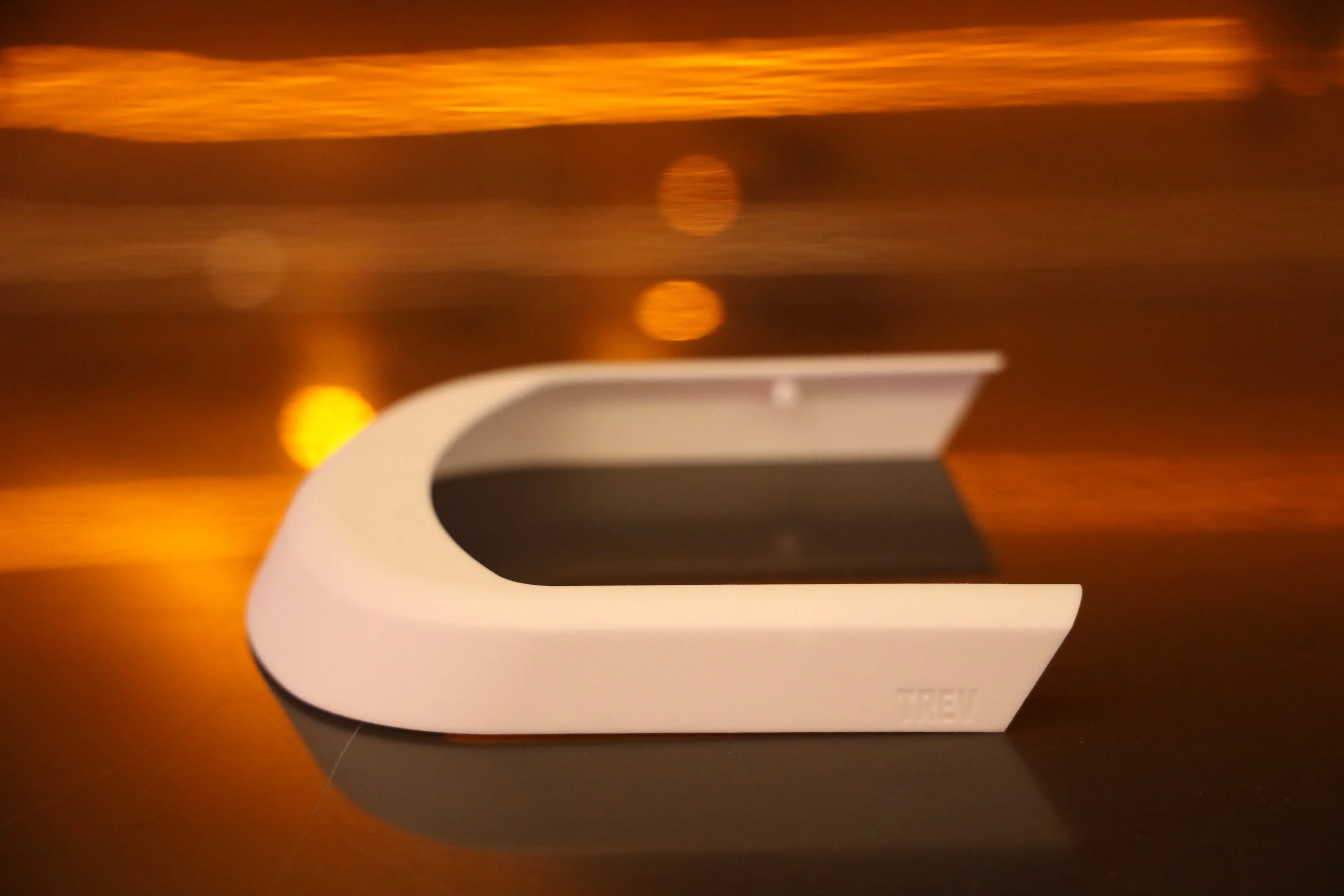
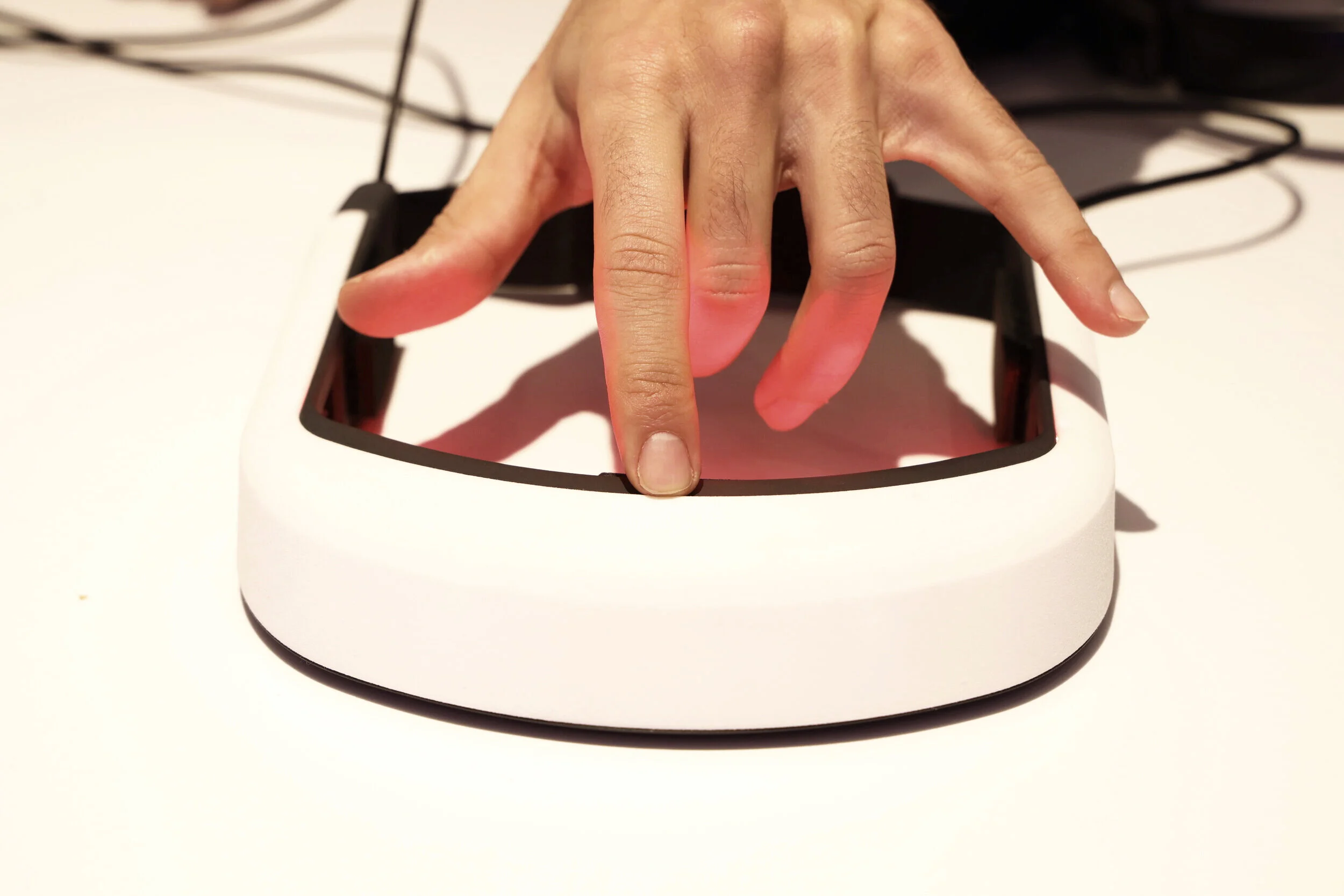
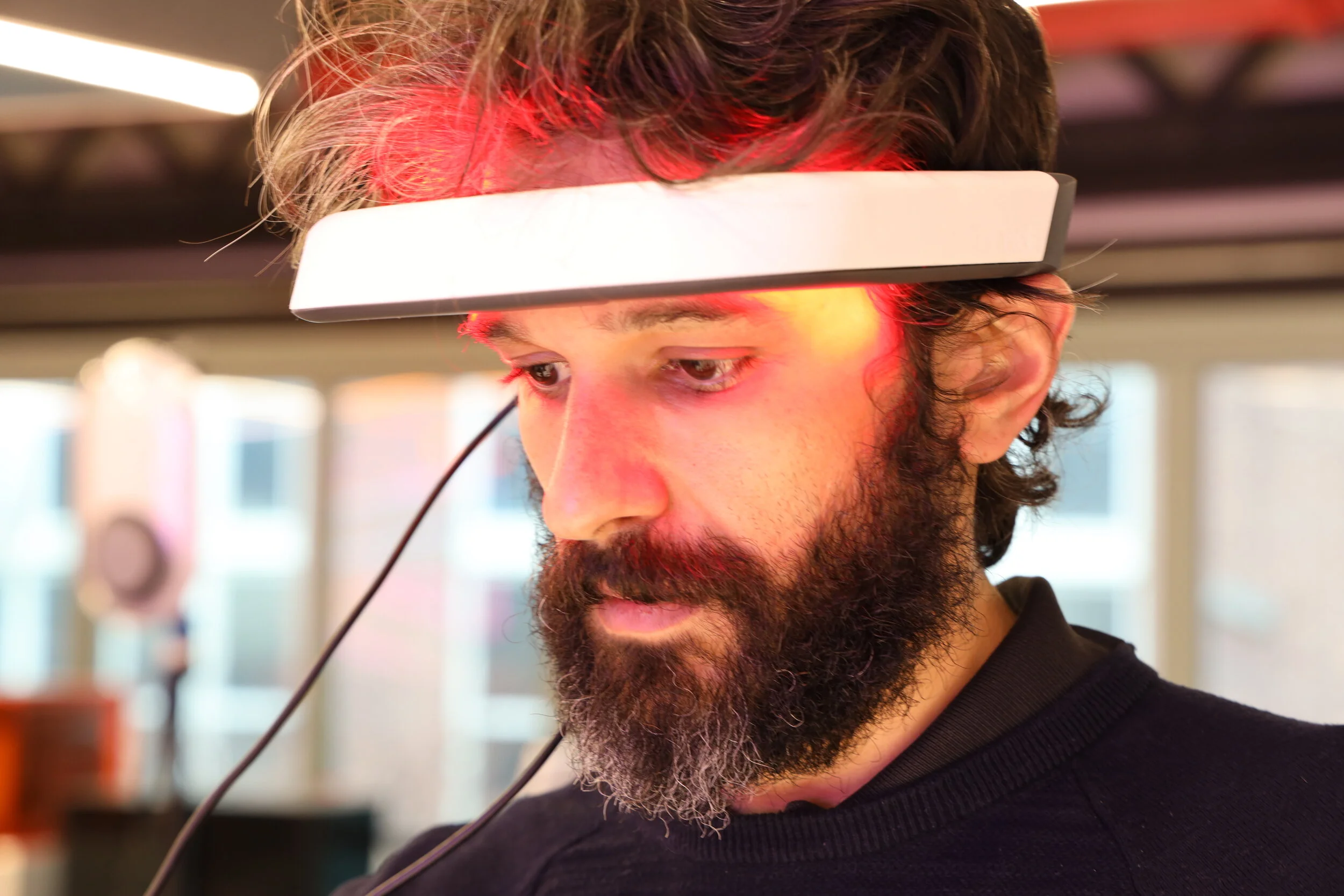
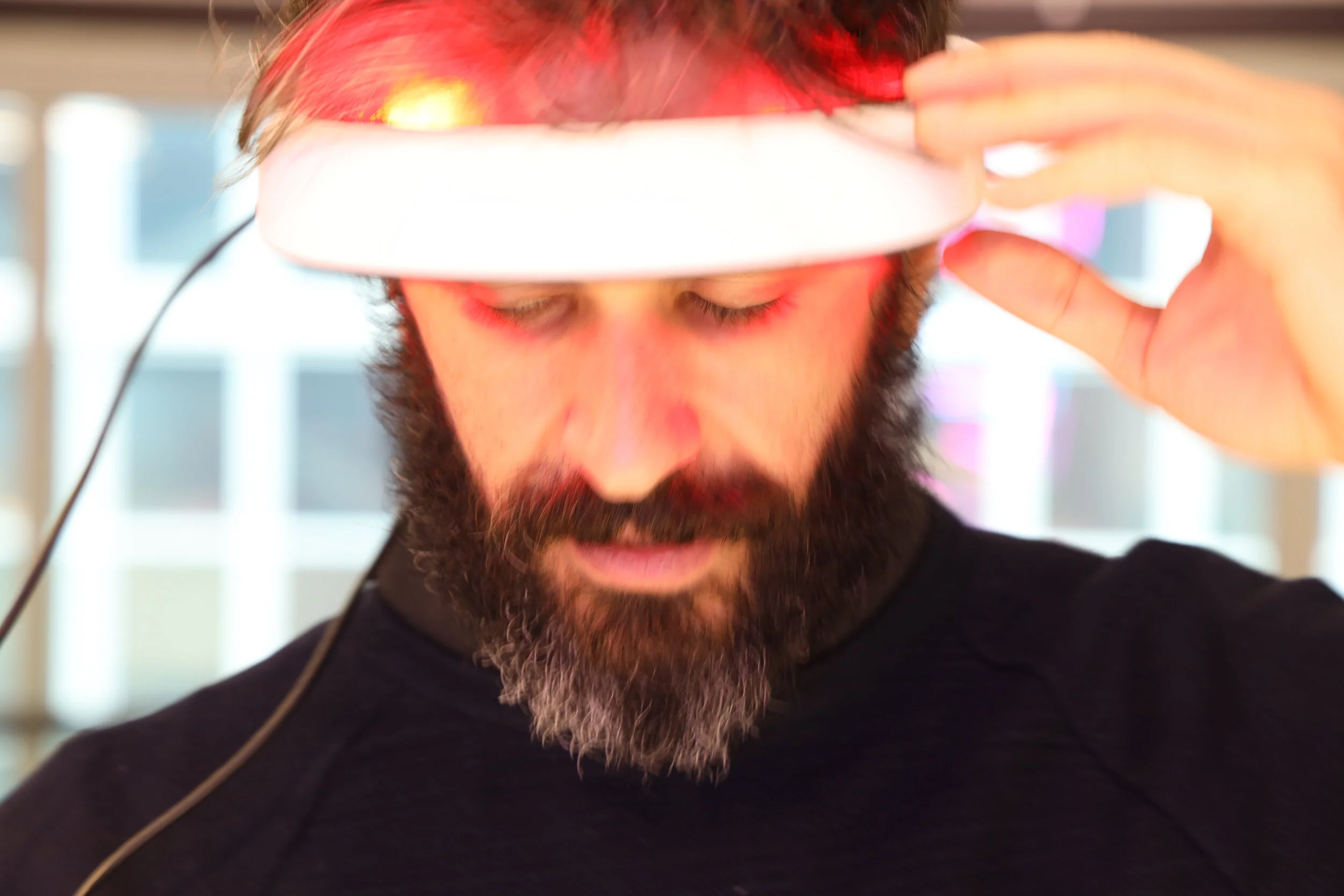
Final — lifestyle 07
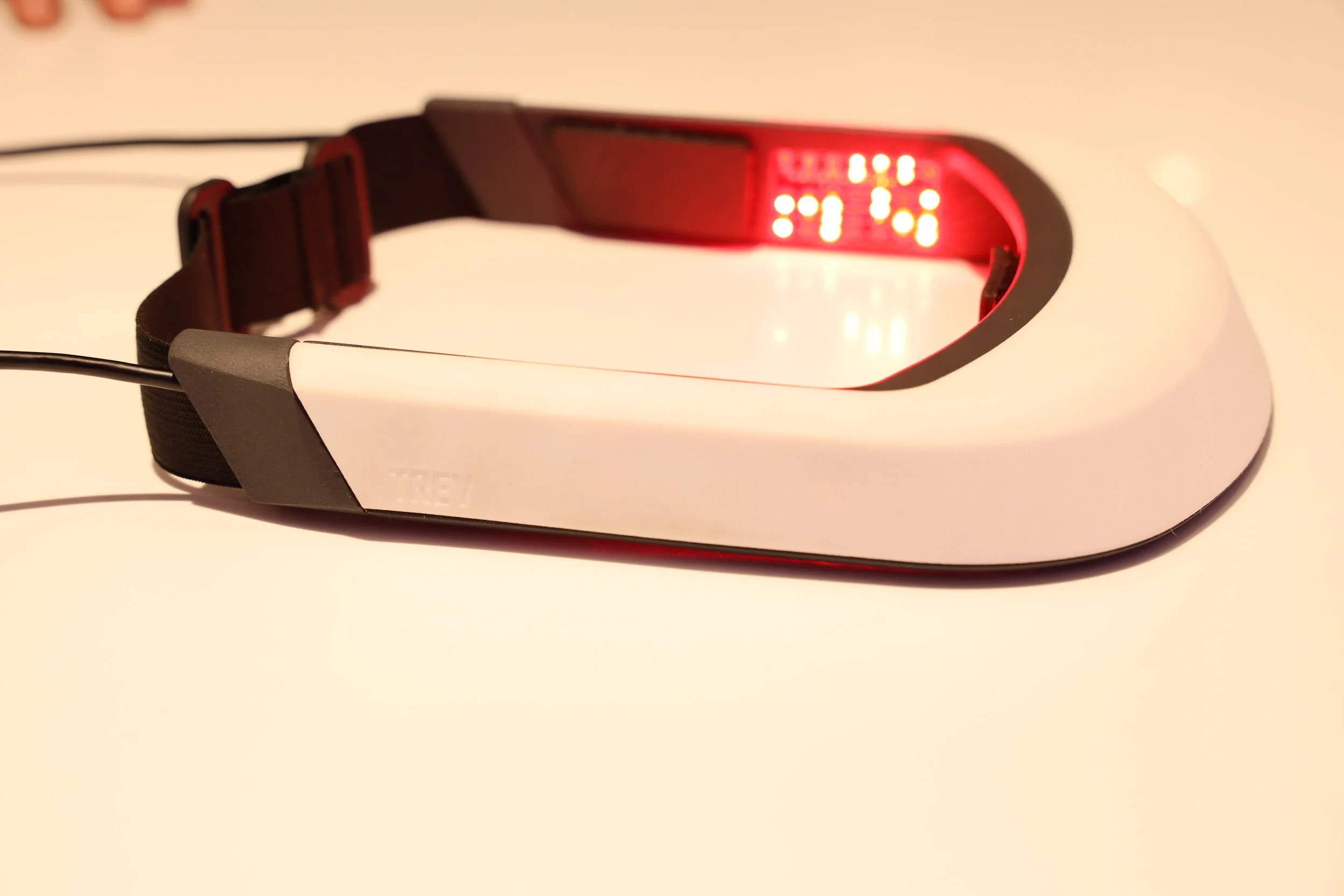
Final — lifestyle 08
Final — lifestyle 09
Final — lifestyle 10
Final — lifestyle 11
Final — lifestyle 12
Outcomes
Technology
Subsystems
Details