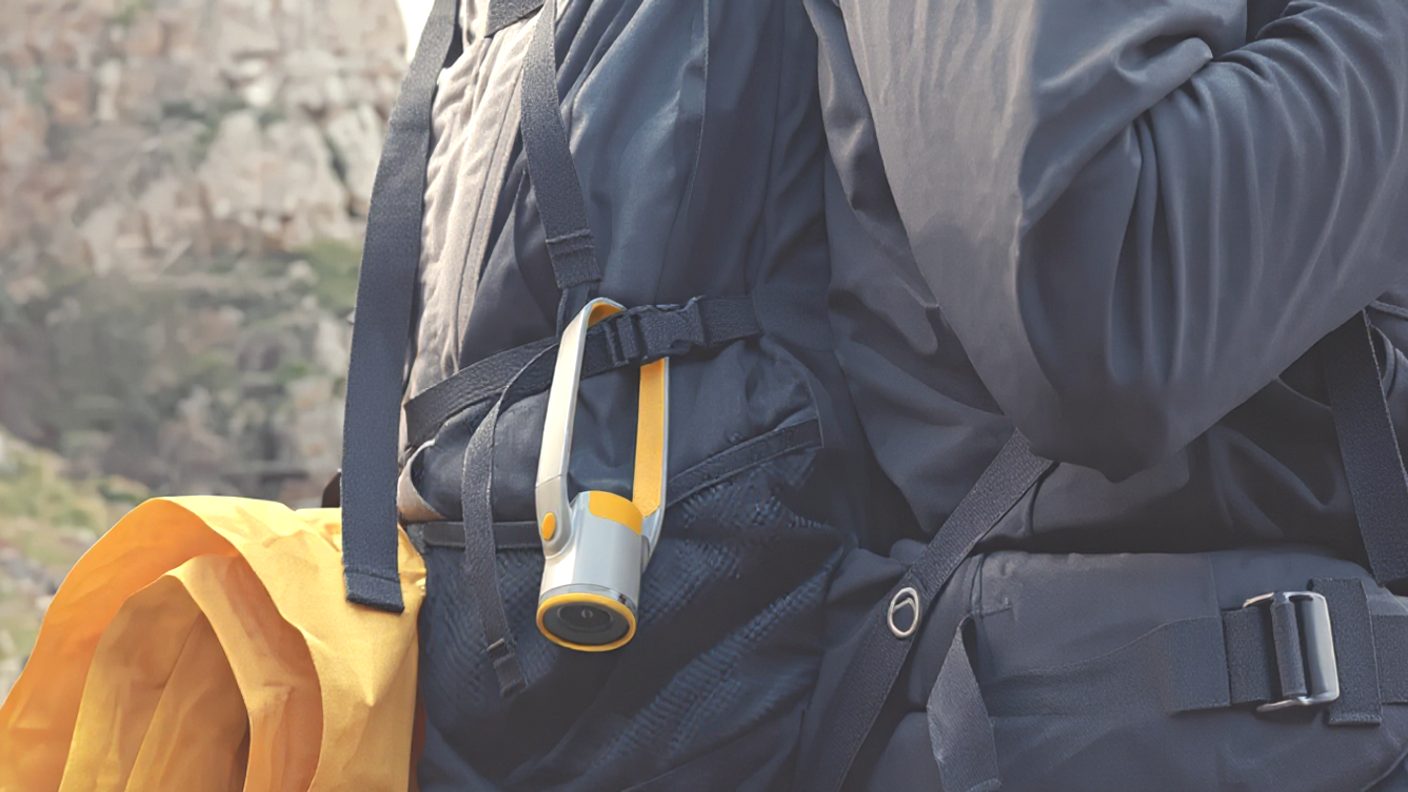
An ultralight multi-mode flashlight engineered for the backcountry — three light modes, sub-one-ounce target weight, and a form factor that disappears in your hand and your kit.
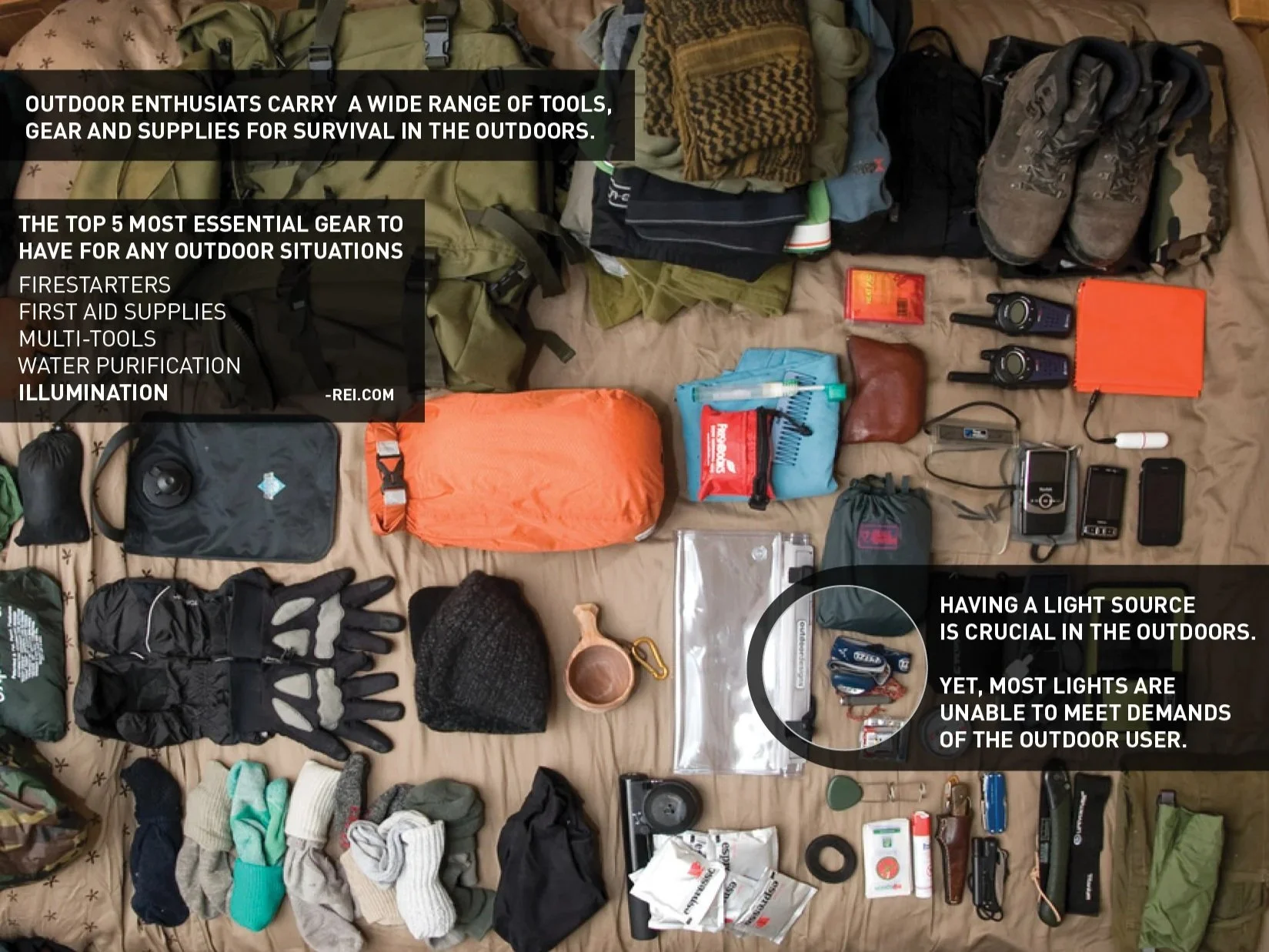
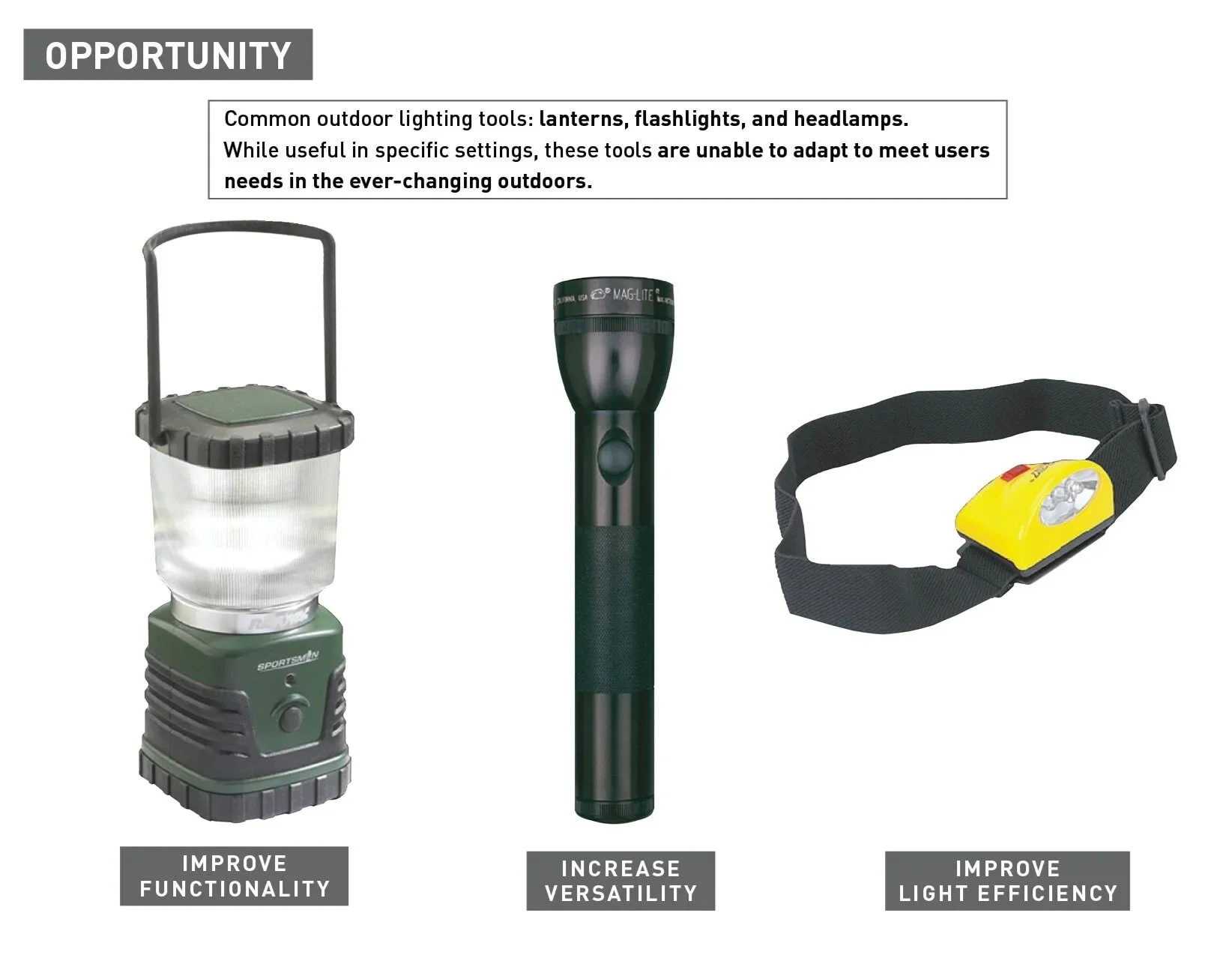
The ultralight backpacking community operates under a fundamentally different set of values than mainstream outdoor gear consumers. Every gram is a deliberate trade-off. Gear that doesn't pull its weight — functionally and literally — gets left behind. The flashlight category had largely ignored this community, producing either feature-heavy headlamps that topped 100 grams or minimal keychain lights that sacrificed usability for weight savings.
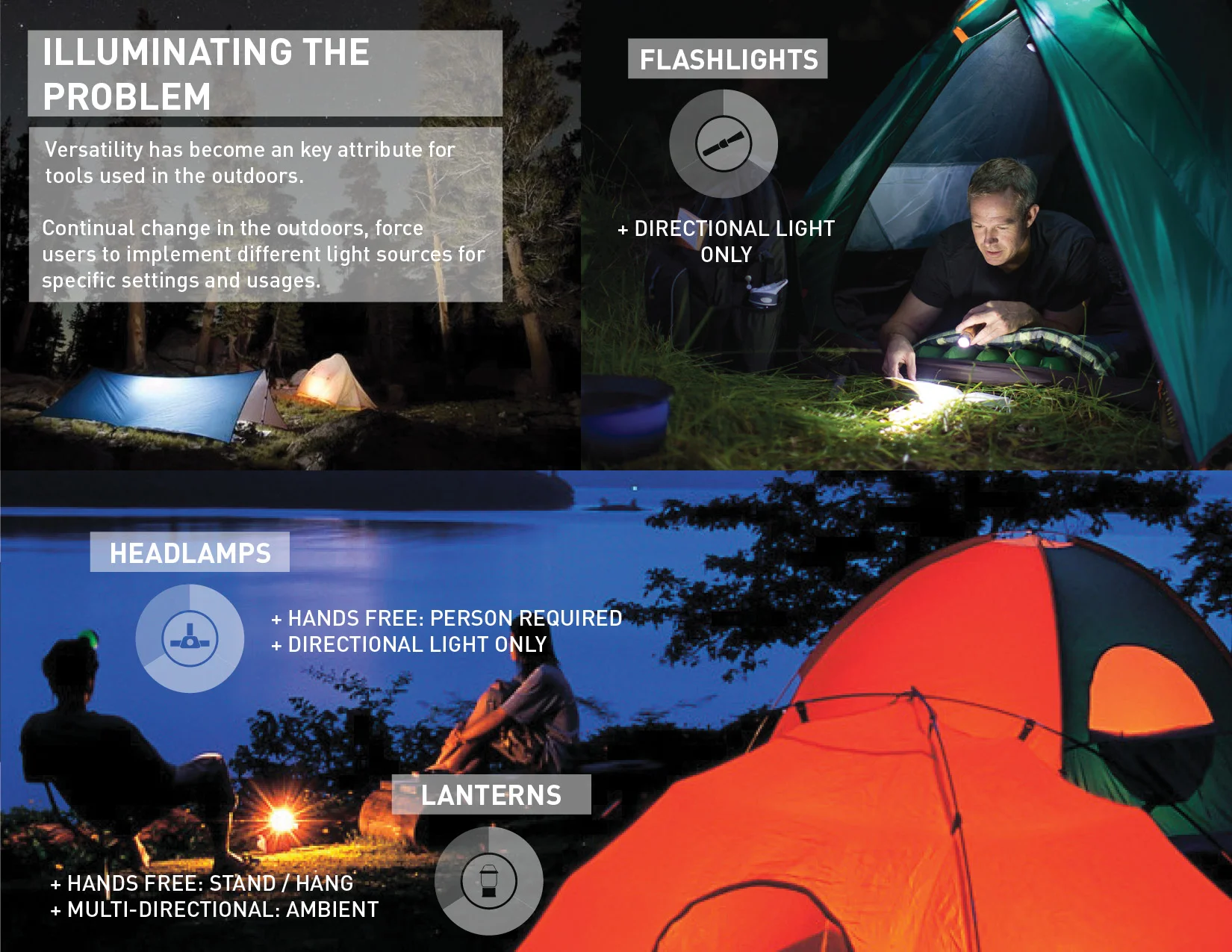
TRI LITE was designed from a user research insight: ultralight hikers didn't want fewer features, they wanted every feature to justify its weight. The brief was to design a flashlight that could do everything a backcountry user needed — task lighting, trail lighting, emergency signaling — without compromise on weight, ergonomics, or durability. Every material choice, geometry decision, and feature inclusion had to earn its grams.
Disciplines
Study
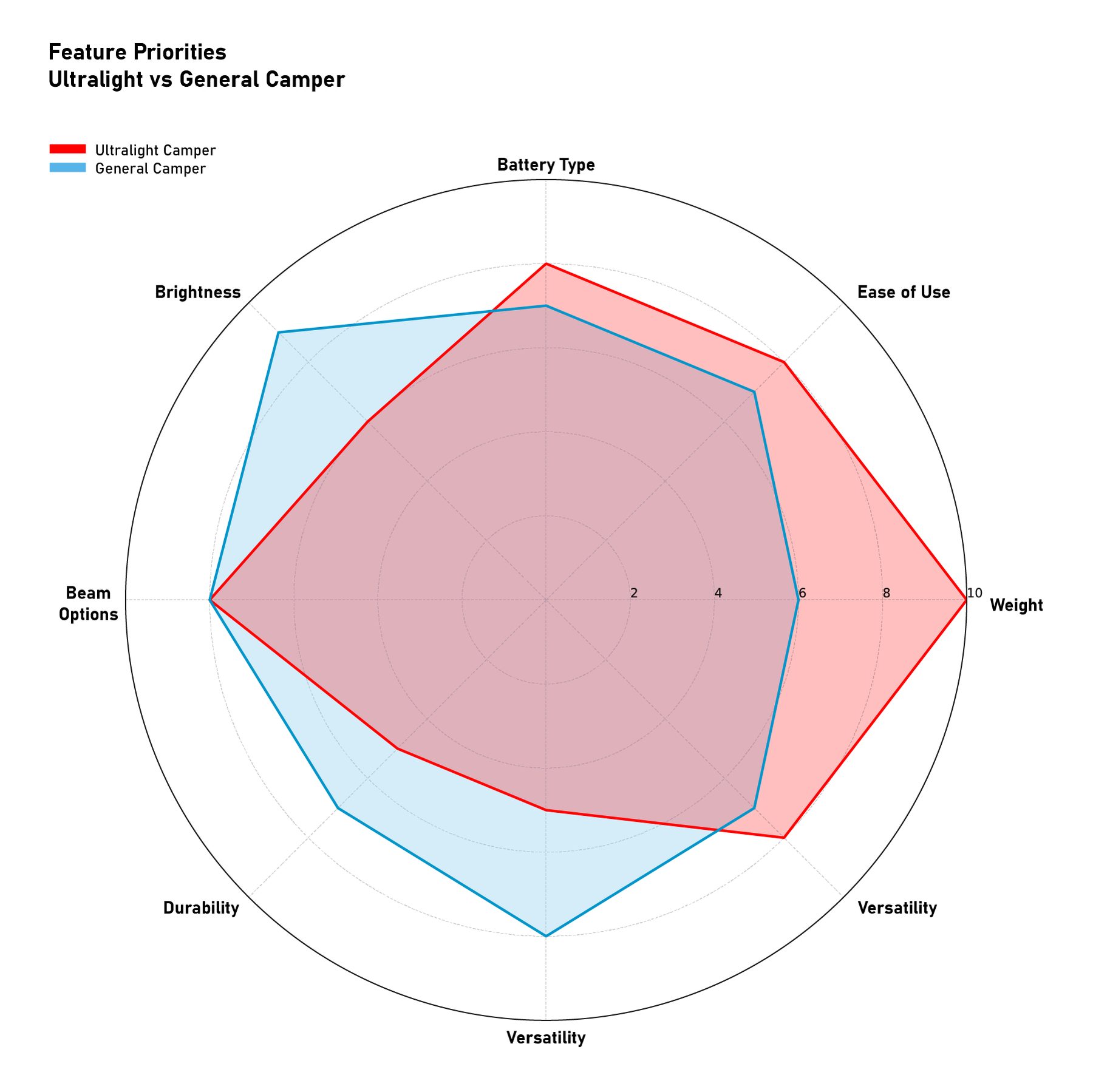
User research with ultralight backpacking communities revealed a consistent frustration: existing "ultralight" options were either feature-stripped to the point of uselessness, or they were standard lights with thin shells — weight savings achieved by material reduction rather than intelligent design. Neither approach respected the user's actual needs in the field.
The research also surfaced a secondary insight around color and visibility. Gear lost in a dark tent or on a dark trail is a genuine backcountry problem. High-visibility color options — not just for aesthetics but for functional findability — emerged as an unmet need across every user interview. The color system for TRI LITE was designed as a functional feature, not a marketing decision.
Strategy
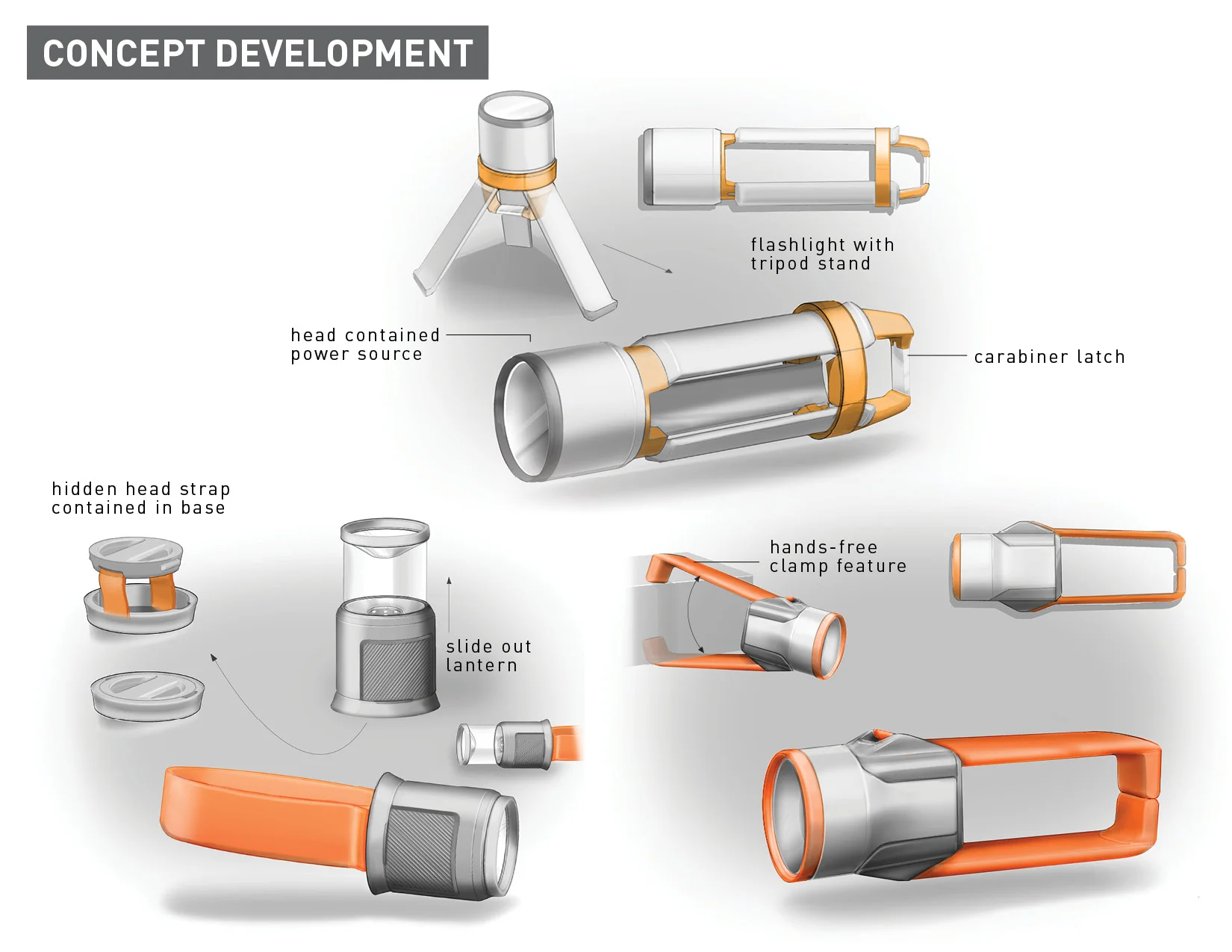
The design strategy was built around constraint as a creative driver. The target weight forced a materials-first approach: magnesium alloy body, polycarbonate lens, titanium clip hardware. Every component was selected for its strength-to-weight ratio before its cost profile. The three-mode interface — task, trail, strobe — was consolidated into a single tactile switch to eliminate mechanism weight while preserving functional range.
The color system was resolved through functional color theory rather than trend research. High-CRI colors that read distinctly against common backcountry environments — rock, soil, pine duff, tent fabric — were validated against real-world findability scenarios. The palette became a signature of the product line.
User research — ultralight priorities
Color — functional palette development
Form development
Geometry refinement
Material + finish study
Switch mechanism detail
Color variant studies
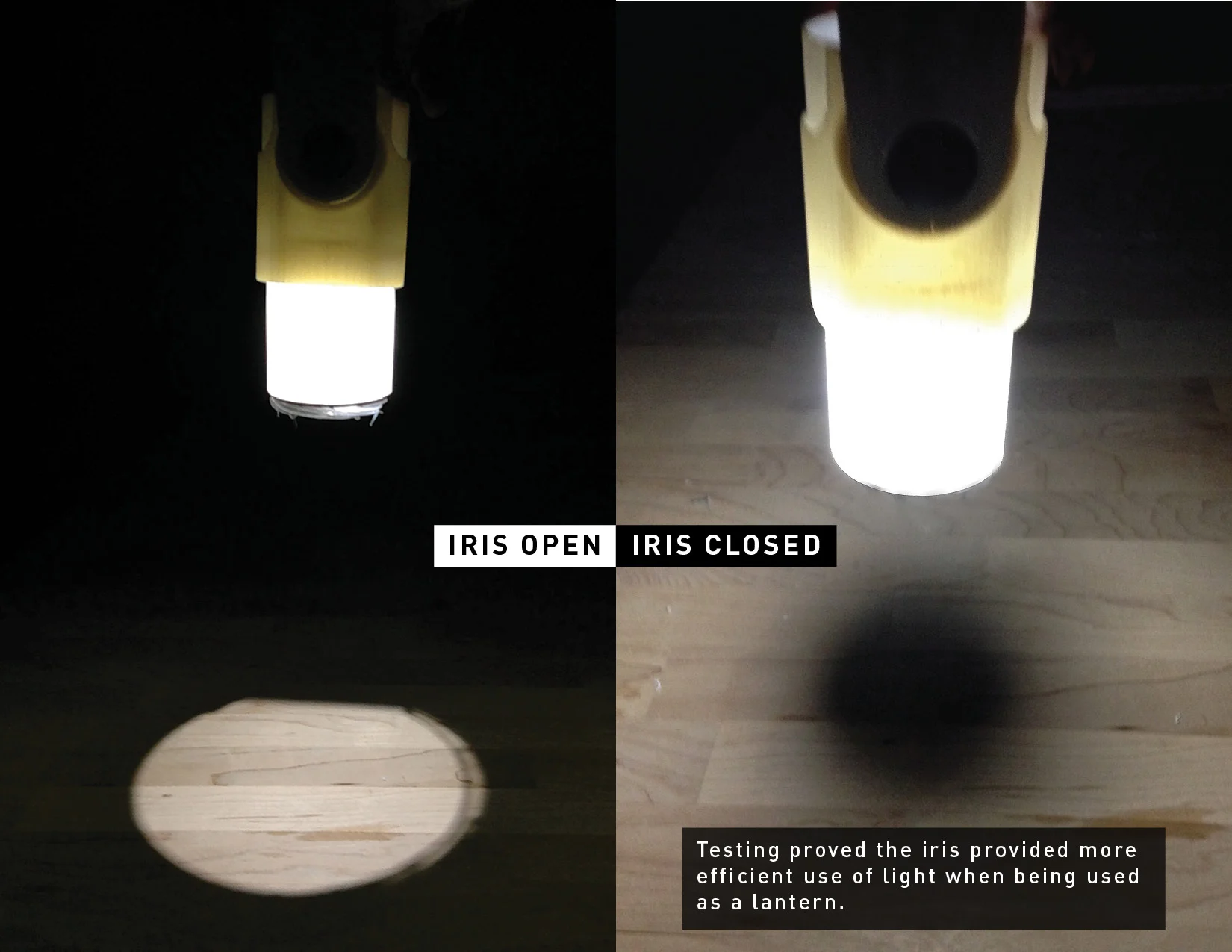
Final form refinement
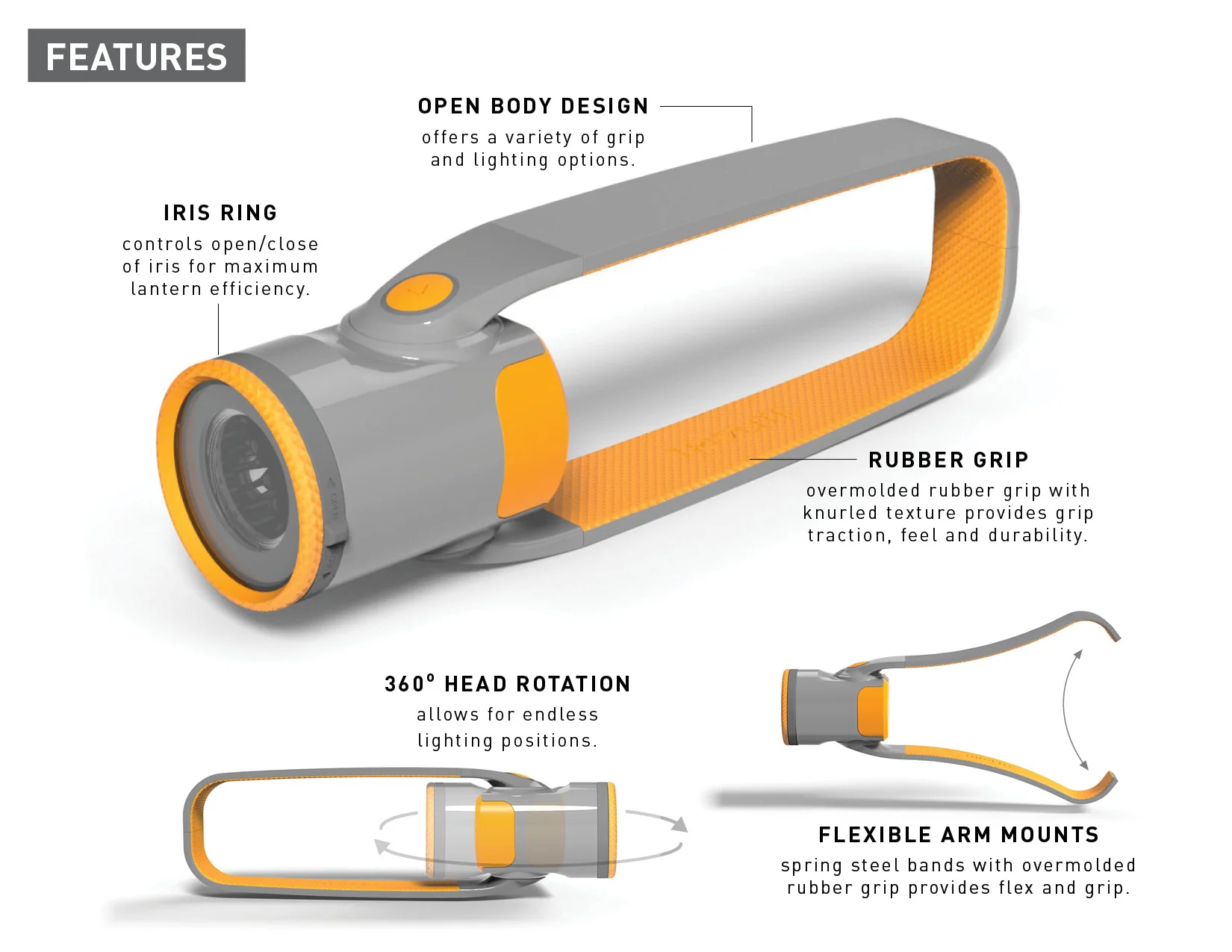
Final product — photography 01
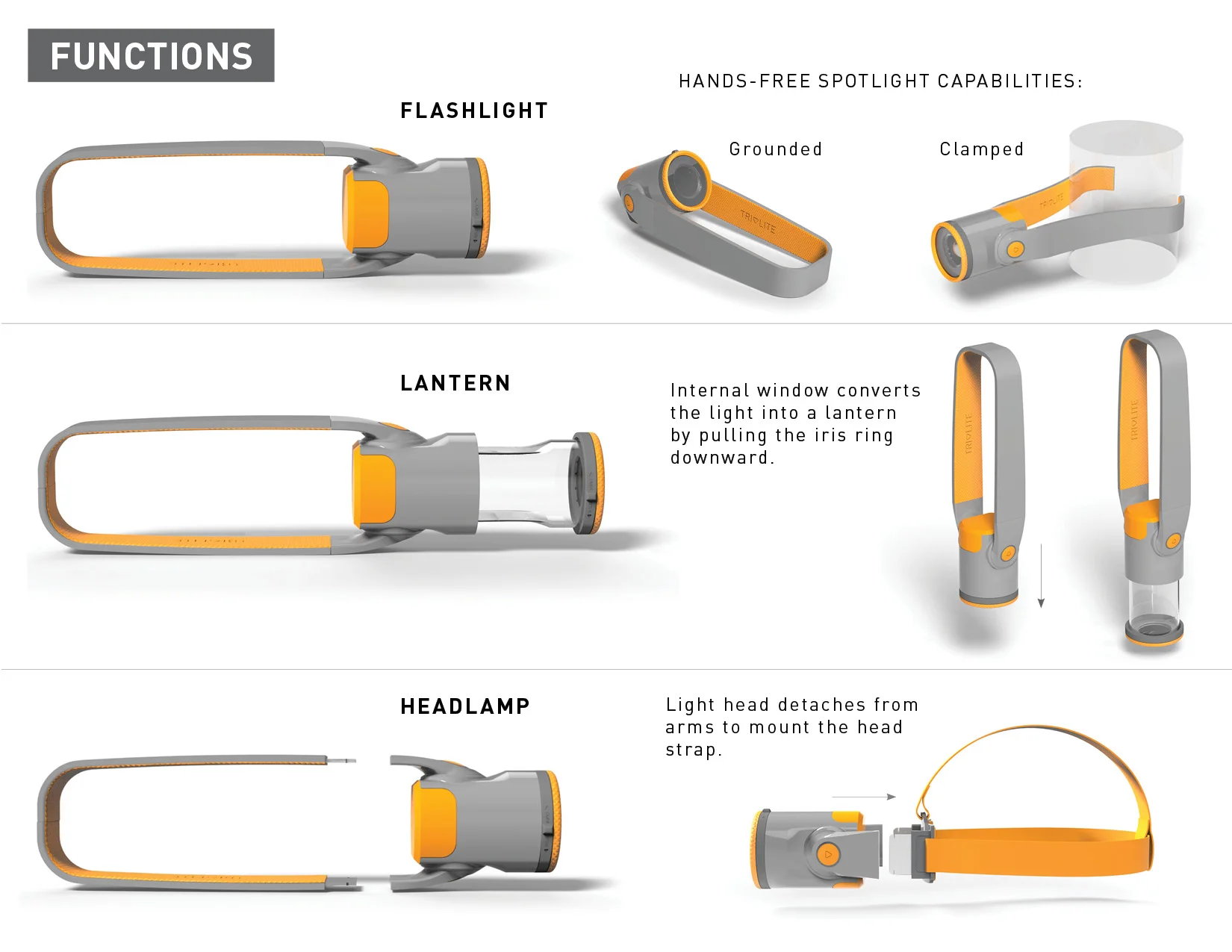
Final product — photography 02
Result
TRI LITE delivered a fully-featured backcountry flashlight at a weight target that outperformed every comparable product in its category. The three-mode single-switch interface eliminates the complexity tax that most multi-mode lights impose. The functional color system — validated against real backcountry findability scenarios — became the product's visual signature. A light designed by someone who has been on the trail, not just in the render farm.
Outcomes
Technology
Design System
Details